


Across podcasts, TikTok feeds, and late-night conversations, one idea keeps surfacing: the mind doesn’t just witness reality, it creates it. Known as the philosophy of conscious creation, this way of thinking blurs the line between science and spirituality, challenging us to see imagination and belief not as daydreams, but as tools for reshaping life itself.
What Is Conscious Creation?
Conscious creation is built on a radical premise: reality is not fixed. Instead, it responds to our thoughts, emotions, and assumptions. When you deliberately direct your inner state, you influence the outer world.
Mystic teacher Neville Goddard framed imagination as the engine behind all creation. His core practice was simple but profound, picture your desired outcome, feel it as if it’s already true, and let that impression sink deep into the subconscious. Joe Dispenza, on the other hand, brings a scientific lens, describing how meditation, brain plasticity, and elevated emotion can “rewire” the body and mind. Two different approaches, one core message: shift within, and your world shifts without.
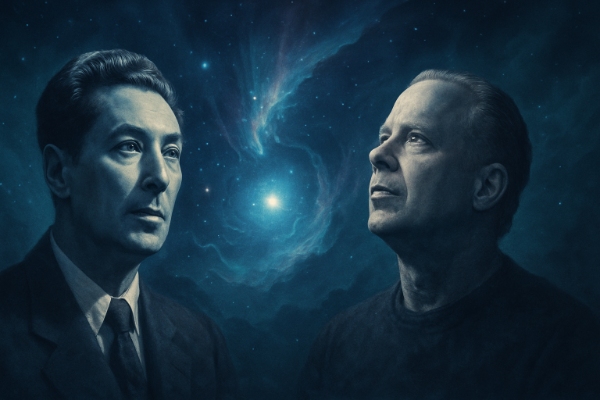
Neville Goddare, Joe Depenza
Why People Are Turning to It
Scroll social media and you’ll see it everywhere: short clips of Goddard’s 1960s lectures, or Dispenza explaining the brain’s ability to form new neural pathways. What once lived on the fringe is now mainstream, and it’s not hard to see why.
At a time when so much feels out of control, the idea of reality hacking offers something rare: agency. It’s not about toxic positivity or vague affirmations. It’s about treating the mind as an active instrument rather than a passive observer. For many, that’s a liberating shift.
How to Hack Your Own Reality
The philosophy might sound abstract, but applying it is surprisingly straightforward:
Visualize the End State
Instead of obsessing over how something will happen, imagine it already done. Picture yourself holding the diploma, signing the contract, or walking into the home you want
Feel the Outcome Now
Emotion is the signal that drives change. Embody the feelings of security, joy, or freedom that your vision would bring.
Practice Daily
Repetition is key. Goddard often recommended imagining just before sleep; Dispenza suggests meditation and mental rehearsal. Consistency builds momentum.
Release Control
The paradox: by letting go of the “when” and “how,” you reduce resistance and allow circumstances to line up naturally.
The Critics and the Converts
Skeptics argue that conscious creation overpromises, especially when it comes to health or wealth. But for those who’ve tested it, results matter more than debates. From people claiming life-changing healings at Dispenza’s retreats to followers swearing by Goddard’s “assumption” method, the stories are everywhere.
And whether you chalk it up to quantum physics, psychology, or faith, one fact stands: focusing the mind reshapes behavior, and behavior reshapes outcomes.
The Bigger Picture
Reality hacking isn’t about escaping life — it’s about engaging with it differently. It’s a philosophy that says you’re not stuck with the script you’ve been handed. You can edit it, rewrite it, and direct it with intention.
For some, that means breaking free of old habits. For others, it means stepping into a career, relationship, or state of health they once thought impossible. Either way, conscious creation is more than a trend. It’s a reminder that the boundary between imagination and reality may be thinner than we think.