


The Schumann V3 Max from The Schumann taps into one of the fastest-growing conversations in wellness right now: how modern environments may be affecting sleep, stress, focus, energy, and the nervous system itself. The silent electromagnetic frequency device is designed to create low-frequency environmental fields associated with relaxation, recovery, meditation, calm, and deeper rest, all without sound, headphones, or constant stimulation. At a time when many people feel mentally overstimulated yet physically exhausted, devices like the V3 Max are drawing attention from wellness enthusiasts, athletes, creatives, executives, and people simply looking for a way to feel a little less “wired” all the time.
The company behind the device, The Schumann, builds wellness technology inspired by the Schumann Resonance, a naturally occurring electromagnetic frequency generated between the Earth’s surface and the ionosphere. The primary resonance sits at approximately 7.83 Hz and is often referred to as the Earth’s natural frequency or “Earth’s heartbeat.”
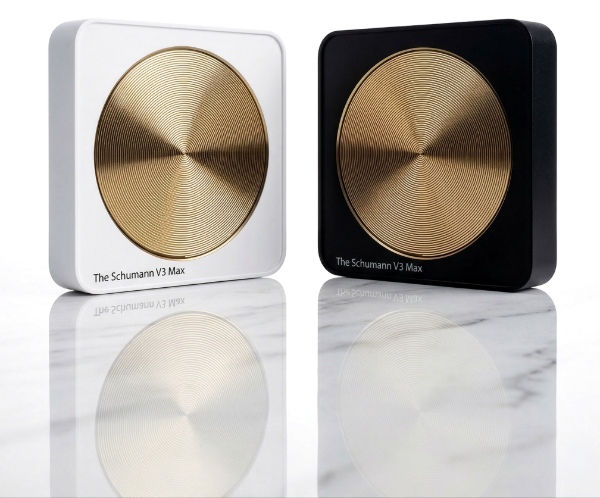
The Schumann V3 Max
While the science surrounding frequency wellness is still evolving, interest in the Schumann Resonance has grown steadily over the last several years among researchers, meditation practitioners, sleep-focused wellness communities, and people interested in how environmental factors may influence stress, recovery, focus, and overall wellbeing.
The basic theory is fairly simple. Humans evolved outdoors surrounded by natural electromagnetic rhythms, but modern life now keeps most people indoors under artificial lighting, surrounded by screens, Wi-Fi signals, nonstop notifications, and constant stimulation. Devices like the V3 Max are designed to recreate quieter low-frequency environments inside homes and workspaces. To look past the standard marketing hype and get into the actual physics of the device, I personally scored an exclusive Q&A with Iva Tashkovska, the Marketing Director at DR Technologies, which you can read in full at the bottom of this piece.
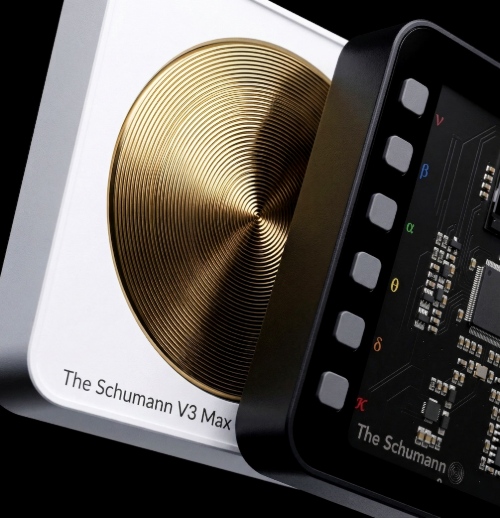
What the Schumann V3 Max Actually Does
Unlike sound-based wellness products, the V3 Max produces no audible tones, vibrations, or music. There are no speakers or headphones involved. Instead, the device generates silent low-frequency electromagnetic fields using what the company calls its Mobius Coil and WaveForm Engine technology. Users manually select frequencies directly on the device depending on the type of environment they want to create.
The V3 Max is the newest and most advanced device in the company’s lineup so far, expanding the available frequency range from 0.01 Hz all the way up to 9,999.99 Hz with 0.01 Hz precision. According to the company, that expanded range was one of the most requested upgrades from longtime users.
The new model also features:
- Five programmable preset buttons on the back of the device
- A quick-jump feature that moves up by 1,000 Hz instantly
- Up to 24 hours of battery life on a single charge
- A redesigned seamless molded casing with no external screws
- Classic matte black and white color options
The idea behind the presets is pure practicality. Many users experiment with different frequency ranges throughout the day depending on what they’re trying to support, whether that’s sleep, concentration, meditation, creativity, energy, or winding down after work.
Understanding the Frequency Ranges
One reason the V3 Max has attracted attention is because different frequency ranges are associated with different brainwave states and mental conditions.
The lower Delta frequencies, roughly 0.5–4 Hz, are associated with deep sleep, physical restoration, and recovery. These are the frequencies many people use overnight or during relaxation sessions. Delta states are often linked to the body’s restorative processes and deep nervous system calm.
Alpha frequencies, around 8–12 Hz, are associated with calm alertness, relaxed focus, creativity, visualization, and flow states. This may be one of the most relatable categories for modern users because Alpha frequencies mirror the mentally clear but relaxed state many people feel they rarely access anymore.
Beta frequencies, generally between 12–30 Hz, are tied to active thinking, productivity, concentration, and external focus. Lower Beta ranges may support focus and problem-solving, while excessive high-Beta stimulation is also associated with mental fatigue and stress.
Gamma and Hypergamma frequencies move into more experimental territory involving heightened cognitive processing, meditation, insight, awareness practices, and states that researchers are still actively studying. Even the company acknowledges that these higher ranges remain highly exploratory and deeply individual.

Using the V3 Max for a Week
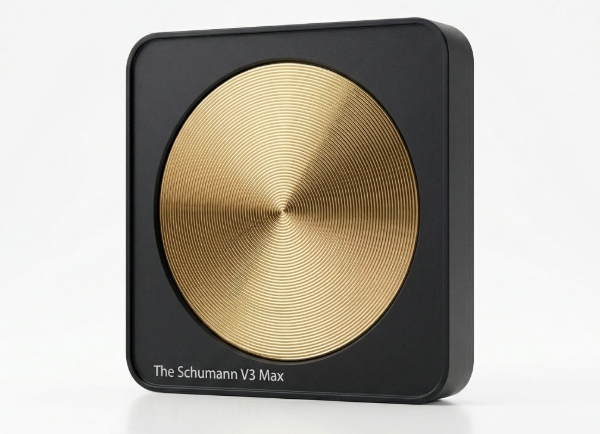
The interesting thing about using the V3 Max is that the experience feels subtle rather than dramatic. There’s no overwhelming sensation when it’s turned on. No sound filling the room. No guided meditation voice. In fact, during the first day or two, some people may wonder whether anything is happening at all.
After about a week of using it, though, certain patterns became more noticeable.
Sleep felt deeper, even if it wasn’t necessarily longer. Falling asleep seemed easier, and mornings felt physically less tense. There was less jaw tightness and less of that low-grade muscle tension that tends to build up after long days spent staring at screens or working at a computer.
The Alpha-range settings during writing sessions felt especially interesting because the focus felt calmer and steadier rather than overstimulated or caffeine-driven. Perhaps the biggest shift was simply feeling less mentally “amped up” before bed. Less racing thoughts. Less urge to endlessly scroll late into the night. The nervous system felt quieter.
Whether those effects come from the electromagnetic environment itself, placebo effect, environmental conditioning, or some combination of all three remains part of the larger conversation surrounding wellness technology in general. But the experience itself was compelling enough to continue exploring.
A Different Kind of Wellness Technology
What makes the V3 Max interesting is that it reflects a larger shift happening throughout wellness culture right now. People are increasingly looking for ways to regulate stress, improve sleep quality, recover mentally, and feel calmer without adding even more stimulation into their lives.
The Schumann V3 Max approaches that idea in a surprisingly quiet way. No app overload. No constant notifications. No wearable buzzing on your wrist. Just a silent environmental device designed to subtly shape the atmosphere around you.
To peel back the exact mechanics of how this interface translates to daily life, we sat down for an exclusive chat with the team behind the hardware.
Exclusive Interview: Inside the Tech with DR Technologies’ Iva Tashkovska
LA’s The Place: For readers who are completely new to this concept, who was Schumann, and what exactly is the “Schumann Resonance” in nature?
Iva Tashkovska: The phenomenon is named after German physicist Winfried Otto Schumann, who mathematically predicted it in 1952. In simple terms, the Schumann Resonance is the Earth’s natural electromagnetic heartbeat. It is a set of global background frequencies generated and continuously excited by lightning strikes thousands of miles away.
This electrical energy bounces back and forth in the cavity between the Earth’s surface and the ionosphere, creating a steady, natural “standing wave” that rings around the globe at a fundamental frequency of 7.83 Hz. Because all living things evolved enveloped by this natural frequency, biohackers and wellness researchers are fascinated by how modern indoor living—which shields us from these native fields while exposing us to high-frequency artificial Wi-Fi and cellular signals—might impact our natural sleep, focus, and stress levels.
LATP: When looking at the physical display on the V3 Max, users see a few specific characters like $\mu\text{T}$, “d”, “t”, “a”, “b”, and “y”. Can you explain very simply what these mean and how they help a user navigate the device?
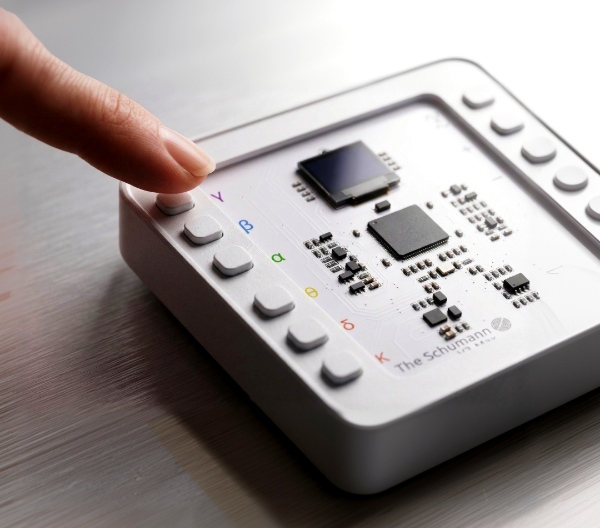
Tashkovska: Absolutely. We intentionally kept the screen uncluttered. The display shows the actual physics of the field rather than marketing buzzwords.
First, you will see a symbol that looks like a Greek letter with a “T” ($\mu\text{T}$). That stands for microteslas, which is simply the standard unit used to measure the intensity or strength of the magnetic field.
The single letters on the screen represent the five primary brainwave states. They are there to serve as an instant, simple guide for your daily routines:
- d (Delta): Deep sleep and physical recovery.
- t (Theta): Meditation, dreaming, and deep relaxation.
- a (Alpha): Calm alertness, visualization, and creative flow.
- b (Beta): Active thinking, problem-solving, and high focus.
- y (Gamma): High-level cognitive processing and peak performance.
Instead of navigating complicated menus, you simply look at the digital companion guide that comes with your device, find the frequency number for the state you want—for instance, 4,444 Hz—and type it directly into the device. The screen will display that number alongside the brainwave zone you are targeting.
LATP: On the right side of the device, there are physical plus (+) and minus (-) signs. What exactly do those control, and how high can a user actually go?
Tashkovska: The V3 Max boasts an incredibly powerful, wide range. It allows you to select frequencies starting all the way down at an ultra-low 0.01 Hz and go all the way up to an industry-leading upper limit of 9,999.99 Hz.
The plus and minus buttons serve two very straightforward purposes depending on your mode:
- In Intensity Mode: They let you turn the field strength ($\mu\text{T}$) up or down to adjust how far the passive field expands into your room.
- In Frequency Mode: They allow you to easily scroll up or down to zero in on an exact numerical frequency setting.
There is zero guesswork. You choose your number based entirely on what you want to achieve. If you want to sleep, you set it to a low number in the Delta range. If you want sharp afternoon productivity, you dial it up to a higher number in the Beta or kilohertz range as laid out in our guide.
LATP: The V3 Max also lets users choose between a “Sine wave” and a “Square wave.” In plain English, what is the difference between those options?
Tashkovska: It comes down to how the energy moves through your space, and it’s easiest to visualize them as shapes.
A Sine wave is a smooth, gentle, perfectly rolling curve—like a calm wave in the ocean. Because it rises and falls seamlessly, it creates a soft, soothing environment. This is the setting most people choose for wind-down routines, meditation, and overnight sleep because it mimics fluid, natural rhythms.
A Square wave looks like a flat-topped block or a castle battlement. It shoots straight up, holds flat, drops straight down, and holds flat. Because it turns on and off instantly with sharp angles, it is much more stimulating and high-energy. Users switch to the square wave during the morning or peak working hours when they need an environmental “wake-up call” to support high alertness and sharp productivity.
LATP: Frequency wellness is still unfamiliar territory for many consumers. What misconceptions do people often have about devices like this, and what do you wish more people understood before trying one?
Tashkovska: The biggest misconception is that we are an audio-based product. People hear “frequency device” and immediately think of YouTube tracks, binaural beats, or meditation music. Our devices produce no sound whatsoever. They generate a silent electromagnetic field—it is a completely different mechanism and a completely different experience. And then there is a follow-up misconception that catches a lot of people—if it does not make sound, surely it must vibrate? We actually see people test this by placing sand on paper near the device, expecting some kind of physical movement or resonance. There is none. No sound, no vibration, nothing you can see or feel coming from the device directly.
The analogy I always use is your phone—when it is not on vibrate, you do not feel the signal it is constantly sending and receiving, but that signal is very much there. An electromagnetic field works the same way. It is invisible, silent, and imperceptible to the senses. For skeptical people, that is genuinely a challenge, because we are so conditioned to need immediate proof. You will not turn this on and feel a dramatic shift in the room. What you will notice, if you give it time, is a subtle and cumulative change in how your environment feels—and eventually in how you sleep, how you focus, how you decompress.
LATP: The second misconception is that you make medical claims. How do you address that with users, and what kind of feedback do you typically receive?
Tashkovska: We do not make medical claims, and we are probably one of the more cautious brands in this space because of that. We will not tell you this device will cure your insomnia or fix your anxiety. What we will tell you is that users report feeling calmer, sleeping more deeply, and feeling less overstimulated. What has been really encouraging for us is the organic social proof that keeps coming in. We have had a significant number of customers who track their sleep with wearables, and they share their sleep scores with us. The improvements people report are genuinely remarkable. Better deep sleep percentages, lower resting heart rates overnight, and reduced sleep latency.
And then there is the placebo question. The honest answer is that we cannot sit here and tell you with absolute certainty that every person who feels better is not experiencing a placebo effect. What we can point to is that animals notice the difference. Pets are settling down, dogs that were anxious becoming calmer, cats gravitating toward the space where the device is running. Animals are not susceptible to a placebo. They do not read the packaging, they do not have expectations, and they simply respond to their environment. That, for a lot of our skeptical customers, ends the placebo conversation pretty quickly.
LATP: The V3 Max is clearly the powerhouse of your lineup, but can you briefly pull back the curtain on the other products in The Schumann family?
Tashkovska: The V3 Max is our flagship, built directly from advanced user feedback for those who want total control over the entire frequency spectrum. But we wanted frequency wellness to be accessible to everyone, which is why we maintain a focused product family:
The V1 Classic: This is our entry-level “Indoor Bridge.” It is pre-set specifically to the Earth’s core 7.83 Hz Schumann frequency. It’s completely passive and perfect for someone who simply wants to bring that natural grounding environment into a bedroom or office without adjusting settings.
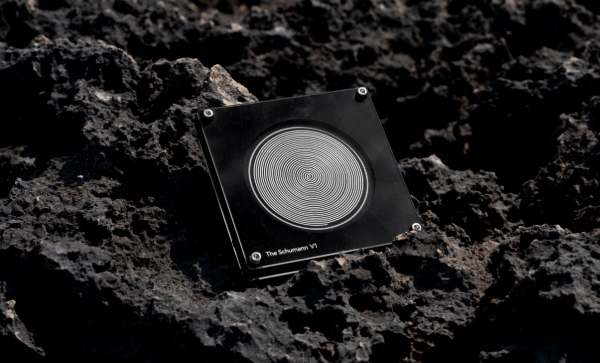
The V2 Pro: The intermediate step that paved the way for our latest tech. It introduced adjustable controls and multi-mode options, making it a favorite for users who wanted to experiment beyond the baseline earth frequency before we unlocked the massive kilohertz range of the Max.
The Schumann Ultimate & Accessories: This includes our premium home setups, alongside our specialized hardback frequency guides and custom charging stations designed to seamlessly integrate these silent, ambient tools into a modern aesthetic.
Our philosophy across the entire line remains identical: to build passive, silent tools that optimize your living space in the background, requiring none of your limited daily attention.
For more information, visit The Schumann official website or follow @theschumannresonance on Instagram.