
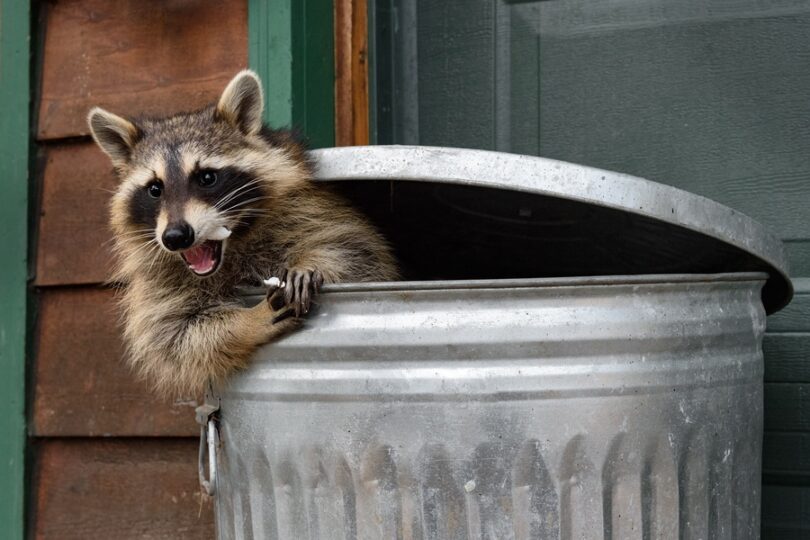

Raccoons and trash cans have a relationship that intrigues many. You’ve probably spotted these clever critters rummaging through debris or boldly climbing into your bins. But why are trash cans such a magnet for raccoons? This fascinating bond is rooted in food, adaptation, and superior survival instincts. Read on as we go into greater detail about this iconic love story, highlighting why raccoons love trash cans.
The Sweet Aroma of Scraps
Raccoons possess an acute sense of smell, which enables them to detect food from considerable distances. Trash cans, often filled with discarded leftovers, emanate smells that are impossible for these opportunistic creatures to ignore.
Whether it’s the scent of greasy pizza crusts or sugary desserts, raccoons are drawn to the promise of an easy meal. This olfactory prowess means a trash can is like a beacon calling them to a feast.
A Buffet of Variety
Unlike scavenging in nature, where choices are limited to what the environment offers at any given time, trash cans serve as an assortment of possibilities. One day it could be leftover fried chicken, the next day, a barely touched sandwich.
Raccoons thrive on this diversity. Their omnivorous diet enables them to consume almost anything—fruit, meat, and even processed items. This wide variety makes trash cans an irresistible smorgasbord for them to explore.
Convenient and Accessible
Trash cans are often poorly secured or left open, making them incredibly easy for raccoons to access. Their dexterous paws make opening lids or tipping over cans an easy task.
Combine that with the proximity of trash bins to human homes and businesses, and it’s no wonder raccoons frequently make nocturnal visits. Our convenience becomes their convenience, and they are incredibly adept at taking advantage of it.
Safety in Familiarity
Trash cans also provide a sense of security and shelter. Raccoons are highly adaptable animals that often find comfort in returning to familiar locations. A trash can offers a consistent spot where they know food will be available without venturing far into the unknown. The area around trash cans also acts as temporary hiding places from predators or urban noise, making it a dual-purpose destination for our furry friends.
Urban Exploration
Raccoons are one of the few wild species that have adapted exceptionally well to urban environments. They capitalize on the resources that human civilization inadvertently provides, and trash cans are a prime example.
However, seeing a raccoon near your home shouldn’t be ignored. Increased raccoon activity might lead to damage in search of food or even confrontations. Make sure your trash cans are tightly sealed and scout for possible entry points into your property.
The love story between raccoons and trash cans is less about mischief and more about survival and adaptability. Trash cans offer raccoons a reliable source of food, security, and ease of access. Next time you secure your bin or spot a raccoon nearby, you’ll know the reason behind their love for these urban treasure chests.