
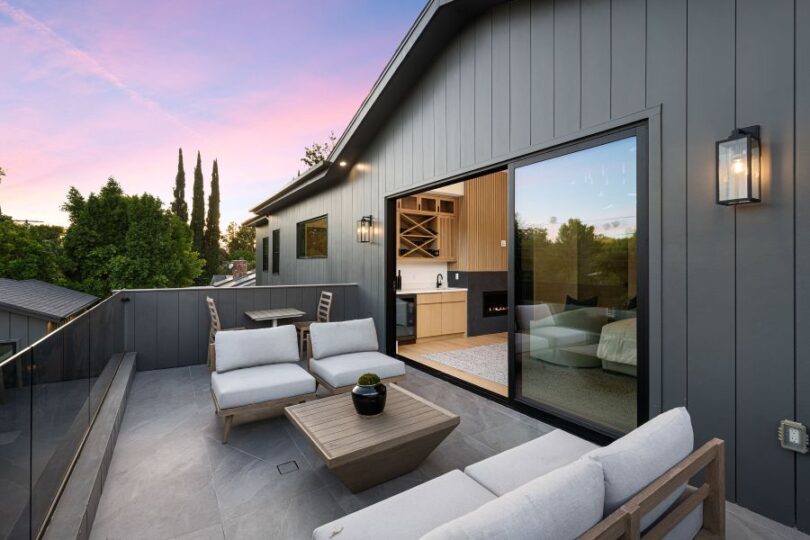

Deck railings do a lot for the appearance of an outdoor space. They frame the perimeter, affect how much of your yard you can see, and contribute to the overall character of your deck.
If your current railing looks dated or you’re planning a new deck, you’ve got quite a few designs to choose from. Today’s options go well beyond traditional wooden balusters, with materials and configurations that complement contemporary homes.
The modern railing styles below offer different looks without sacrificing the function you need from a deck railing.
Slim-Profile Aluminum Railings
Aluminum railings are a popular option for contemporary decks because their narrow posts and balusters create a streamlined appearance. Unlike bulkier railing systems, slim-profile designs leave more open space between the components, preserving your view of the yard.
The simplicity of aluminum also makes it easy to coordinate with your home’s exterior. When incorporating aluminum railings into modern deck designs, black finishes create a bold contrast against lighter decking, while softer colors produce a more subtle look.
Beyond their appearance, aluminum railings require relatively little maintenance. Their powder-coated surfaces resist corrosion, and you won’t need to stain them periodically as you would with natural wood.
Horizontal Cable Railings
Horizontal cable railings use thin stainless steel cables stretched between posts to create an open, contemporary design. Their minimal appearance draws less visual attention than conventional railings with thick balusters.
The cables run parallel to the deck surface, creating long horizontal lines that complement homes with modern architecture. The narrow cables also preserve views of the surrounding property.
Cable systems require proper tension to maintain their appearance and structural performance. Over time, individual cables may need adjustment, so occasional maintenance is part of owning this style. Local building codes may also affect cable spacing and installation requirements.
Vertical Cable Railings
Vertical cable railings offer a different take on the cable railing concept. Instead of running horizontally between posts, the cables extend vertically between the upper and lower rails.
The upright arrangement creates a more traditional railing pattern while retaining the minimal appearance of stainless steel cables. You get the slender lines associated with cable systems without the pronounced horizontal emphasis.
Vertical cable railings pair nicely with contemporary homes that feature tall windows or upright architectural elements. Depending on the system, the cables may arrive in prefabricated panels, which can simplify installation compared with individually tensioned configurations.
Frameless Glass Railings
Frameless glass railings use large panels of tempered or laminated safety glass without conventional posts between each section. The panels attach to the deck through specialized clamps or a continuous channel along their lower edge.
Because the glass carries the railing loads, each panel needs sufficient thickness to withstand pressure without relying on a surrounding frame. The mounting hardware must also connect securely to the deck’s supporting structure.
Some frameless systems use a continuous base channel that conceals much of the mounting hardware beneath the glass. Others feature individual metal clamps that remain visible along the bottom edge. Both configurations preserve the frameless design, but the mounting method changes how the finished railing looks.
Framed Glass Railings
Framed glass railings combine transparent panels with visible posts and rails. The surrounding framework introduces structure without blocking the scenery behind the deck.
Aluminum frames are common because they resist corrosion and accommodate relatively narrow profiles. Dark frames create a pronounced outline around each glass panel, while lighter finishes produce a softer appearance.
Unlike frameless systems, these railings establish a visible rhythm along the deck perimeter. The posts divide the glass into individual sections, which gives the design a more structured appearance.
Framed glass is appealing when you want transparency but prefer the architectural presence of a conventional railing system.
Metal Mesh Railings
Metal mesh railings bring an industrial style to your deck through their grid-like construction. Welded wire panels feature intersecting metal rods that form a repeating pattern of square or rectangular openings.
The rigid panels sit inside a surrounding frame, giving each railing section a uniform appearance. You can choose between fine wire mesh for a tighter pattern or thicker rods that emphasize the grid itself.
The exposed metal construction pairs well with industrial-inspired architecture, particularly homes with angular rooflines and minimal exterior trim. For a less conventional look, expanded metal panels feature diamond-shaped openings created by cutting and stretching a single sheet of metal.
Horizontal Wood Slat Railings
Horizontal wood slat railings use boards arranged lengthwise between posts, giving your deck a contemporary look while retaining the natural grain of wood. Unlike manufactured railing materials, individual boards have variations in grain and color that add character to the finished design.
The spacing between the slats determines how much privacy the railing offers. Boards placed closer together limit visibility from neighboring properties, making this style an option for decks near other homes. Wider gaps create a less enclosed space while maintaining the horizontal pattern.
You can stain the wood to coordinate with your decking or choose a contrasting shade to give the railing its own appearance. The boards will need periodic refinishing to protect them from weathering.
Composite Deck Railings
Composite deck railings offer the appearance of painted wood without the upkeep that comes with traditional lumber. Manufacturers combine wood fibers with plastic polymers to produce components that resist rot and insect damage.
Many composite railing systems use protective outer shells that prevent moisture from reaching the material underneath. These coverings also limit fading from sun exposure, although their performance varies by manufacturer.
One thing to know about composite railings is that their internal construction differs from solid wood. Some systems use reinforced components or internal metal supports to meet structural requirements. You’ll need to follow the manufacturer’s installation instructions rather than relying on conventional wood railing methods.
Finding the Right Look for Your Outdoor Space
Your railing choice influences how your deck looks from the yard and how you experience the space while using it. The surrounding architecture, your preferred level of visibility, and the amount of maintenance you’re comfortable handling can guide your decision.
As you compare modern railing styles, think about how each design will look across the entire deck rather than focusing on a single railing panel. A style that looks attractive in a small sample may have a different visual effect when it surrounds a large outdoor area.
With so many configurations available, you have room to choose something that complements your home while giving your deck an updated appearance.