


Consumer behavior is a must-know factor in the present fast-evolving business world. Qualitative research has become an asset for businesses hoping to gain a competitive advantage by revealing profound insights and the underlying causes of consumer behavior.
More than half (56%) of marketers rely on qualitative research to understand customer needs and preferences. However, this digital era has disrupted the traditional ways of conducting qualitative research like focus groups and in-person interviews. This is where online qualitative platforms come in – game changers in market research.
The Rise of Online Qualitative Platforms
The COVID-19 pandemic disrupted the world, prompting businesses to adapt and explore new avenues for conducting market surveys. It was under these circumstances that online qualitative platforms were embraced with 70% of researchers now conducting studies online.
These virtual platforms offer several advantages, such as being more accessible, cost-effective, and enabling outreach to people from various locations. Online qualitative platforms have changed how firms collect and analyze consumer insights by utilizing technology.
In this comprehensive guide, we’ll explore the strategies and best practices for maximizing the potential of online qualitative platforms, ensuring that your business stays ahead of the curve and achieves lasting market success.
Choosing the Right Online Qualitative Platform
With a plethora of online qualitative platforms available, selecting the right one for your business can be a daunting task. 82% of researchers prioritize platform usability and features when making their choice, highlighting the importance of this crucial decision.
When evaluating potential platforms, consider the following factors:
- Engagement Features: Look for platforms that offer multimedia tools, such as video and audio capabilities, interactive whiteboards, and virtual focus group environments. These features can enhance participant engagement and provide richer insights.
- Audience Reach: Ensure that the platform can effectively target and recruit your desired audience, whether it’s a specific demographic, geographic location, or niche interest group.
- Security and Privacy: Data privacy and security should be a top priority. Look for platforms that comply with industry standards and regulations, such as GDPR and CCPA, and implement robust measures to protect participant data.
By conducting a thorough evaluation of these factors, you can confidently select an online qual research platform that not only aligns with your research objectives but also caters to the unique needs of your target audience.
Maximizing Engagement on Online Qualitative Platforms
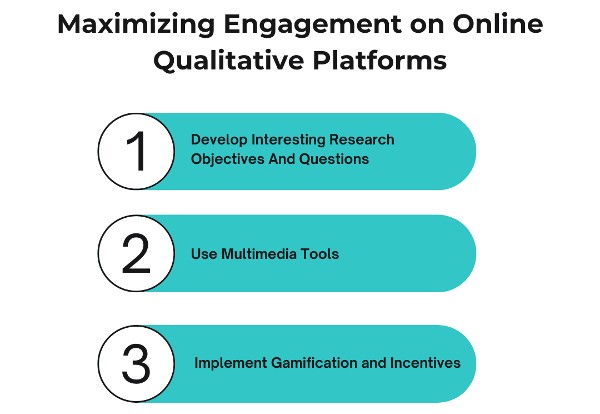
Engaging participants effectively is crucial for collecting valuable insights. The following tips will help you maximize engagement rates on online qualitative research platforms:
- Develop Interesting Research Objectives And Questions: Come up with questions that will make your target audience think. You should know that 75% of respondents prefer engaging content, so it is important to create captivating stories and scenarios.
- Use Multimedia Tools: Use different media types for an immersive experience. Video content accounts for 65% participant preference to aid understanding; thus making them more suitable when dealing with complex ideas or situations
- Implement Gamification and Incentives: Introduce gamification elements, such as leaderboards, badges, and challenges, to foster a sense of friendly competition and maintain participant interest. Additionally, offering rewards increases participant engagement, with 80% more likely to participate when incentives are provided.
Combining these strategies creates a dynamic and engaging research environment that encourages active participation and elicits rich, meaningful insights.
Ensuring Data Quality and Reliability
Although online qualitative platforms offer numerous advantages, ensuring the quality and reliability of the collected data is paramount. Implementing the following strategies can help you achieve this:
- Participant Recruitment and Screening: Identify and recruit the right participants for your study. 70% of researchers emphasize the importance of recruiting the right participants, as they can significantly impact the quality and relevance of the insights gathered.
- Monitoring and Moderation: Real-time monitoring and moderation of discussions are essential for maintaining quality. 60% of researchers use real-time monitoring to ensure quality discussions, enabling them to address potential issues promptly and keep the conversation on track.
- Data Validation and Triangulation: Leverage advanced technologies, such as artificial intelligence (AI) and machine learning, to validate and triangulate data from multiple sources. 68% of researchers use AI for data validation and analysis, ensuring the accuracy and reliability of their findings.
By implementing these strategies, you can mitigate potential biases, identify and address data quality issues, and ultimately produce more robust and reliable insights.
Analyzing and Interpreting Qualitative Data
Once high-quality data has been obtained, analyzing and interpreting it properly is the next step. Some best practices for doing this include:
Diverse Data Sources Organization and Synthesis: Many types of qualitative data are used, including transcripts, videos, images, and notes. You should establish a systematic way to organize all these different sources so that you can find patterns and gain insights from them.
Pattern identification, themes recognition and actionable insights: Coding or theming can be used among other methods to detect common occurrences as well as useful information from sentiments expressed in collected materials. Such knowledge may guide such things like product creation or marketing plans development among others connected with general business strategy making.
Qualitative findings integration with quantitative data: It is necessary to blend qualitative results together with numbers acquired through surveys based on various aspects of analytics concerning consumer behavior etcetera; because this will give a holistic view hence validating your findings too.
When these guidelines are followed appropriately, nondescript qualitative records become meaningful suggestions for decision-making which enhance the overall performance of an enterprise.
Efficacy of Insights for Market Achievement
The genuine worthiness of online qualitative research is the ability to spark market achievement through actionable insights. Below are some of the ways you can use your findings:
Turn Qualitative Findings into Actionable Business Strategies: Utilize the things you have found from your study to inform and tweak product development, advertising campaigns, customer experience management (CEM) efforts among other business strategies in general. Aligning these plans with likes, dislikes or pain points expressed during qualitative inquiries.
Communicate Insights Properly With Stakeholders: Data should be presented clearly enough for all parties involved including those who might not understand technical terms while making sure it does not lose meaning along the way; this can be done by using visual aids like graphs/charts showing relationships between variables etc., storytelling techniques where people share personal experiences that relate back to what was discovered during a particular investigation or giving tangible examples so as to make them relate easily with real life situations.
When communicated effectively it helps in getting approval from different groups of people which will enhance their implementation hence transforming them into actions.
Continuous Improvement Should Be Welcomed: Businesses need to constantly upgrade their operations based on market needs thus helping organizations pinpoint exact areas where they should concentrate more resources since they act as catalysts towards success over time. It means that firms must always seek feedback from consumers and adjust accordingly by utilizing such information throughout various stages until final delivery is achieved but still keep on improving products/services which might be required when evolving consumer demands change rapidly.
To maximize all these benefits, follow every step without fail.
FAQs
1. What are some key considerations when choosing an online qualitative platform?
A: When selecting an online qualitative platform, researchers need to evaluate its accessibility across devices and operating systems, user-friendliness and flexibility in terms of study setup and customization options. Additionally, they should assess the availability of support services like training materials or technical assistance as well as data management features such as secure storage or export functionalities. Finally, considering the costs involved is necessary to ensure value for money without compromising quality standards.
2. In what ways can online qualitative platforms enhance engagement and participation among research participants?
A: Online qualitative platforms offer various features that can promote active involvement from research participants including anonymity options which make it easier for people to share sensitive opinions or experiences without fear of judgment. Moreover, these platforms enable asynchronous communication – this means individuals do not have to be available at the same time for discussions hence catering for diverse schedules across different time zones. Additionally, multimedia capabilities such as video uploads allow users to express themselves more creatively while interactive elements like polls stimulate real-time interaction among respondents.
3. Are there any ethical concerns specific to conducting qualitative research using online platforms?
Striking this balance necessitates a tactical method. For initial exploration and hypothesis generation businesses can use the efficiency and scalability of internet-based platforms, before they resort to more detailed qualitative research methods which are aimed at certain areas based on findings acquired during online investigation such as face-to-face interviewing or ethnography. Besides enriching insights with multimedial tools; games; and involving research designs among others may be considered while still benefiting from web platforms.
Conclusion
With the ever-changing marketplace of consumer demands and market trends, there has never been a greater need for strong qualitative research. These days, online qualitative platforms have become game changers because they provide opportunities that were previously unheard of when it came to using technology to uncover valuable customer insights.
This complete guide lists some of the best practices that should be followed; such as selecting the most appropriate platform, ensuring data quality and reliability through engagement maximization during analysis interpretation and translation into actionable strategies – all these will help businesses fully exploit what internet-based qualitative investigations can offer.
Not only do these virtual methods bring companies up-to-date with current developments but they also create an environment where continuous improvement is possible through frequent iteration on product service refinement driven by customer feedback and Understandings about them gained from online qualitative platforms.
In today’s world where speed is everything and competition is fierce, knowing why people buy things can make or break your business against theirs. Understanding customers’ needs deeply requires businesses to go beyond surface level information gathering which is why utilizing online qualitative platforms should not be underestimated by any company wishing to succeed in its endeavors. Data-based decision-making becomes easier when organizations embrace this approach since it helps them know their clients better while also allowing them realize long-term marketing success.