
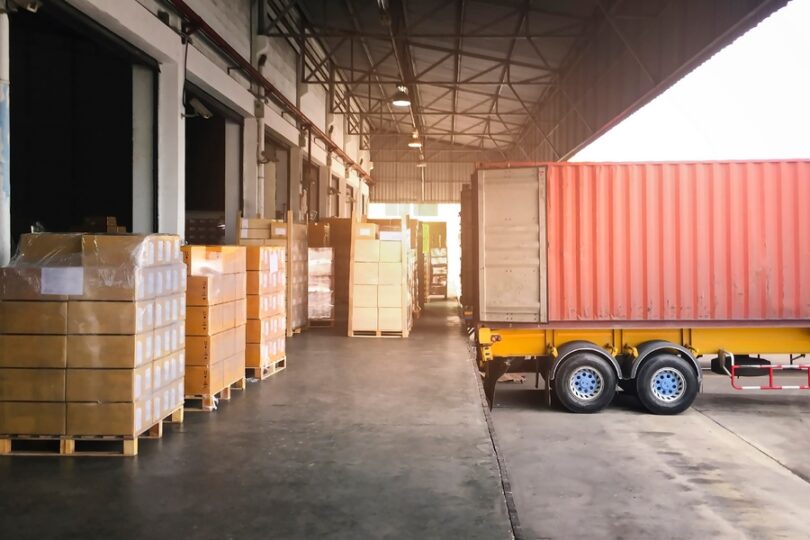

Most shoppers give little thought to how a bottle of shampoo, a gallon of paint, or a favorite packaged food reached the shelf because the finished product makes its journey largely invisible. Before taking that familiar form, however, its ingredients and packaging may have traveled through several facilities, sometimes covering long distances separately before coming together.
For people living in Southern California, the logistics behind products most people never think about can be easier to spot once everyday purchases relate to the freight activity surrounding the region. Looking beyond the store shelf reveals a side of consumer life that receives little attention, even though countless familiar products depend on it.
The Store Shelf Comes Near the End of the Journey
Although retail packaging naturally attracts attention because consumers actually handle it, the ingredients or raw materials inside have usually completed several stages of their journey before a manufacturer ever fills that package. What looks like one product at the store may represent several supply paths that converged during production, each with its own transportation needs and schedule.
Consider something as familiar as a bottle of lotion, whose ingredients may arrive from multiple suppliers while its bottle and other packaging components travel separately. After manufacturing brings those pieces together, the finished lotion enters another distribution network that carries it closer to the Los Angeles stores where shoppers finally encounter it. Similar patterns exist behind countless household products, making the retail shelf more like the final meeting point than the beginning of the journey.
Products Do Not Always Travel in Familiar Packaging
Seeing olive oil in a glass bottle or cleaning solution in a plastic jug can make it easy to picture the product traveling that way from the beginning, even though manufacturers working with large quantities have little reason to receive thousands of small packages before production or bottling begins.
During earlier stages of the supply chain, liquids may travel in quantities and containers that look nothing like their eventual retail packaging. Because the requirements for transporting liquid in bulk depend partly on the material and the conditions it will encounter, businesses have to consider how those contents will move before they reach a manufacturing or packaging facility.
Once production begins, a material that traveled a long distance in a large container may become a small portion of a beauty product, household cleaner, beverage, or packaged food. Consumers encounter only that final form, leaving the containers and transportation methods used throughout the earlier journey almost entirely out of sight.
A Single Journey Can Change Transportation Methods
Materials traveling long distances may rely on several forms of transportation before reaching a manufacturer. A shipment arriving in Southern California by cargo ship, for instance, still needs another way to reach its next destination, which could mean transferring to a truck or train for the inland portion of the journey.
Once manufacturers turn those materials into finished products, the transportation process changes again as goods move toward warehouses, distribution centers, and eventually local retailers. For shoppers, those separate stages are largely invisible, but together they explain how products and their ingredients can cover considerable distances without following one continuous route from beginning to end.
The Product Itself Shapes the Trip
Because materials respond differently to temperature, movement, contamination risks, and other conditions, logistics decisions depend on much more than finding the shortest route between two locations. The physical characteristics of a product can influence the container selected for transportation along with the way workers handle it during transfers.
Food ingredients may need controlled conditions during their journey, whereas certain liquids require containers compatible with their particular properties. Fragile goods introduce a different set of concerns, which means two neighboring products on a store shelf may have followed dramatically different transportation paths before reaching the same destination.
Long before packaging needs to attract a shopper’s attention, transportation equipment has the practical job of protecting its contents through loading and movement between facilities. Consumer packaging may be the version people remember, but it represents only the visible end of a much longer packaging story.
Timing Matters as Much as Distance
Even when materials travel without damage, arriving too late can create problems for every stage that depends on them. Manufacturers need incoming supplies when production requires them, while retailers rely on distribution networks to replenish merchandise as customers buy it. Coordinating those arrivals becomes especially important when a business depends on ingredients or components coming from several suppliers.
Because each stage connects to another, a disruption far from Los Angeles can eventually become visible on a local shelf without shoppers ever seeing what caused it. When all those movements stay coordinated, products simply appear where expected, while empty shelves or delayed orders reveal how much timing normally goes unnoticed. What looks like a local inventory problem may therefore have started hundreds or even thousands of miles away.
Some Transportation Equipment Makes a Return Trip
Although delivery completes one part of a shipment, it does not necessarily end the journey for the equipment that carried it. Pallets, reusable containers, and other transportation assets may continue through the supply chain when businesses can prepare them for another load.
Returning usable equipment for cleaning, inspection, or another shipment can reduce the need to treat every transportation container as disposable, adding another dimension to the environmental impact of logistics. Fuel consumption receives plenty of attention, but the resources devoted to packaging and repeated replacement can influence the footprint of transportation as well.
For consumers interested in sustainability, this hidden movement broadens the conversation beyond whatever happens to retail packaging after purchase. Long before a bottle reaches a recycling bin, businesses have already made decisions about the transportation resources required to move its ingredients and get the finished product where it needs to go.
Everyday Products Carry an Invisible Backstory
Living in Los Angeles means sharing the region with an enormous amount of freight movement, although there is little reason to connect that activity with a bottle in the bathroom or an item pulled from a grocery shelf. Tracing an everyday product backward reveals how the transportation infrastructure surrounding the region fits into a much more recognizable story.
Looking at the logistics behind products most people never think about reveals how much movement occurs before anything becomes a familiar consumer good. What appears to be a simple purchase at the end of the journey connects to a much larger network that has carried materials and finished goods through most of their story before shoppers ever enter the picture.