
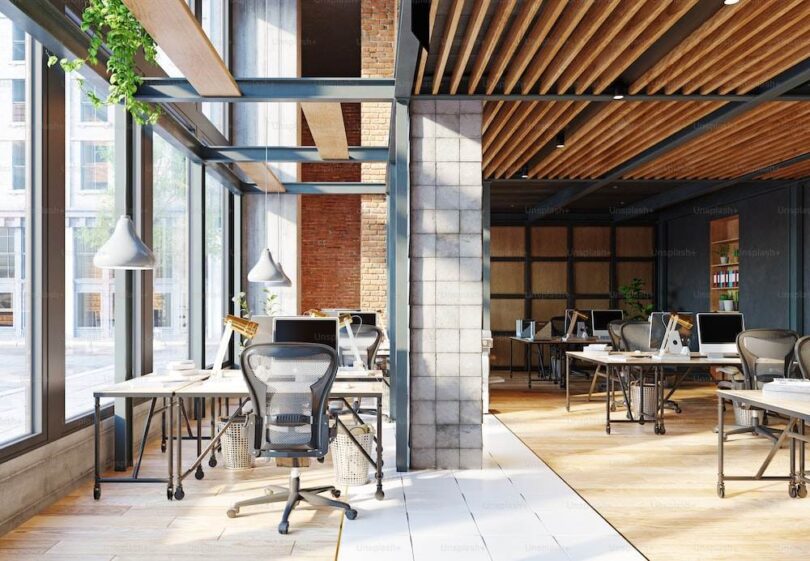

In the contemporary office environment, striking a balance between privacy and openness can be a significant challenge. Traditional walls and cubicles obstruct light, limit visibility, and create a sense of isolation. But an entirely open floor plan can also come with its own set of problems, like noise pollution and lack of personal space. The solution? Glass partition walls.
Privacy in the Open Office Era: Glass Partitions to the Rescue
The open office era, characterized by large, unobstructed workspaces, has been both praised for its collaborative potential and criticized for its disregard for personal privacy. However, glass partition walls have emerged as a practical and visually appealing solution that caters to both needs.
Glass partitions provide a sense of separation without creating a visually intrusive barrier. They allow for light to pass through, maintaining the spacious feel of the open office while offering workers the privacy they need to concentrate and perform at their best. In contrast to opaque walls that can make a space feel small and confined, glass partitions provide a seamless transition between areas in the office, enhancing the perception of space.
In addition to privacy, glass partition walls also offer an element of safety in the workplace. They create a physical barrier that can prevent the spread of germs, an especially important consideration in the post-COVID era. Glass is easy to clean and sanitize, making it a practical choice for maintaining a hygienic workspace.
The Psychological Impact: Striking the Right Balance with Glass Partitions
The psychological impact of our work environment should not be underestimated. Research has shown that workplace design can significantly affect employee productivity, satisfaction, and well-being. Glass partition walls can play an integral role in creating an environment that fosters both privacy and collaboration.
Glass partitions can help reduce stress by providing employees with a sense of control over their environment. They can personalize their space, control visibility, and manage interruptions more effectively. Employees who feel they have some degree of privacy are generally more satisfied and more productive.
At the same time, glass partitions allow for visibility, promoting a sense of openness and transparency. Employees can see their colleagues, facilitating communication and collaboration. A transparent environment can also foster a culture of accountability, as it discourages behaviors that individuals would not want to be seen doing.
Flexible Workspace Solutions: Adapting Glass Partitions for Privacy Needs
Workplaces need to be flexible to adapt to the changing needs of their employees and business operations. Glass partition walls offer a high degree of adaptability, making them an excellent solution for businesses that need to regularly reconfigure their spaces.
glass partition walls can be moved, resized, or rearranged as needed, allowing businesses to create different zones for different activities, such as quiet areas for focused work, collaborative areas for team meetings, and social areas for informal interactions.
Moreover, glass partition walls can be customized to meet specific privacy needs. For instance, frosted or tinted glass can be used to provide more privacy, while clear glass can be used where transparency is desired. In this way, glass partitions offer a flexible solution that can be tailored to the unique needs of each organization.
Navigating Noise: Soundproofing Strategies with Glass Partitions
One of the main criticisms of open office layouts is the noise pollution. Without physical barriers to block sound, noise can travel freely across the workspace, causing distractions and reducing productivity. However, with the right soundproofing strategies, glass partition walls can help mitigate this issue.
Glass partitions can be designed with soundproofing features to reduce noise transmission. For example, double-glazed glass partitions filled with a layer of air or gas can significantly reduce noise levels. Additionally, incorporating sound-absorbing materials like acoustic panels can further enhance the soundproofing performance of glass partitions.
By combining these strategies, businesses can create a workspace that is both open and quiet, allowing employees to focus on their work without being disturbed by noise.
Encouraging Collaboration: Using Glass Partitions to Foster Openness
While privacy is important, so is collaboration. A workspace should encourage employees to share ideas, work together, and build relationships. Glass partition walls, with their transparency and flexibility, can be instrumental in fostering a collaborative culture.
Glass partitions can create a visual connection between team members, making it easy to see when colleagues are available for a quick chat or brainstorming session. At the same time, they can be designed to include doors or openings that allow for easy movement between spaces, encouraging interaction and collaboration.
Moreover, the use of glass partitions can signal a company’s commitment to transparency and openness. By breaking down physical barriers, companies can create a more inclusive and egalitarian workspace where everyone feels seen and valued.
In conclusion, glass partition walls offer a solution that balances the need for privacy and openness in the workplace. They provide a flexible, adaptable, and visually appealing way to delineate spaces, control noise, and foster a collaborative culture. With careful planning and design, they can significantly enhance the functionality and aesthetics of any workspace.