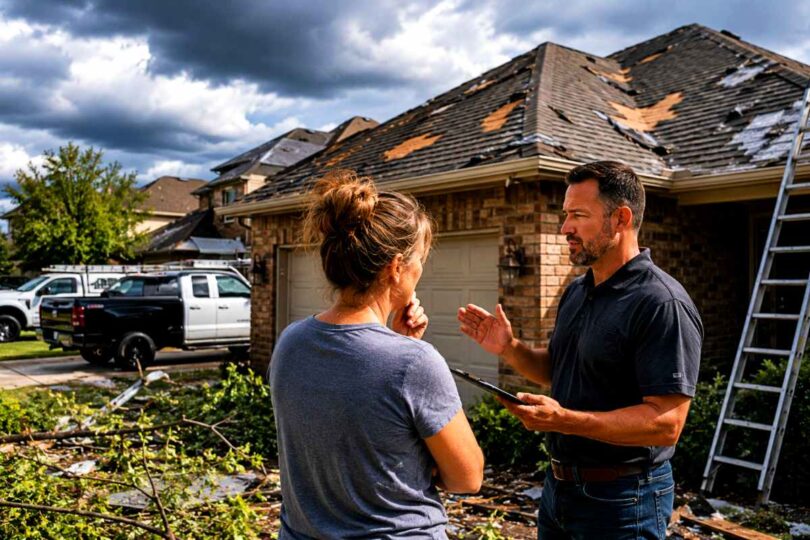

A North Dallas homeowner counted eleven trucks on her street the morning after a spring hailstorm. Half the crews had out-of-state plates and no company name on the door. She wanted to hire one of the reputable roofing companies in dallas tx before the next storm line, but every pitch sounded identical. Sort the storm chasers from the established local roofers and you sidestep the five mistakes that drain a deposit or void a warranty.
Chasing the Fastest Door Knocker Backfires
The crew that reaches your door first is rarely the one that does the best work. They blow in with the weather and, deposit in hand, blow out just as fast. The case we see most often is a homeowner who signs within an hour of the storm, then cannot reach a soul when a shingle lifts that winter. Established roofers stay busy after a hail too. A same-day yes can signal an empty schedule, not good service. Slow down.
Skipping License And Insurance Checks Costs More
Texas does not license roofing contractors the way it licenses electricians, so the burden of vetting falls squarely on you. Ask for a certificate of general liability insurance, proof of workers compensation, and a local address you can drive to. If a crew cannot produce insurance and a local address, walk away; if both check out and the references hold, you are very likely dealing with an established company. Uninsured crews look cheaper until someone gets hurt and the claim lands on your policy. An April 2026 Yahoo Finance analysis put the average Texas home insurance premium at $4,380 last year, up 14 percent, with Houston policies near $5,653 and Insurify projecting another 3 percent increase in 2026.
Taking the Lowest Bid at Face Value
The lowest number on paper usually hides the highest cost later. Roofing Contractor has tracked construction materials prices climbing 9.6 percent year over year, with nonresidential input prices up 9.7 percent. Someone absorbs that increase, and it is not the contractor. Every time.
Run the math before you sign. Say a 2,400 square foot North Dallas roof needs 24 squares of architectural shingles. At roughly $115 per square that is about $2,760 in materials, tear-off and disposal add maybe $1,200, and labor for a two-day crew runs another $3,600. That comes to roughly $7,560 before permits. A $4,500 bid is no bargain. It is a crew planning to skip the underlayment or vanish before inspection.
Ignoring the Warranty Fine Print
Two warranties matter here, and buyers confuse them constantly. The manufacturer warranty covers the shingles; the workmanship warranty covers the installation, and only a company still in business can honor it. A storm chaser offering a twenty-five year workmanship warranty is offering nothing if the crew is three states away by spring. Here is a tangent worth one sentence, because a roof affects more than leaks: peer-reviewed research in Renewable Energy and Environmental Sustainability found a green roof cut peak roof surface temperature by 5.04 degrees Celsius at midday against a bare roof. Different roof and climate, so pull it right back to the point that decides this: the warranty is only as good as the company behind it. Read who signs it.
Common Questions Before You Sign Anything
Most bad hires trace back to questions nobody asked. A few pointed ones separate a local roofer from a crew passing through. Ask them out loud, before money changes hands.
How Do I Check If a Roofer Is Actually Local?
Search the physical address, not the phone number, and confirm it is a real office, not a rented mailbox. A company serving Waco, Dallas, and Fort Worth for years leaves a trail of pulled permits and reviews tied to those cities. Storm chasers rarely carry that history, because last season they worked somewhere else.
What Should a Real Warranty Include?
It should name both the manufacturer coverage and a workmanship term, in writing, under the company’s legal name. A vague verbal promise of lifetime coverage is a warning sign, not a benefit. If the document cannot be produced on the spot, treat the warranty as though it does not exist.
Is the Highest Bid the Safest Choice?
No. Paying the most is its own quiet mistake. The goal is a fair bid backed by insurance, references, and a local track record, not simply the biggest number.
Choosing a Roofer Who Stays Local
The fifth mistake is the quietest one: picking whoever happens to be in your driveway instead of the company that will answer the phone in two years. A roof is a fifteen to thirty year decision, and the crew that installs it should still exist when it needs service. Among the established roofing companies in dallas tx, the ones worth hiring point to years of local work, real insurance, and warranties they have honored on record. Check the license, verify the insurance certificate, and call three references from your zip code before you sign. Do that much, and the storm chasers screen themselves out.