
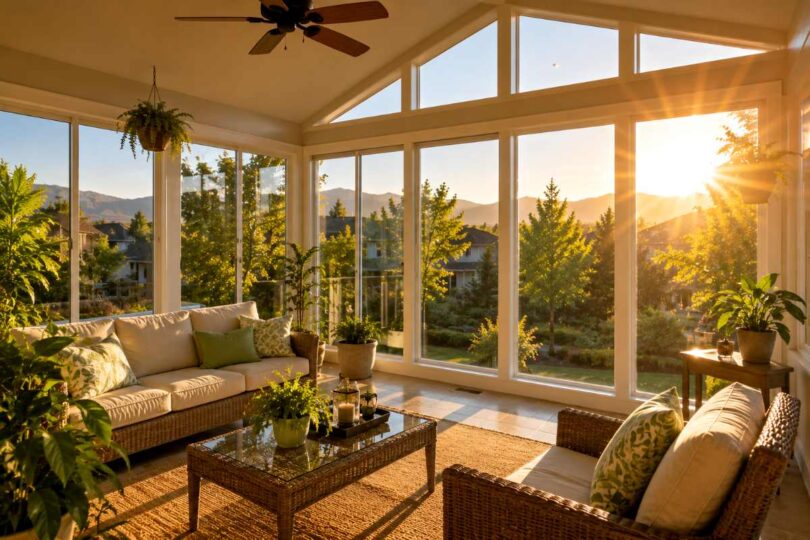

By three in the afternoon, the west-facing living room in that Draper house had turned into a greenhouse. The family had quietly stopped using it until sundown, which is exactly why they finally started pricing out window replacement draper ut crews actually stand behind. The blinds were down, the ceiling fan ran nonstop, and the thermostat still could not hold its number. Old single-pane glass lets solar heat and ultraviolet pour straight through, and no curtain truly fixes that. The real fix is not a thicker drape; it is glass engineered to stop the heat and the UV before either one reaches the room.
Afternoon Sun Turns West Rooms Into Ovens
West-facing rooms take the worst of it. In the afternoon the sun drops to a low angle and drives in almost sideways, straight through the vertical glass instead of over the roofline. The room we get called about most often is the one that faces the setting sun, because that low light keeps pouring in for hours right when the day has already peaked. A south-facing window catches a high midday sun that a normal eave or overhang can partly shade. A west window gets no such help from the architecture. By the time the thermostat is clearly losing, the hardwood, the drywall, and the furniture have all soaked up that energy. They keep radiating it back into the room long after the sun has moved on. You feel it as a wall of heat the second you walk in.
Blinds and Film Only Hide the Problem
Closing the blinds feels like a fix for about a week. Heavy drapes, cellular shades, and stick-on films all cut some glare, yet they treat the symptom and leave the cause sitting right there in the frame. Here is the part most people miss. Once sunlight has passed through the glass, its energy is already inside the room, so a blind hung behind the window simply absorbs that heat and radiates it back, which is why the slats themselves turn warm to the touch. Aftermarket film does a little more. Still, the budget products haze over or peel within a couple of Utah summers, and even the good ones cannot match a sealed insulated unit built for the job.
How Low-E Glazing Actually Blocks Heat
Modern replacement windows solve the problem at the glass, not the curtain rod. A low-emissivity coating, low-E for short, is a microscopically thin metallic layer bonded to the pane that reflects infrared heat and ultraviolet light while still letting visible daylight through. Think of it as sunscreen for the house. A good SPF lets you sit outside without burning because it blocks the UV and not the light. A low-E coating does the very same job for a living room, turning back the rays that carry heat and fading while the view stays clear. The federal ENERGY STAR program puts the payoff at up to 13 percent off a household’s annual energy bills when single-pane windows are swapped for certified units. Add a second pane and an argon gas fill between them, and the heat that used to bake the room mostly bounces back outside where it belongs.
Glare and Fading Furniture Tell the Story
Fading is the quieter damage, and on a west room it is relentless. Ultraviolet light breaks down the dyes and finishes in hardwood, area rugs, and upholstery. A floor that faced the setting sun for a couple of summers starts to look bleached in a pale stripe right where the light lands each day. Exactly how much of that fading comes from UV versus plain heat, I honestly cannot give you a clean split, and nobody is running lab tests on their own couch to settle it. What I can say is that quality low-E glass blocks the large majority of UV, which is why anyone weighing window replacement draper ut quotes should scrutinize the glass package well before the frame material.
The old glass was quietly working against them the whole time.
Cost matters more than usual right now, too. In May 2026, CNBC reported that home insurance premiums have surged across the country, with Utah posting the sharpest ZIP-code jumps in the nation at 59 percent. When the fixed cost of simply owning a home keeps climbing like that, an upgrade that pays part of itself back through lower cooling bills and protected furnishings becomes a much easier call to justify.
Questions Worth Asking Any Window Installer
Not every installer sells the same glass, and the spec sheet is where the real differences hide. Before you sign anything, get specific about the numbers that decide how a window handles a hard afternoon sun. A contractor worth hiring answers these plainly, and the answers arrive as figures rather than adjectives.
- What is the solar heat gain coefficient on this glass? For a west exposure a good answer usually lands between 0.20 and 0.30.
- How much ultraviolet light does the coating actually block? Look for a stated percentage up in the high 90s, not a vague promise.
- Is this low-E package matched to our climate zone? The installer should name the zone and explain why the glass fits it.
- What does the warranty cover on seal failure and gas loss? Ask for the term in years and exactly what voids it.
The Right Glass Ends the Daily Battle
The daily retreat from a sun-scorched room is not something anyone has to accept. The right replacement windows stop the heat and the UV at the glass, so the living room stays usable at four in the afternoon, the hardwood keeps its color, and the glare finally comes off the television screen. Broader reporting from CNBC found that 71 percent of homeowners say their insurance costs have risen and 42 percent call the increase steep, so every dollar a house earns back through lower bills genuinely counts. Put the budget into the glass package, ask the installer the hard questions, and let the coating do the work the blinds never could. The payoff is simple: a west-facing room you can use all day, sun and all.