
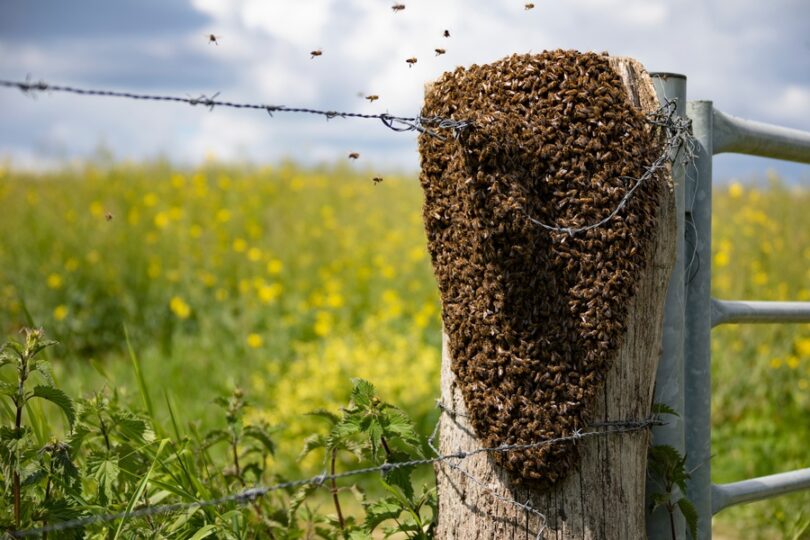

Ever watched a cloud of bees lift off from a hive or a tree and thought, “Okay, what’s happening right now?” Swarming looks wild, but there’s a clear plan behind it. Whether you keep a couple of backyard hives or just see bees around your neighborhood, understanding why bees swarm and what you can do to prevent it helps you stay calm, stay curious, and respond in a way that protects both you and the bees.
Why Do Bees Swarm?
Bees swarm when their current home stops meeting the colony’s needs. A hive that feels crowded, hot, or low on space for brood and honey pushes the bees to create a new queen and prepare to split. The old queen leaves with thousands of workers to start a fresh colony somewhere else, while younger bees and a new queen stay behind.
Swarming is a natural way for bees to reproduce at the colony level, spread their genetics, and find better real estate. It usually lines up with good nectar flows and warm weather, when the colony has plenty of resources and strong numbers.
Understanding bee behaviors like swarming helps beekeepers improve their hive management to prevent issues like overcrowding, queen loss, and sudden colony decline. For non-beekeepers, it’s just a helpful way to read what bees are doing when a buzzing cluster suddenly shows up on a fence, tree branch, or porch rail.
Why Is Swarming Bad?
For beekeepers, a swarm takes a big chunk of workers and honey-making power out of the original hive. That drop in population slows production, weakens the colony, and can hurt the season’s honey harvest. A poorly timed swarm also leaves the original hive trying to sort out a new queen, which can lead to queenless periods and unstable behavior.
For everyone else, a swarm hanging on a mailbox or playground tree creates worry. Even though swarming bees usually stay calm, the risk of stings and the stress of a buzzing cluster near homes or public spaces is a safety concern.
How To Prevent Problems and Stay Safe
Prevention looks a little different depending on whether you keep bees or just see them around your yard, but the goal stays the same: calm colonies and safe people.
For beekeepers:
- Regular hive inspections during swarm season catch crowded frames and queen cells before bees leave.
- Extra brood or honey boxes give bees more living space, so the colony feels less pressure to split.
- Requeening older or highly swarm-prone queens keeps colonies steadier and less likely to swarm.
For everyone else:
- A comfortable distance of several yards from a swarm lowers sting risk while bees cluster.
- Closed windows and doors keep stray bees out of homes and cars until the swarm moves on.
- Local beekeeping clubs or humane removal services can relocate swarms without harming the colony.
Feeling Better About Swarms
Swarming will always look dramatic, but you have more control over the situation than it seems. Knowing why bees swarm and how you can prevent it gives beekeepers practical ways to keep colonies strong, and it helps everyone else respond calmly when a swarm shows up nearby. When people recognize swarming as a natural behavior and handle it with simple, informed steps, bees stay safer, neighbors stay more relaxed, and the whole scene turns into a short story to share later instead of a full-blown emergency.