
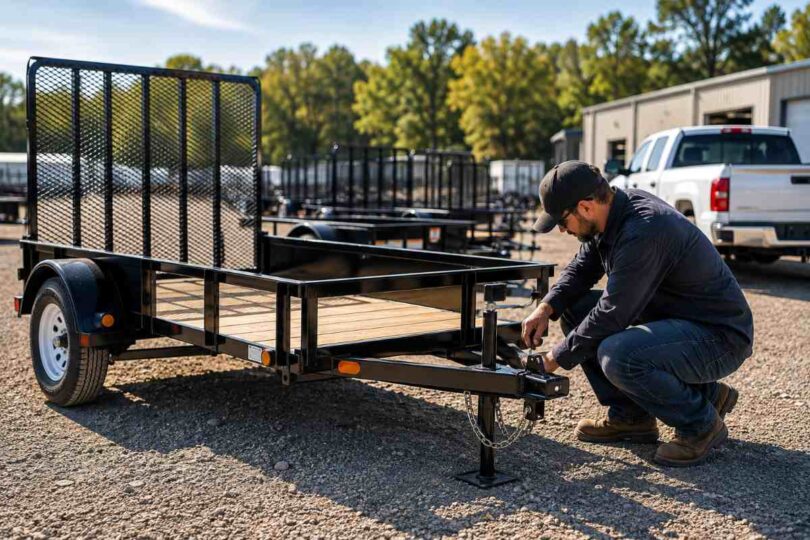

Maintenance on a fleet of utility trailers doesn’t become overdue all at once. It’s one overdue bearing, one overdue spring shackle, one corroded plug on the trailer nobody’s been paying close attention to because it’s “just a trailer.” Reorganize your maintenance program to view it as a documented system tied to duty cycle, compliance, and cost, not a once-a-year once-over, and overdue becomes a thing of the past.
Set intervals by duty cycle, not the calendar
A trailer that operates on sealed highways between depots will have different wear and tear compared to one that operates on unsealed roads, carries maximum load, and is parked near the coast. The salt air, dust, and corrugated tracks will roughly double the wear rate on bearings, brakes, and suspension components. If the coastal trailer is due for servicing at the same time as its highway-running stablemate, you have a problem.
The solution, in principle, is simple: group trailers by “duty profile” (coastal, unsealed, heavy-haul, light-duty highway), and schedule your bearing repacks, brake inspections, and suspension checks against that profile rather than a one-size-fits-all date. It requires some record-keeping up front. It pays for itself the first time it catches a hub running hot before it seizes on the highway.
The ten-minute walkaround that catches most problems
Most of the trailer failures that happen by the side of the road can be detected hours or even days in advance. A good, thorough walkaround before you hit the road is the way you catch those warnings. The problem is, different drivers have different standards. Make it short and universal or it doesn’t happen. This is a pretty good checklist, whether you’re in a truck cab every day or you only tow a box trailer twice a year:
Tire pressure and tread. Make sure the tires are cold – checked before you drive – and check against your trailer’s load plate to make sure it’s carrying the weight it should be.
Wheel-end temperature. At a rest stop, place a hand on the hub of each wheel and see if there’s one that’s a lot hotter than its opposite number. That’s an advance bearing warning and it’s saved a fortune in ruined stub axles.
Coupling and ball fit. Try to wriggle it: confirm correct diameter and secure latch.
Safety chains. They’re crossed, rated for the weight of the load, not just looped over the ball.
Breakaway cable and battery. It’s physically connected and the battery is holding charge.
All lights and indicators. Climb under and give them a proper check.
Wheel bearings and brakes: schedule them like a service, not a symptom
The most common cause of a trailer pull-over is wheel bearing failure that leaves you parked by the smell of a hot hub. Greased wrong, got wet, or just overdue to be replaced, a failed bearing overheats, grinds, and sometimes warns you by trying to take the whole hub and spindle with it. Repack and adjust bearings at fixed intervals (such as 12 months or 20,000 kilometers, rather than “when you hear a noise”) – it’s a much cheaper job on a bench than in a ditch.
Separate still from general servicing is trailers’ brake work because, whether it’s electric or hydraulic, braking defects dominate the defect list among trailers pulled over in roadside checks. Electric systems use magnets actuating on a drum and they must be checked annually for lining wear and magnet integrity. It’s lining wear that’s the main concern, since the magnet physically grinds against the drum every time you apply the brakes. Hydraulic surge units need fluid flushed and lines bled every year or two to stop moisture and corrosion degrading braking force at the exact moment you need it. Either way, test the breakaway battery monthly – it’s the one component whose entire job is to work correctly on the one day everything else has already gone wrong.
Tires: manage by age and load, not just tread
Tire tread depth is important, but it doesn’t reveal the whole story. For instance, it won’t tell you that the tire’s rubber compound has been aging for five years, exposed to UV and ozone, becoming brittle regardless of how much tread is left. Establish a precise replacement deadline, like five to six years from the manufacture date (the code that’s molded into the sidewall of every tire), and don’t sidetrack yourself over a good-looking tread.
Tire pressure is even more important regarding costs than most managers think. The U.S. Department of Energy estimates that maintaining the correct tire pressure adds 0.6% to average fuel economy. On top of that, each psi of consistently low tire pressure on a set of tires could decrease fuel economy by around 0.2%. For a fleet that logs thousands of kilometers a month, the numbers can definitely add up. And that’s on top of the wear and tear and risk of your next blow-out. Put air to the load plate spec of the actual weight on the trailer that day. Don’t trust an “all-purpose” figure somebody wrote on a whiteboard three years ago.
Frame, suspension, and the corrosion nobody notices until it’s structural
Leaf springs, shackles, and suspension bushes are constantly receiving the full weight of every load, every pothole, every corrugation. They sag, crack, and seize over time. When they do, ride height changes and tire contact patches shift – accelerating tire wear and throwing load distribution off in ways that compound each other.
Corrosion is the bigger threat in the background. Spring eye mounts, axle-to-spring pads, and drawbar-to-tongue welds are the stress points cracks start at, and they’re also the places rust loves to hide under a layer of surface scale. Knock that scale off with a wire brush during inspection, check the weld underneath for hairline cracks, and touch up bare steel with rust paint before it gets a foothold again. Fleets running near the coast or on gritty unsealed roads get real mileage out of hot-dip galvanized undercarriages compared to painted-only steel – the upfront cost is higher, but the frame simply lasts longer against salt and stone chips.
Electrical faults and the paper trail that protects you
The 7-pin connector is a small, inexpensive part that is often the root cause of far too many roadside lighting defects. But for a few bent pins, a bit of green corrosion on the contacts, or a split in sheathing letting moisture wick up the cable, many of these problems can be found and rectified before they cause a light to fail – and well before the driver reports it. If the trailer lights function correctly when dry, and not so well when wet, then that’s a fair indicator you have moisture getting in where it shouldn’t.
It’s ten times worse with a light that only works intermittently in the dark, and puts a whole lot of pressure on you to make sure every one of them is working every time your trailer goes out. A quick pull on each cable and a wipe with a rag is a good place to start; putting a little dielectric grease on the connectors is cheap insurance.
None of this matters if you can’t prove it happened. A dedicated maintenance log per trailer – dates, odometer or hubometer readings, parts fitted, photos of the work – is what turns “we service our trailers regularly” into evidence. If a defect ever becomes a legal question, that log is the difference between a documented maintenance program and a shrug.
Repair or replace: making the call without guessing
Every fleet manager eventually stands in front of a trailer trying to decide whether it’s worth fixing. The honest answer depends on what’s actually broken. A frame that’s rusted through at a stress point, sagging out of shape, or cracked at a structural weld is generally a write-off. Worn brakes, tired suspension bushes, or a failed bearing kit on an otherwise sound trailer is a different story entirely. That’s a repair, and a straightforward one, provided you can get the right parts fast.
This is where sourcing becomes part of your maintenance strategy rather than an afterthought. A trailer sitting idle for two weeks waiting on a hub kit is costing you money whether it’s broken or not – it’s not earning, and someone else on the fleet is probably absorbing its workload. Lining up a reliable supplier for trailer repairs and parts before you need one, rather than scrambling when a bearing fails on a Friday, is what keeps a viable trailer back on the road in days instead of weeks. Whether you run OEM parts for warranty reasons or a mixed fleet where aftermarket fitment is easier to manage across brands, the deciding factor is usually lead time as much as price.
Load distribution and the legal weight of getting it wrong
Each trailer has an Aggregate Trailer Mass and Gross Trailer Mass rating which decides axle capacity, tire load rating, and pretty much everything else concerning how much load that trailer can handle. Exceeding those numbers doesn’t simply accelerate wear – it concentrates pressure unevenly if the actual load isn’t properly spread, putting excessive strain on a set of tires, a frame side, or a coupling point.
Under Chain of Responsibility obligations, that’s not only a mechanical problem. The operator who directs an overloaded or poorly distributed load can be held legally responsible for the resulting defect, even where maintenance itself is outsourced to a third party. Coupling mismatch piles up even more risk – an inappropriate ball diameter or badly designed drawbar induces trailer sway and exposes a hitch assembly that was never designed to absorb such pressure.
Ensuring proper load distribution and coupling match isn’t optional. It’s part of the same compliance picture as your bearing schedule and your brake log. A fleet of trailers running well isn’t luck. It’s duty-cycle-based intervals, a walkaround that actually gets done, brakes and bearings on their own clock, tires managed by age as much as tread, and a parts supply chain that gets a fixable trailer back to work fast. Get that system running and the trailers stop being the thing you worry about at 6am.