

Are you struggling with a persistent fungal infection? You’re not alone. Choosing the right fungus eliminator is crucial for effective treatment and restoring your health. This blog will walk you through everything you need to know to make an informed decision.
Understanding Different Types of Fungal Infections
Understanding different types of fungal infections is crucial for effective treatment. Fungal infections vary widely in their presentation and severity, affecting different parts of the body including the skin, nails, and mucous membranes. Common types include dermatophyte infections like athlete’s foot and nail fungus (onychomycosis), yeast infections such as candidiasis, and fungal infections of the scalp (tinea capitis) or groin (tinea cruris).
Symptoms often include itching, redness, scaling, and discomfort, which can differ depending on the affected area. Recognizing these distinctions helps select appropriate treatment strategies and ensure timely resolution of fungal infections.
Types of Fungi and Common Infections
Fungi are diverse organisms that can cause various infections in humans. Some common types include:
- Dermatophytes: Responsible for athlete’s foot, ringworm, and nail fungus
- Candida: Causes yeast infections and thrush
- Aspergillus: Can lead to respiratory infections
Impact on Health and Symptoms
Fungal infections can significantly impact your quality of life. Symptoms often include:
- Itching and burning sensations
- Redness and inflammation
- Scaling or flaking skin
- Discoloration of nails
- Unpleasant odor
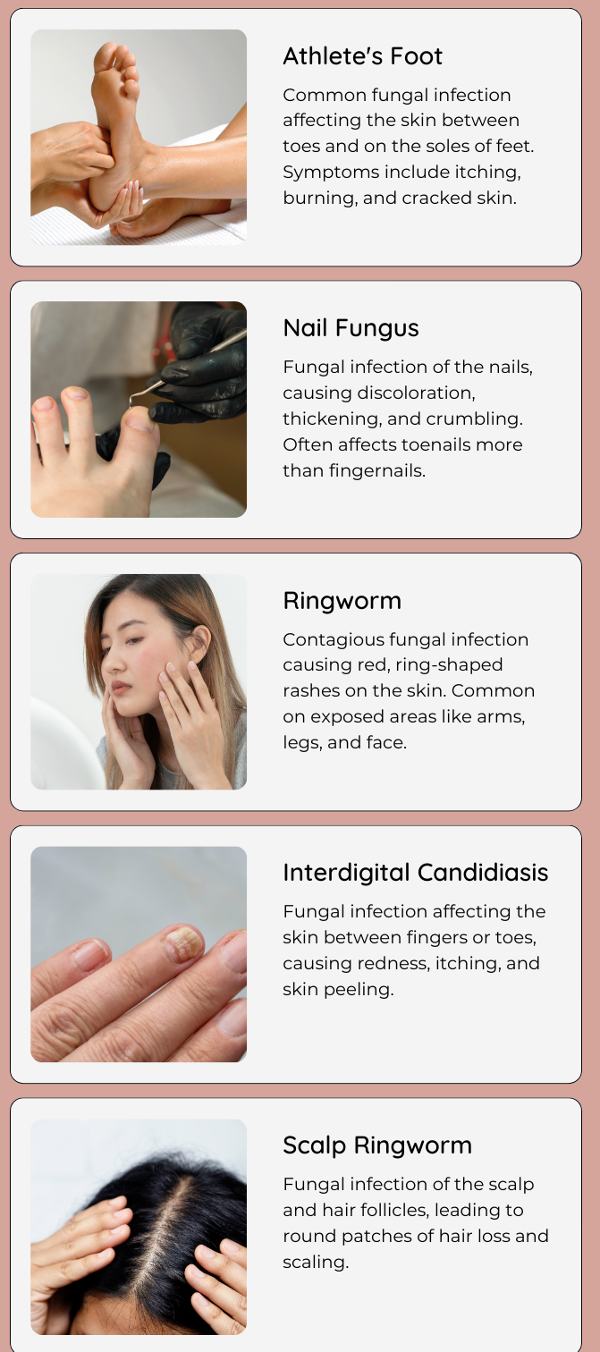
Types of fungal infection Source: Canva
Key Considerations When Choosing a Fungus Eliminator
Choosing the best fungus eliminator hinges significantly on the efficacy of its active ingredients. Key components like Terbinafine (effective against dermatophytes), Ciclopirox (broad-spectrum antifungal properties), Ketoconazole (effective against various fungi), and Clotrimazole (found in over-the-counter treatments) play pivotal roles.
Giving safety priority is equally crucial. To be sure a product is suitable for your skin type, always read the labels carefully for any potential reactions or sensitivities. Additionally, to see whether the eliminator and any other medications you may be taking interact, speak with medical authorities.
Key markers of product effectiveness and reliability are also user feedback and brand reputation. Look for reviews from validated customers on reliable websites and find out how long the producer has been producing antifungal products that work for fungal infections.
Practical Tips for Selecting the Right Product
You can make choices on the best fungus eliminator faster by following these useful tips. Start by speaking with medical professionals who can offer tailored advice based on your unique needs and medical history. It’s important to read product labels and claims carefully; and search for details on active components, usage guidelines, and potential adverse effects.
Take price into consideration when evaluating efficacy because some treatments might need to be continued for the best results. By using these recommendations, you may choose a fungus eliminator with confidence that will support your health objectives and guarantee that fungal infections are properly treated.
Practical Tips for Managing and Treating Fungal Infections
Keep affected areas clean and dry: Fungi thrive in warm, moist environments. Regularly wash and thoroughly dry the affected skin or nails, especially after bathing or sweating.
Use antifungal treatments: Apply over-the-counter antifungal creams, lotions, or powders directly to affected areas as directed. Ensure to cover the entire affected area and continue treatment for the recommended duration, even after symptoms disappear.
Choose appropriate clothing: Wear loose-fitting, breathable clothing made from natural fibers such as cotton. Avoid tight-fitting shoes and opt for moisture-wicking socks to keep feet dry.
Practice good hygiene: Wash hands frequently, especially after touching or treating infected areas. Avoid sharing personal items like towels, socks, shoes, or nail clippers to prevent spreading the infection.
Trim and care for nails: Keep toenails and fingernails trimmed short and straight across. Avoid picking at nails or biting nails as this can worsen nail fungus and spread it to other nails.
Consultation with Healthcare Providers
Speak with healthcare providers before choosing the best fungus eliminator for your requirements. Medical specialists can provide customized guidance based on your past medical history, current ailments, and prescription medications. They can assist in determining the extent of your fungal infection and suggest appropriate steps of action, which may include prescription-strength drugs if needed.
Their expertise ensures the selected eliminator minimizes potential hazards or side effects and aligns with your overall health goals. You can make well-informed decisions that maximize treatment outcomes and advance long-term health by working with a healthcare provider.
Understanding Product Labels and Claims
- Look for FDA-approved products
- Be wary of exaggerated claims or “miracle cures”
- Check for clear ingredient lists and usage instructions
Comparison of Popular Fungus Eliminators
To help you make an informed decision, here’s a comparison of some popular fungus eliminators:
| Product Name | Active Ingredient | Form | Treatment Duration | Pros | Cons |
| FungiCure | Undecylenic Acid | Liquid | 4-8 weeks | Fast-acting, easy application | May cause skin irritation |
| Lamisil | Terbinafine | Cream | 1-2 weeks | Clinically proven, short treatment time | More expensive |
| Fungi-Nail | Tolnaftate | Pen applicator | 4 weeks | Convenient application, affordable | May not be effective for all types of fungi |
| Kerasal | Urea, Lactic Acid | Gel | 8 weeks | Improves nail appearance quickly | Not a true antifungal |
| Zane Hellas | Natural oils | Oil | 4-5 months | All-natural ingredients | Long treatment time, strong odor |
Remember, what works best can vary from person to person. Always consult with a healthcare professional for personalized advice.
FAQS
What kills all fungus in the body?
No single treatment can eradicate every type of fungus present in the body. Various tactics are needed for different fungi. Many interior fungal infections can be treated with systemic antifungal drugs like itraconazole or fluconazole. But, under medical supervision, the course of treatment should always be customized to the particular type of fungus and the site of infection.
What is the number one cure for toenail fungus?
For the treatment of toenail fungus, oral terbinafine is often considered as the best option. But it comes with a prescription and might not be without adverse effects. In certain situations, The intensity of the infection and personal medical needs decide the “best” course of action.
What kills toenail fungus permanently?
Since recurrence is prevalent, no treatment can ensure that toenail fungus will be eliminated. However, the current infection can be effectively eradicated and recurrence can be avoided with a combination of topical therapies, oral antifungal medicine (such as terbinafine), and good foot hygiene. Additionally, laser treatments seem effective. The secret to long-term success in treatment and preventive measures is consistency.
In conclusion, selecting the ideal fungus remover for your needs doesn’t have to be difficult. You may make an informed choice by being aware of the various kinds of fungal infections, taking significant factors like safety and active ingredients into account, and adhering to helpful advice. Remember that variations among people may exist in what works best, and that persistence can be essential for managing fungal infections.
Feature photo by Karolina Kaboompics.