
For decades, Burke Williams Day Spa has been woven into Southern California’s wellness culture. Founded in 1984, the company helped define what the modern day spa experience would look like in the region. Long before self-care became a marketing hook, the brand built its reputation on disciplined training, consistent service, and therapists who treated their work as a craft rather than a side hustle.
Now, more than forty years later, that focus on craft is showing up in a different way.
Rather than expanding locations or chasing trends, the company has turned inward, investing in the people who deliver the work. On February 10, the newly launched Burke Williams Academy graduated its first class of nationally certified continuing education students. Sixteen massage therapists completed advanced training in Manual Lymphatic Drainage, a technique that demands anatomical precision and restraint. The training was offered free of charge, allowing therapists to continue working while completing the program.
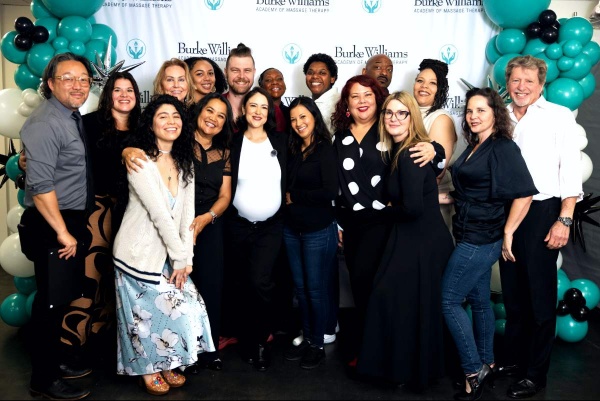
Burke Williams co-founder Bill Armour with the latest graduates of the new Burke Williams Academy
In an industry where post-graduate education can be expensive, hard to schedule, and inconsistent in quality, the move feels practical and strategic. To understand why the Academy launched now and where it is headed, Director of Massage Cruz Kim and Chief of Treatments Diane Hibbard shared their perspective.
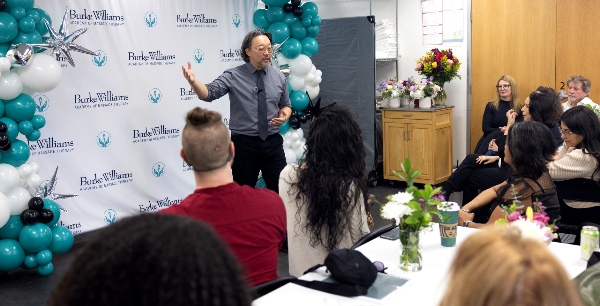
Burke Williams Director of Massage Cruz Kim
LA’s The Place: What gaps in traditional massage therapy training led to creating an in-house education program?
Burke Williams: Massage therapy certification programs in California are strong, Kim says. There are accredited schools that provide solid foundational education for those entering the profession.
The issue begins after graduation. Graduate-level CEU courses can be costly, time-consuming, and sometimes poorly taught. Many workshops require therapists to take four or five consecutive days off, often on weekends when they are busiest. For working professionals, that lost income is a real barrier.
The Academy was built around those realities. Flexible scheduling allows therapists to keep their shifts while expanding their skills. By removing tuition costs, Burke Williams eliminates a financial obstacle that prevents many from advancing. The company also conducted focus groups and researched consumer demand to ensure the courses offered would be immediately relevant in treatment rooms.
LA’s The Place: The Academy’s first graduating class trained in Manual Lymphatic Drainage. Why start there?
BW: Manual Lymphatic Drainage has seen a surge in demand. Social media has increased awareness of its benefits, but the technique itself requires deep anatomical knowledge and control.
Hibbard explains that MLD is a light, precise therapy that encourages the body’s natural detox process, decreases puffiness, speeds healing, and calms the nervous system. Because it uses feather-soft pressure, it is suitable for nearly all clients and can be deeply relaxing. Starting with MLD set a standard. The Academy would focus on advanced modalities that require skill and discipline.
LA’s The Place: Why was it important to offer this advanced training free of charge while therapists continue working?
BW: Time and cost were the two most common obstacles therapists identified when it came to growth. Many cannot afford to take several consecutive days off. They also cannot afford to sacrifice weekends, which are often their highest-earning days.
Offering the training at no cost while maintaining flexible schedules communicates something larger. It signals that the company values its therapists and is willing to invest in their development without asking them to absorb the burden.
LA’s The Place: How does investing in education and mentorship strengthen the local wellness workforce?
BW: Burke Williams has long advocated for raising standards in the massage industry. As a company built on structured training, it sees education as a responsibility as much as a benefit.
Because the Academy courses are CEU certified, the training is transferable beyond the company. Therapists can apply their credentials anywhere they work. That portability strengthens not just Burke Williams, but the broader Southern California wellness community.
LA’s The Place: With more than 700 Burke Williams massage therapists nationwide, how does the Academy support long-term career sustainability?
BW: Massage therapy can be physically demanding if performed incorrectly. The Academy emphasizes safe, ergonomic techniques for both therapist and guest. Proper body mechanics are integrated into every course. The goal is not just better treatments, but longer careers.
LA’s The Place: The Academy also offers training in Prenatal Massage and Shiatsu. How do you decide which modalities to prioritize?
BW: The selection process is straightforward. The company listens to its therapists and studies consumer demand. By combining practitioner interest with market trends, the Academy ensures its courses are relevant and practical. The result is training that therapists can use immediately in response to guest requests.
LA’s The Place: What has surprised you most since launching the Academy?
BW: Kim says the enthusiasm has been striking. Therapists are dedicating their time to learning while balancing work schedules and personal responsibilities. Feedback from the first graduating class has encouraged others to pursue additional training. There is a clear appetite for growth within the team.
LA’s The Place: How do you see professional development in the wellness industry evolving over the next few years?
BW: Kim expects standards to rise. As massage therapists gain broader recognition as healthcare providers, there will be greater demand for scientific knowledge and anatomical fluency. Communication skills and self-awareness will become increasingly important. She also anticipates deeper collaboration between massage therapists and the larger health industry, along with more acceptance of modalities such as Lymphatic Drainage, Craniosacral Therapy, Somatic Emotional Release Therapy, and Shiatsu.
LA’s The Place: What do you hope this program signals to the next generation of wellness professionals?
BW: The message is direct. Invest in yourself. Continue to grow. Never stop learning. Be willing to receive feedback and allow others to observe your work. Advancement in this field requires humility as much as talent.
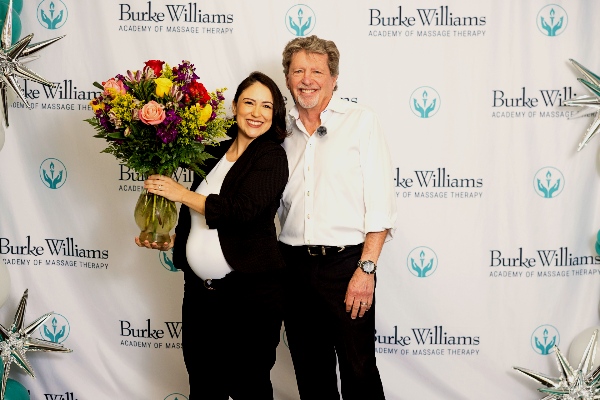
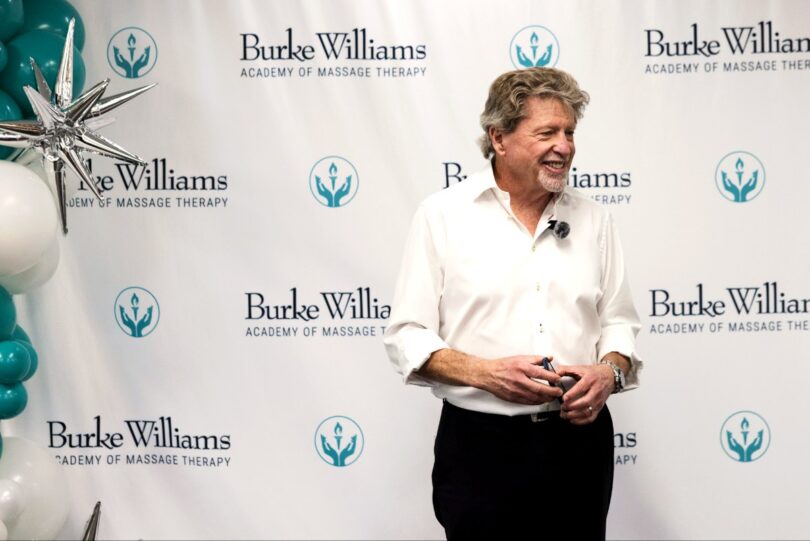
Katie Mishima, Lead Instructor for Lymphatic Drainage, with co-founder Bill Armour
For a company that helped define the Southern California spa experience, the Academy represents a structural shift. It is less about adding new treatments to a menu and more about strengthening the hands behind them. In a wellness landscape crowded with trends, that kind of long-term investment may prove to be the most durable innovation of all.
Go to their website to find out more on how to: Advance Your Career with Free Master’s-Level Education