


Recent headlines questioning the effectiveness of greens powders have many consumers wondering whether these popular supplements deserve a place in their daily routine. Some products have come under fire for relying on proprietary blends, lengthy ingredient lists with only trace amounts of each ingredient, and health claims that may promise more than they deliver.
According to Dr. David Brady, Chief Medical Officer for Designs for Health, that criticism shouldn’t be applied across the board. With more than 30 years as an integrative practitioner and decades of experience in nutrition, functional medicine, and product formulation, he says the real question isn’t whether someone should use a greens powder, it’s whether they’re choosing one that’s thoughtfully formulated and backed by quality ingredients.
Research continues to show that most Americans don’t consume enough fruits and vegetables. That’s one reason greens powders have become increasingly popular, but Dr. Brady says consumers should look beyond flashy labels and long ingredient lists. Instead, he recommends looking for transparent labeling, meaningful ingredient amounts, quality sourcing, and third-party testing, particularly since concentrated plant powders can also concentrate heavy metals, pesticides, and other contaminants.
He also points to the growing body of research surrounding phytochemicals, the naturally occurring compounds found in colorful fruits and vegetables. These compounds, along with digestive enzymes and prebiotic fibers, are becoming increasingly important as researchers continue learning more about antioxidant activity, inflammation, nutrient absorption, cellular signaling, and the gut microbiome.
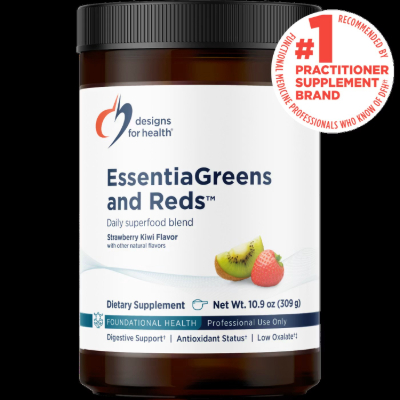
One product designed around those principles is Designs for Health EssentiaGreens and Reds™, which combines organic greens, vegetables, fruits, antioxidant-rich ingredients, prebiotic fiber, and digestive enzymes without added sugar or artificial sweeteners. Rather than replacing fruits and vegetables, the formula is intended to complement a healthy diet by helping fill nutritional gaps.
As research continues to evolve, Dr. Brady believes the future of greens powders will focus less on adding trendy ingredients and more on smarter formulations that emphasize bioavailability, microbiome support, targeted phytonutrients, and personalized nutrition.
LA’s the Place recently spoke with Dr. Brady about the growing debate surrounding greens powders, how consumers can separate meaningful nutrition from marketing, and what to look for before purchasing one.
Expert Q&A: Dr. David Brady on Greens Powders
LA’s the Place: Greens powders have come under increased scrutiny recently. Which criticisms do you think consumers should take seriously, and which ones miss the bigger picture?
Dr. David Brady: One of the biggest concerns is that many greens powders don’t disclose meaningful ingredient amounts, making it difficult to know whether you’re getting clinically relevant levels. Consumers should also be cautious of products that make unrealistic claims, such as replacing fruits and vegetables or detoxifying the body.
At the same time, it’s important not to dismiss greens powders altogether. Research consistently shows that most adults don’t eat enough fruits and vegetables, and diets rich in plant foods are associated with better metabolic, cardiovascular, and overall health. A well-formulated greens powder can help fill nutritional gaps, but it should complement—not replace—a healthy diet.
LATP: You’ve formulated nutritional products for decades. What are the biggest mistakes you see companies making when they create greens powders today?
Dr. David Brady: The biggest mistake is focusing on the wrong aspects of formulation. Long ingredient lists may look impressive, but if each ingredient is included in only tiny, non-functional amounts, the product is unlikely to provide meaningful nutritional value.
It is also vital to take seriously concerns about testing since concentrated plant powders can accumulate heavy metals, pesticides, and other environmental toxins.
Another common mistake is overlooking how plant compounds work together. Research suggests that phytochemicals often have synergistic effects, meaning combinations of ingredients may provide greater benefits than isolated compounds. Choosing high-quality ingredients and using meaningful amounts matters much more than simply increasing the number of ingredients. Dietary phytochemicals—including polyphenols, carotenoids, and flavonoids—have a real biological effect on oxidative stress, making proper sourcing and formulation especially important.
LATP: EssentiaGreens and Reds™ emphasizes organic ingredients. From a formulator’s perspective, why does organic sourcing matter, and are there situations where it makes a measurable difference?
Dr. David Brady: Organic sourcing can matter because it helps reduce exposure to certain chemicals and reflects a commitment to ingredient quality. While the nutritional differences between organic and conventional produce can be slight, using organic ingredients may be particularly beneficial for products that are consumed daily and contain concentrated plant materials. If ingredients are concentrated, so will be the environmental toxins in non-organic formulations. Organically grown plants may yield higher concentrations of bioactive compounds.
Ultimately, the quality of the raw ingredients, processing methods, and formulation are just as important as whether an ingredient is organic.
LATP: Many greens powders contain impressive-looking ingredient lists but very small amounts of each ingredient. How can consumers tell whether a formula is designed for marketing or meaningful nutrition?
Dr. David Brady: Transparency is one of the best indicators. Consumers should look for products that disclose ingredient amounts rather than hiding everything inside proprietary blends.
It’s also helpful to look at the formula as a whole. Does it contain meaningful servings of vegetables, berries, algae, grasses, and other nutrient-rich ingredients, or is it relying on dozens of ingredients sprinkled in at very low levels? A shorter, well-dosed formula is often more meaningful than a long ingredient list. One can do basic math: if a single serving contains 30–40 ingredients, most of those ingredients are present in amounts far below what any research has used. If a formula has all those ingredients and many more yet weighs only 6–8 grams per serving, the amounts of active compounds will not be meaningful. One would have to consume several servings per day to achieve the desired effect.
LATP: Is there one ingredient or category of ingredients in EssentiaGreens and Reds™ that you feel is consistently overlooked by consumers, even though it plays an important role in the formula?
Dr. David Brady: The colorful plant compounds—often called phytochemicals or polyphenols—are probably the most overlooked. People tend to focus on vitamins and minerals, but many of the health benefits associated with fruits and vegetables come from these naturally occurring compounds.
Polyphenols, carotenoids, anthocyanins, and other plant bioactive ingredients help support antioxidant defenses, healthy inflammatory responses, and cellular signaling. These compounds are one of the major reasons eating a wide variety of colorful plant foods is consistently linked with better long-term health. Additionally, polyphenols also feed some of the most important commensal bacteria in our gut.
Without adequate enzymatic support, a significant portion of the bioactive compounds in any greens powder may pass through the digestive tract without being absorbed. The enzyme blend maximizes the breakdown of bioactive compounds to help ensure they are bioavailable and ready to be absorbed.
LATP: Some people expect a greens powder to replace eating fruits and vegetables, while others dismiss them entirely. Where do you think the truth lies?
Dr. David Brady: The truth is somewhere in the middle.
A greens powder should never be viewed as a substitute for eating whole fruits and vegetables. Whole foods provide fiber, water, texture, and a complex mixture of nutrients that affect satiety, gut motility, and the rate of nutrient absorption. No powder can fully replicate that.
However, greens powders can be a practical way to increase intake of beneficial plant compounds, especially for people who struggle to consistently meet fruit and vegetable recommendations. They’re best viewed as a supplement to a healthy diet on days when dietary intake falls short—not as a replacement for it. Think of it as nutritional insurance, not a nutritional replacement.
LATP: If someone handed you a random greens powder off a store shelf, what would be the first three things you would examine before deciding whether you would personally recommend it?
Dr. David Brady: First, I’d look at the ingredient list and whether the company discloses meaningful ingredient amounts instead of relying on proprietary blends.
Second, I’d evaluate the quality and diversity of the ingredients. I want to see a variety of vegetables, berries, algae, and other plant foods that contribute a broad range of phytonutrients. Is it organic? Is it third-party tested for heavy metals, pesticides, and microbial contaminants? Concentrated plant powders are inherently at risk for contaminant accumulation, and without rigorous testing, a product marketed as healthy could introduce harmful substances.
Third, I’d look for evidence that the formula is designed with nutrition in mind rather than marketing. A scientifically designed formula focuses on a set of ingredients at meaningful doses, includes components that enhance bioavailability such as digestive enzymes, and balances different ingredients for synergistic effect. A less meaningful formula will have a list of 30 to 40 ingredients with numerous trendy superfoods present only in negligible doses.
LATP: Looking ahead, where do you see the science of greens powders evolving over the next five to ten years, and what innovations do you think consumers should expect?
Dr. David Brady: I think we’ll move away from simply adding more ingredients and toward creating smarter formulations.
Future products will likely place greater emphasis on specific phytonutrient profiles, bioavailability, and ingredients that support the gut microbiome. We’ll also see more research focused on how combinations of plant compounds work together rather than studying individual nutrients in isolation.
Another area I expect to grow significantly is the integration of microbiome science. We’re learning that it’s not just the nutrients or plant compounds themselves that matter—it’s also how our gut bacteria process them. A person’s microbiome can influence how effectively they absorb and benefit from many of the beneficial compounds found in fruits and vegetables. Future greens powders will likely include targeted prebiotic fibers, such as inulin from ingredients like burdock root, to help nourish the beneficial bacteria that metabolize these plant compounds. Instead of simply delivering nutrients, the next generation of greens powders will be designed to support both the individual and their gut microbiome at the same time.
Personalized nutrition is another area with tremendous potential as nutrigenomics becomes increasingly integrated into healthcare. As researchers learn more about individual differences in metabolism and the gut microbiome, greens powders may eventually become more tailored to a person’s specific health needs rather than relying on a one-size-fits-all approach. Future formulations may target cardiovascular health, metabolic support, cognitive function, or healthy aging by emphasizing specific plant compounds supported by emerging research.
Be an Informed Consumer
As interest in greens powders continues to grow, consumers are also becoming more informed, and more skeptical. Dr. Brady believes that’s ultimately a positive development. Rather than being swayed by impressive ingredient lists or bold marketing claims, shoppers should focus on transparency, ingredient quality, meaningful serving sizes, and scientific support. While no supplement can replace a balanced diet rich in whole fruits and vegetables, a thoughtfully formulated greens powder may help bridge nutritional gaps for people looking to support their overall wellness. As research into phytochemicals, the gut microbiome, and personalized nutrition continues to evolve, the next generation of greens powders may become even more targeted and evidence-based than the products available today.
Sources
- Interview with Dr. David Brady, ND, DACBN, FMCP-M, FACN, Chief Medical Officer, Designs for Health.
- Background information and product details provided by Designs for Health.
Scientific References
- Guan R, Van Le Q, Yang H, et al. A review of dietary phytochemicals and their relation to oxidative stress and human diseases. Chemosphere. 2021.
- Phan MAT, Paterson J, Bucknall M, Arcot J. Interactions between phytochemicals from fruits and vegetables: Effects on bioactivities and bioavailability. Critical Reviews in Food Science and Nutrition. 2018.
- Lee SH, Moore LV, Park S, Harris DM, Blanck HM. Adults meeting fruit and vegetable intake recommendations—United States, 2019. MMWR Morbidity and Mortality Weekly Report. 2022.
- Angelino D, Godos J, Ghelfi F, et al. Fruit and vegetable consumption and health outcomes: An umbrella review of observational studies. International Journal of Food Sciences and Nutrition. 2019.
- Aune D. Plant foods, antioxidant biomarkers, and the risk of cardiovascular disease, cancer, and mortality: A review of the evidence. Advances in Nutrition. 2019.
- Zhu F, Du B, Xu B. Anti-inflammatory effects of phytochemicals from fruits, vegetables, and food legumes: A review. Critical Reviews in Food Science and Nutrition. 2018.
- Zhang L, Virgous C, Si H. Synergistic anti-inflammatory effects and mechanisms of combined phytochemicals. Journal of Nutritional Biochemistry. 2019.
- Wu Q, Liu L, Miron A, Klímová B, Wan D, Kuča K. The antioxidant, immunomodulatory, and anti-inflammatory activities of Spirulina: An overview. Archives of Toxicology. 2016.
- Bito T, Okumura E, Fujishima M, Watanabe F. Potential of Chlorella as a dietary supplement to promote human health. Nutrients. 2020.
- Valdes AM, Walter J, Segal E, Spector TD. Role of the gut microbiota in nutrition and health. BMJ. 2018.