


Cognac has long been regarded as one of the world’s most refined spirits, appreciated for its layered aromas, careful craftsmanship, and centuries-old traditions. Yet many drinkers still find themselves puzzled by the letters that appear on nearly every bottle: VS, VSOP, XO, and, more recently, XXO. These initials are not marketing terms or flavor descriptions, they are official age classifications that indicate how long the youngest eau-de-vie in a cognac blend has matured in oak barrels.
Understanding these classifications offers a deeper appreciation of the spirit itself. Aging plays a critical role in shaping cognac’s flavor, aroma, and texture, and these designations provide a helpful guide to what’s inside the bottle.
The Importance of Aging in Cognac
Unlike many other spirits, cognac develops its complexity through long periods of maturation in oak casks. After grapes are harvested, fermented, and double-distilled, the clear spirit, known as eau-de-vie, is placed into French oak barrels where it begins its transformation.
During aging, several key processes occur. The wood gradually imparts color, turning the spirit from transparent to shades of amber and mahogany. At the same time, subtle compounds from the oak influence flavor, introducing notes of vanilla, spice, dried fruit, and toasted nuts. Meanwhile, slow oxidation allows the spirit to soften and integrate.
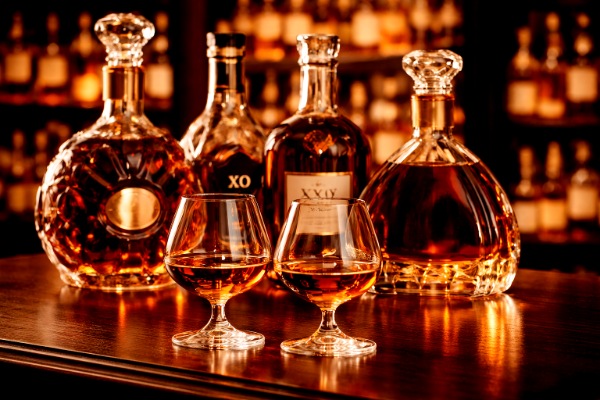
The result is a spirit that becomes more nuanced with time. This aging process is precisely why cognac classifications exist: to give consumers an idea of the minimum maturity of the blend.
VS: Young and Vibrant
VS stands for “Very Special,” and it represents the youngest category of cognac. For a bottle to carry this designation, the youngest eau-de-vie in the blend must be aged for at least two years in oak barrels.
Because of its relatively short maturation period, VS cognac tends to display brighter, more energetic flavors. Fresh fruit notes, hints of citrus, and subtle floral aromas are common. The structure is lively and direct, making VS cognacs particularly suitable for cocktails or for those who enjoy a more spirited expression of the drink.
Despite being the youngest classification, VS cognac still reflects the traditional craftsmanship that defines the spirit.
VSOP: A Balance of Freshness and Depth
VSOP stands for “Very Superior Old Pale.” In this category, the youngest eau-de-vie in the blend must be aged for at least four years.
This additional time in oak brings noticeable changes. The VSOP cognac often exhibit greater smoothness and depth than VS expressions. The fruit character begins to evolve into richer notes, such as dried apricot, baked apple, or honey, while subtle oak spices add warmth.
The category is widely appreciated for its balance. It offers enough maturity to highlight the complexity that aging provides while still maintaining a lively freshness.
XO: Mature Complexity
XO, meaning “Extra Old,” represents a significant step up in aging. Since 2018, the official minimum age for XO cognac has been ten years.
By this stage, the spirit has undergone a long and patient maturation process. XO cognacs often display deep amber color and a broad spectrum of aromas. Notes of caramel, roasted nuts, cocoa, leather, and dried fruits may emerge alongside delicate hints of spice and oak.
The texture tends to be rounder and more velvety than younger classifications. Many enthusiasts enjoy XO cognac neat, allowing the intricate aromas and layered flavors to unfold gradually in the glass.
XXO: The Newest Classification
In 2018, the Bureau National Interprofessionnel du Cognac introduced an additional designation: XXO, or “Extra Extra Old.” This category requires the youngest eau-de-vie in the blend to be aged for at least fourteen years.
XXO cognacs represent a deeper level of maturity, where extended aging further refines the spirit. These expressions often showcase exceptional smoothness and a remarkable concentration of flavors developed through decades in oak.
While not as widely produced as other classifications, XXO highlights the continuing evolution of cognac tradition and expertise.
The Role of Blending
It is important to note that cognac is rarely made from a single barrel. Instead, it is typically a blend of multiple eaux-de-vie of different ages and origins within the Cognac region.
The age classification on the bottle always refers to the youngest component of the blend, even though many older spirits may be included. A cellar master carefully combines these elements to achieve consistency, balance, and complexity.
Appreciating the Differences
Ultimately, these designations serve as a roadmap for understanding cognac’s relationship with time. From the vibrant freshness of VS to the profound maturity of XO and XXO, each classification reflects a different stage in the spirit’s journey.
Exploring these categories allows drinkers to discover how aging shapes the character of cognac—and why patience remains one of the most important ingredients in its creation.