
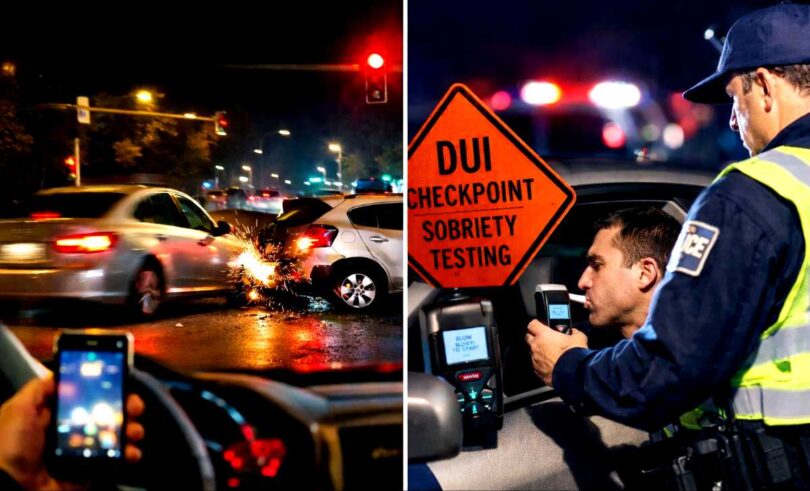

If driving feels more stressful than it used to, you’re not imagining it.
Across the U.S., traffic deaths and serious crashes have increased in recent years, reversing decades of gradual improvement. Transportation safety agencies report more red-light running, more speeding, more distracted driving, and persistent repeat DUI offenses, even as vehicles become heavier, roads more crowded, and drivers more distracted by phones and in-car technology.
The result is a growing sense, shared by drivers and lawmakers alike, that the roads have become riskier. In response, states are no longer relying on small fines or warnings. Instead, 2026 marks a clear shift toward stricter driving laws, tougher penalties, and real financial consequences designed to change behavior.
At a Glance: What’s Changing in 2026
Before getting into the details, here’s a snapshot of the most significant driving law changes taking effect this year:
-
California: Ignition interlock devices are now required for all DUI convictions, including first-time offenders, before driving privileges are restored.
-
New York: Illegal U-turns now carry license points, and the threshold for license suspension has been lowered.
-
Louisiana: The hands-free “touch law” is fully enforced, allowing police to stop drivers solely for holding a phone.
-
Pennsylvania: DUI diversion programs no longer erase prior offenses when determining repeat violations.
-
Nevada: A single traffic ticket can raise auto insurance premiums by hundreds to over $1,000 per year, turning minor violations into long-term financial penalties.
Why States Are Changing the Rules
Lawmakers increasingly agree that traditional traffic enforcement wasn’t working. Small fines didn’t deter repeat behavior, and first-time DUI penalties often failed to prevent future offenses. Meanwhile, insurance claims, medical costs, and vehicle repairs have surged—costs that ultimately get passed on to drivers.
Rather than focusing solely on punishment, states are now using:
-
Technology (such as ignition interlocks and automated enforcement)
-
Faster-escalating point systems
-
Insurance consequences that last for years
-
Lower tolerance for “minor” violations that often lead to serious crashes
State-by-State Highlights
California: Ignition Interlocks Become Standard
California now requires ignition interlock devices for every DUI conviction, including first offenses. Drivers must install the device to regain driving privileges, and failure to comply can result in license suspension, fines, or jail time. The state has also expanded automated traffic enforcement and roadside safety protections.
New York: Faster Paths to Suspension
New York has reclassified illegal U-turns as point-carrying violations and lowered the number of points needed for license suspension. Common infractions like distracted driving and failure to yield now accumulate consequences more quickly.
Louisiana: No More Phone-in-Hand Driving
Louisiana’s hands-free law is now fully enforceable. Drivers may not hold or manipulate a phone while driving, and police can stop vehicles solely for this violation. Repeat offenses bring escalating penalties.
Pennsylvania: Closing the DUI “Reset”
Pennsylvania eliminated a loophole that allowed some DUI offenders to avoid escalation through diversion programs. A second DUI now counts as a true repeat offense, triggering harsher penalties regardless of prior rehabilitation.
Nevada: The Insurance Wake-Up Call
Nevada stands out for its insurance consequences. While DUI penalties have tightened, the bigger impact for most drivers comes after routine traffic tickets. A single moving violation can raise insurance premiums by hundreds to more than $1,000 per year, often lasting multiple years. In Nevada, the real cost of a ticket often shows up long after the fine is paid.
What This Means for Drivers in 2026
Taken together, these laws reflect a broader reality:
-
States are less tolerant of risky driving behavior
-
First-time offenses are no longer treated lightly
-
Automated enforcement is expanding
-
Insurance costs are increasingly tied to driving records
Driving carefully is no longer just about avoiding accidents, it’s about avoiding long-term financial and legal consequences.
For many drivers, the concern isn’t just getting pulled over. It’s knowing that one mistake can follow you for years.