
In a sun-drenched city such as Riverside, maintaining green public areas has always been a challenge. With limited rainfall, water restrictions, and increasing foot traffic from a growing population, keeping natural grass thriving in communal spaces is both difficult and costly. But change is taking root in the most visible way possible—underfoot. Artificial grass is no longer just a suburban backyard upgrade; it’s becoming an integral part of Riverside’s parks, playgrounds, schoolyards, and recreational spaces.
Municipal planners, school administrators, and community developers across the region are embracing artificial turf as a solution that meets aesthetic, environmental, and functional needs. The shift reflects a broader movement toward durable, water-wise infrastructure that aligns with Riverside’s climate and evolving public space priorities. As traditional lawns struggle to survive the demands of modern urban life, synthetic turf is stepping up to transform how people of all ages experience the outdoors.
Creating All-Weather Playgrounds for Riverside’s Youngest Residents
Playgrounds are among the first public spaces to benefit from the artificial grass revolution. In the past, these areas often featured a patchy blend of grass and dirt—or worse, hard concrete or rubber tiles that failed to soften a child’s fall. Artificial grass offers a safer, cleaner, and more inviting alternative. Designed with advanced underlay shock pads and antimicrobial properties, today’s playground turf systems deliver superior safety ratings and hygiene levels.
Children can run, jump, and tumble without the mud stains or scraped knees often associated with traditional play surfaces. Parents, too, appreciate the consistency and cleanliness, particularly in high-use areas where real grass would quickly wear down. Perhaps most importantly, synthetic turf is accessible. For children with mobility challenges, it provides a smooth, even surface that works with wheelchairs and walkers, fostering inclusivity in playground design.
In Riverside’s public schools and daycare centres, artificial grass is quickly becoming the standard for play areas. The benefits—low maintenance, long-term savings, and year-round usability—outweigh the upfront installation costs. And as community awareness of play-based learning and outdoor wellness grows, these upgraded spaces are being recognised not only as recreational amenities but as essential components of child development infrastructure.
Revitalising Parks with Year-Round Green Appeal
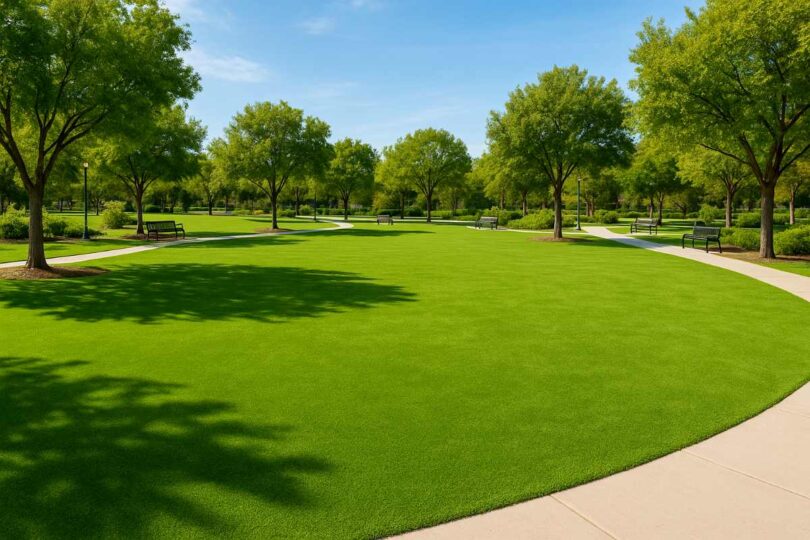
Natural grass parks in Riverside face a perpetual struggle against the elements. Between the intense summer sun and long dry spells, large lawn areas often deteriorate into dust bowls, requiring expensive reseeding and irrigation. Artificial grass provides a way to maintain the lush look of a city park without the heavy burden on water resources or municipal budgets.
Park managers are increasingly turning to artificial turf for high-traffic zones such as picnic areas, event lawns, and dog parks—places where grass would ordinarily be trampled into oblivion. By installing synthetic turf, they ensure these spaces remain attractive and usable regardless of the season or footfall. It also makes them more adaptable; areas once cordoned off for maintenance or drought damage are now fully accessible year-round.
There’s also a growing aesthetic appreciation for artificial grass in the city’s public spaces. Unlike past iterations, today’s turf mimics the look and feel of natural grass with remarkable realism. It enhances the visual appeal of parks and urban oases, complementing native plantings, art installations, and hardscape features. Visitors may not even realize they’re walking on synthetic blades.
Greener Fields for Sports and Recreation
Few places test the durability of grass like a sports field. Whether it’s soccer, baseball, or an impromptu frisbee match, athletic turf takes a beating—and in a city such as Riverside, where rain is scarce, maintaining natural grass in these settings is nearly impossible without extensive irrigation. Artificial grass has become a game-changer, quite literally, for local athletics.
The shift toward synthetic turf in Riverside’s athletic complexes has been rapid and widespread. From high school stadiums to community recreation centers, artificial fields are now the go-to option. They support more hours of play per week, require less downtime for repairs, and stand up to wear and tear with minimal intervention. Crucially, they provide consistent traction and surface stability, reducing the risk of injury and supporting peak performance.
These upgrades also align with equity goals. Schools and neighborhoods that once struggled with uneven, poorly maintained fields now enjoy high-quality athletic surfaces that rival those in wealthier districts. And because artificial grass fields don’t need recovery time, scheduling becomes more inclusive—there’s more availability for youth leagues, adult recreation, and community events.
Enhancing Urban Plazas and Gathering Spaces
Beyond parks and playfields, artificial grass is making its way into unexpected corners of the city—urban plazas, rooftop lounges, library courtyards, and even transit hubs. These communal spaces are being reimagined with comfort, colour, and community in mind. Synthetic turf adds a soft, welcoming surface that encourages gathering and relaxation, without the fragility of natural plant life.
City planners have recognised that green space doesn’t have to be traditional to be effective. A downtown square adorned with turf can still function as a mental refresh zone or a family-friendly event space. These installations are often paired with movable seating, shaded pergolas, and interactive art, creating multifunctional areas that blur the lines between recreation and civic engagement.
Artificial grass also allows developers to turn underutilised or unconventional spaces into thriving community assets. Whether it’s a median strip transformed into a mini-park or a former parking lot reimagined as a pop-up event lawn, synthetic turf provides the flexibility needed to green the grey parts of the city. In doing so, it contributes to Riverside’s broader goals of sustainability, livability, and community cohesion.
Lower Maintenance, Higher Impact for Municipal Budgets
One of the most practical reasons cities such as Riverside are embracing artificial grass is its long-term economic logic. Water conservation is a priority, but so is controlling operational costs. Maintaining public grass areas is labour-intensive, equipment-heavy, and subject to the whims of climate. Turf eliminates the need for mowing, fertilising, irrigation, and most pest control, reducing both direct and indirect maintenance expenses.
For city departments, this translates into significant budgetary breathing room. Workers who once spent hours mowing lawns can now focus on other tasks, improving service delivery across the board. And since synthetic grass can last upwards of 15–20 years with minimal upkeep, it offers one of the highest returns on investment for public infrastructure.
The environmental benefits complement the financial ones. Less mowing means fewer carbon emissions from gas-powered equipment. Reduced chemical use lowers the risk of runoff into local waterways. And in drought-prone areas such as Riverside, eliminating non-essential irrigation can help safeguard water supplies for critical needs.
Conclusion: Riverside’s Greener Tomorrow Starts Beneath Our Feet
Artificial grass is no longer confined to private homes or sports stadiums—it has entered the public realm with purpose. In Riverside, a city shaped by sun and scarcity, this modern landscaping solution is enabling a new era of public space design that prioritizes sustainability, usability, and inclusivity.
From playgrounds and sports fields to civic plazas and downtown rooftops, synthetic turf is laying the groundwork—literally—for a more resilient urban environment. It allows the city to offer more green spaces without the ecological cost, creating areas where people can gather, play, and thrive, regardless of the weather or water supply.
As climate challenges mount and communities seek smarter ways to build and grow, artificial grass stands out as a symbol of adaptive thinking. And in Riverside, it’s helping pave the way for a greener, more vibrant, and more accessible future.