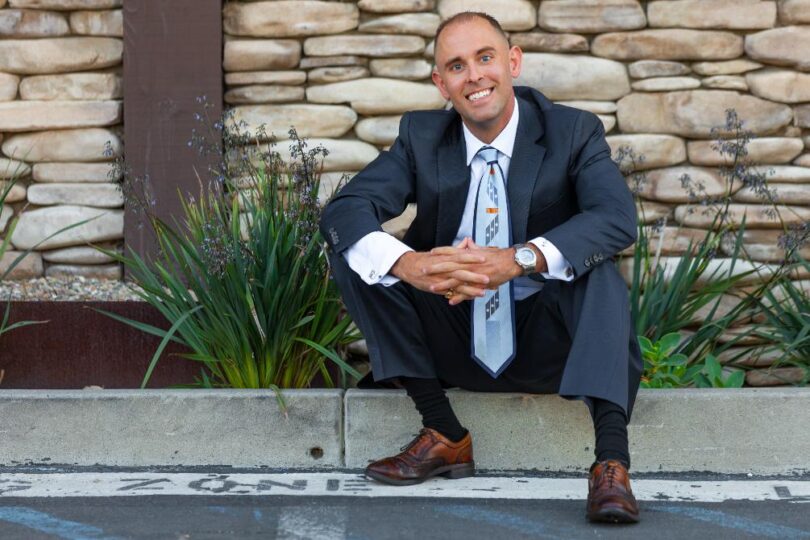

In recent years, the rise of medical spas has been nothing short of meteoric. Promising rejuvenation and youth, these establishments have proliferated across the country, attracting clients eager for quick and easy solutions to aging. However, behind the allure and luxury, there lies a concerning reality that many are unaware of. Dr. John Neely, a seasoned expert in internal and emergency medicine, is sounding the alarm on the state of med spas today.
Dr. Neely, who graduated from Marshall University Medical School in 2009 and is the owner of Destinations Med Spa and Destinations Direct Primary Care in San Marcos, CA, describes the med spa industry as the “Wild West of medicine.” According to him, these establishments are highly lucrative yet poorly regulated, with low barriers to entry. This combination, he warns, can lead to substandard care and ineffective treatments.
“Facial aging is a complex process that requires a deep understanding and mastery,” Dr. Neely explains. “Unfortunately, many practitioners in the med spa industry lack this basic knowledge, resulting in services that do not effectively target the mechanisms of aging.”
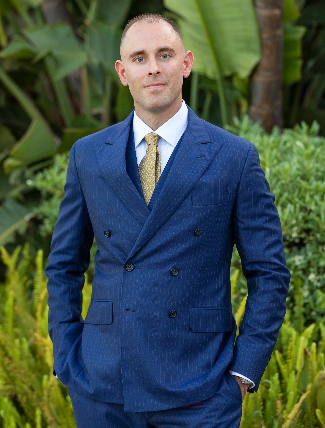 In this Q&A session, Dr. Neely shares his insights on the fundamental ways our faces age, regardless of race or gender. He also provides critical information and advice for anyone navigating the world of med spas, helping you make informed decisions about your aesthetic care.
Key Factors in Facial Aging
- Bone Loss: Over time, our facial bones diminish in density and size, altering the structural foundation of the face.
- Loss of Fat Pads: Fat pads that provide youthful fullness and contour gradually decrease, leading to a more hollowed appearance.
- Change in Muscle Tension: Facial muscles can lose their tone and elasticity, contributing to sagging and wrinkles.
- Thinning of the Skin and Loss of Elasticity: The skin becomes thinner and less elastic with age, making it more susceptible to sagging and wrinkles.
- Skin Dehydration: Proper hydration is essential for maintaining skin’s plumpness and vitality. As we age, the skin’s ability to retain moisture diminishes.
Join us as we delve deeper with Dr. Neely, uncovering the truths about med spas and gaining valuable knowledge to safeguard your health and beauty.
LA’s The Place: Dr. Neely, can you tell us a bit about your background and what led you to focus on facial aging and med spas?
Dr. Neely: I am a clinician at heart. I am board-certified in internal and emergency medicine but have spent most of my career in emergency medicine. I moved from Memphis, TN to Los Angeles after I finished my training in 2016 and, if you had asked me if I thought my formative years were over I would have answered unequivocally, yes. What I didn’t realize was that they had barely begun. Los Angeles was my greatest adventure and, during my six years, I fell in with a remarkable group of former Special Forces operators, doctors, and professional fighters who forever changed the trajectory of my life. They inspired me to do more than what I was doing and to be more than who I was; they were all entrepreneurs.
I wholeheartedly adopted the California lifestyle and began training Brazilian Jiu Jitsu and took up surfing. I met my best friend and regular training partner through these activities. He had his MBA and several business interests in Los Angeles and his interest quickly became mine. The day began sitting offshore along Venice or Santa Monica beach discussing life, ladies, and career. I often joke that I got my MBA from Pacific University at Venice Beach but this unusual education ignited a passion for business. I chose medical aesthetics because cosmetic dermatology was close to my core knowledge and nurses saw most of the patients which allowed the practice to run in my absence.
I purchased Destinations Med Spa in January 2020 just a few months before California was ravaged by Covid. It was a difficult time but, in every tragedy lies a kernel of opportunity. Coincidentally, at the same time as Covid nearly tripled the volume of the ER four doctors left my group. This created an enormous hole in our schedule, and it was up to the few of us who were left to provide 24-hour coverage to two busy hospitals for over two years. I worked nearly every day, took care of thousands of critically ill patients, and worked myself to the point of exhaustion. As we emerged from the pandemic I used those funds to purchase two additional med spas, moved out of California, and took a year-and-a-half sabbatical from emergency medicine to focus exclusively on aesthetics.
LATP: What are some of the most common misconceptions about aging and cosmetic treatments?
Dr. Neely: The most common misconception might be that aesthetics is a well-developed field, but it is not. Botox only received FDA approval in 2002 and there remains no generally accepted standard of care defined as treatments and practices that are appropriate for a specific disease that are both accepted by medical authorities and widely used by healthcare professionals. Aesthetics is plagued by guesswork as providers grapple with the myriad of technologies and techniques available to best treat their patients. It has been frustrating because everyone is selling something which makes it impossible to get straight information! This has driven me deeper and deeper into textbooks and peer reviewed journals to actually learn the best modalities and techniques. The mission of the Destinations Medical Group is to be a part of the creation of a standard of care in aesthetics. While there should always be room for stylistic differences and creative thinking we feel strongly there should also be a generally accepted evidence-based standard of care providers can utilize to achieve for their patients the highest return on investment in their skin care.
LATP: Why do you describe the medical spa industry as the “Wild West of Medicine”?
Dr. Neely: Medical aesthetics is in the same place as electricity was at the beginning of the 19th century, oil at the beginning of the 20th century, and artificial intelligence at the beginning of the 21st. century. It is unique among specialties in that it is driven chiefly by industry rather than a neural governing body like the American Board of Emergency Medicine (ABEM) or American College of Surgeons (ACS) that regulate the field. This is not to suggest malfeasance but to highlight that aesthetics is a young field and hasn’t had time to develop the standards that will dictate the future of the industry.
To understand the future of aesthetics look at the history of the Standard Oil Company. John D. Rockefeller consolidated and standardized the highly fragmented oil industry at the end of the 19th century. His genius was that he positioned himself to implement and control the regulations of his own industry when it caught the attention of the Trust Busters at the beginning of the 20th century. This hasn’t happened in aesthetics, yet. Like oil, aesthetics is highly fragmented because it isn’t covered by insurance. This means hospitals and hospital systems pass in favor of more lucrative reimbursable procedures. As a result, this multi-billion-dollar market has been cornered by private offices and med spas serving cash paying patients.
Clinical medicine lags behind science by at least ten to fifteen years and this means many promising treatments simply haven’t yet been adopted. While lack of regulation may compromise quality it is also our power as the fragmentation of the industry allows us to adopt new and promising therapies years before they work their way into the algorithms of primary care. The importance of this cannot be overstated as it helps to narrow the gap between science and medicine. The two best examples of this are hormone replacement therapy and the GLP-1 agonist (Ozempic and Mounjaro) for weight loss. Both could dramatically improve patient and public health but are largely ignored by the medical establishment. Medical spas have been instrumental in popularizing these therapies and I’m excited to see how else we may be able to one day bring the fringes of medicine into the mainstream.
LATP: You mentioned that facial aging involves five key factors: bone loss, loss of fat pads, change in muscle tension, thinning of the skin and loss of elasticity, and skin dehydration. Can you elaborate on each of these factors and their impact on the aging process?
Dr. Neely: Aging is the physical manifestation of the gradual process of cellular senescence whereby a cell loses its power of division and growth. Facial aging is a complex 3D process best described by the 3D’s; Deflation, Descent, and Deterioration. Deflation comes from the gradual resorption of bone and fat pad atrophy. Descent results from the loss of support underneath the soft tissue of the face and deterioration from the breakdown of collagen and elastin.
Bone Remodeling: The facial bones are the framework for the attachment of overlying soft tissue and provide a platform for stability, structure, and definition. Bone resorption occurs in a predictable pattern. It leads to a downward drift of the fat pads and weakening of the facial muscles as they stretch to realign over the shifting bony foundations.
- The height of the ramus and the height and length of the mandibular body decrease. This causes retraction of the chin and an increase in the mandibular angle resulting in the loss of a sharply defined jawline.
- The pyriform fossa of the nose widens causing the nasal tip to droop and deepening of the nasolabial folds.
- The orbits enlarge as bone loss in the superior medial and inferior lateral directions causes deepening of the tear troughs and the development of eye bags.
- When viewed from the profile, these changes lead to a clockwise rotation of the face relative to the base of the skull causing flattening of the cheeks and blunting of the facial angles.
Muscles: Fine lines, wrinkles, and folds develop as a final common pathway from resorption of the underlying bone, atrophy of the fat pads, and the gradual breakdown of the dermis. Repetitive muscle contraction does exacerbate this process and leads to the formation of dynamic and static wrinkles but, there’s more to the story. An imbalance develops from the unequal atrophy of the facial muscles and overlying skin. Facial muscles exert a constant tension on the skin. The youthful dermis has sufficient collagen to withstand this tension without buckling. However, as we age, the deterioration of collagen outpaces the weakening of facial muscles, and the skin buckles and submits to the pull of the muscles and gravity.
Fat: Facial expressions are possible because the muscles of the face attach directly to the dermis through their interaction with the Subcutaneous Muscular Aponeurotic System (SMAS). The face is supported by numerous deep and superficial fat pads. Deep fat pads are firmly anchored to bone and provide contour, support, and a gliding plane for muscle movement while superficial fat pads lie just beneath the dermis and provide contour and facial volume. The superficial fat pads are subject to the resting tension and pull of the muscles below. As bone loss and the weakening of facial ligaments cause loss of support these pads gradually shift in the downward and medial direction to cause an inferior displacement of the overlying skin.
Skin: Skin degenerates from the interplay of intrinsic and extrinsic factors. Intrinsic factors refer to the natural degradation that occurs with time while extrinsic factors are within our control and due primarily to sun exposure, smoking, and environmental pollutants. Collagen makes up the bulk and strength of the dermis while elastin provides elasticity. Glycosaminoglycans are long molecules that are part of the extracellular matrix. They attract and retain water to help maintain the skin’s hydration. Unfortunately, cellular senescence spares no one and by our forties or fifties, the rate of collagen, elastin and glycosaminoglycan breakdown exceeds their synthesis.
LATP: How do these aging mechanisms differ between individuals, if at all?
Dr. Neely: These are universal mechanisms. While they may affect individuals to a different degree they are universal.
LATP: What are some of the signs people should look out for to understand the specific ways their face is aging?
Dr. Neely: Facial aging follows a predictable course. Dynamic lines are visible with facial movement but evolve into static lines meaning they are present at rest as a result of repetitive movements of the face and the natural breakdown of collagen over time. There is also gradual flattening of the cheeks as the mid-face fat pads atrophy and descend. Sun damage is cumulative and leads to the formation of age spots. Botox prejuvenation, an occasional laser treatment, and dermal fillers which are to go to treatment to restore volume to the aging face can help keep these changes at bay.
LATP: What are some of the primary risks associated with getting treatments at med spas?
Dr. Neely: All medical procedures involve some risk. Botox is the safest. It isn’t associated with any truly harmful effects and even the worst cosmetic blunder wears off in a few months. Filler can cause a vascular occlusion that, in a worst-case scenario, could lead to skin necrosis or even blindness. However, these are exceedingly rare. Lasers are a powerful technology and can cause skin discoloration or even burns if used incorrectly. Again, these are exceedingly rare if your provider adjusts the energy to the patient’s skin type.
LATP: Can you share any personal experiences or cases where poorly regulated med spa practices led to negative outcomes for patients?
Dr. Neely: I have been lucky so far. Morgan Housel, in his wonderful book The Psychology of Money, observes that “growth is the natural result of compounding overtime while destruction rests on single points of failure.” This is a great way to look at the practice of medicine. I ask myself, “Where could this fall apart?” With every procedure, this helps identify those single points of failure that must be avoided.
LATP: What should consumers look for when choosing a reputable med spa or cosmetic practitioner?
Dr. Neely: Education, training, and experience. I also encourage patients to read online reviews. Although even the best practices will inevitably have a few bad reviews, look for trends as they will tell you much more than any single positive or negative review. Look for a provider who invests heavily in their own education. Ask how often they attend conferences, what they read, and how often their reps sponsor in-office training. Credentials are important but, many a nurse who injects daily is miles above her medical director who only injects once in a while.
LATP: How important is it to rely on evidence-based treatments when it comes to facial aging?
Dr. Neely: Evidence based treatments are essential but, the artistry of aesthetics comes from combining the right services in the right ways to create the best results.
LATP: Can you discuss the latest advancements in evidence-based treatments for facial aging?
Dr. Neely: There are two. Hormone replacement therapy and the GLP-1 agonists, Semaglutide (Ozempic) and Tirzepatide (Mounjoro) have the potential to revolutionize not just medical aesthetics but the healthcare industry as a whole. We need to take a long view of facial aging and take corrective steps early to mitigate the development of irreversible change. Just as we lose bone in our hips and knees with age we lose bone in our face. The skull supports the soft tissue above it and bone resorption causes tectonic shifts in the muscle, fat, and skin that underlie many age-related changes.
Hormone replacement therapy should be implemented early as it is part of a comprehensive treatment plan. It has been shown to reduce the risk of osteoporosis (low bone mass) by as much as 8% per year which is significant! Semaglutide and Tirzepatide have also revolutionized aesthetics. Weight is often a patient’s primary problem and these drugs have been transformative by helping some patients to shed as much as 22 percent of body weight according to a 2022 New England Journal of Medicine study. Patients couldn’t be happier as they look and feel better than they have in years. These therapies have also lowered the threshold for great results by allowing us to design custom treatment plans that improve general health. Once a patient has lost weight they often notice a few units of Botox, a syringe of filler, or a laser procedure yield dramatic results.
LATP: What role does diligent study and practice play in mastering the art of facial rejuvenation?
Dr. Neely: It is everything.
LATP: What are your top recommendations for those looking to age gracefully?
Dr. Neely: Preventative maintenance is key. The three best modalities are Botox (or any of the wrinkle relaxers) three to four times a year, an annual fraxyl laser, and regular sunscreen. Botox is a temporary paralytic that weakens the muscles and helps to prevent the development of fine lines and wrinkles. An annual fraxyl laser stimulates the production of new collagen and is a great way to tighten and brighten the skin.
LATP: How can individuals maintain their skin health and overall facial structure as they age?
Dr. Neely: Sunscreen is central and the combination of HRT and laser treatments work well to maintain beautiful skin. Sunscreen helps to prevent the degradation of collagen and limits the formation of age spots. Lasers boost collagen and hormone replacement therapy preserves bone mass allowing us to maintain the platform that supports the soft tissues of the face. Taken together these treatments limit the formation of fine lines, wrinkles, and laxity.
LATP: Are there any daily habits or lifestyle changes that can help slow down the facial aging process?
Dr. Neely: Regular exercise and a diet low in processed sugar are fundamental to good health and aging. Past that, regular use of sunscreen and not smoking will do wonders for your skin. Smoking is incredibly destructive as it exacerbates collagen breakdown and leads to premature aging.
LATP: How do you see the field of cosmetic treatments and med spas evolving in the next decade?
Dr. Neely: Aesthetics may follow in the footsteps of open-heart surgery. Cardiovascular surgeons were at the top of the heap for many years, but open surgery has been largely replaced by minimally invasive techniques performed by cardiologists who are internal medicine rather than surgery trained. The same trend is happening in plastic surgery. Although it remains the gold standard many patients opt for injectables or minimally invasive techniques that spare the pain, expense, and recovery of open surgery.
Aesthetics is practiced today much like a fast-food restaurant; patients stop by, quickly place an order for a service, and are on their way only to return if and when it strikes their fancy. As the field evolves this approach will change to more of a fine dining experience. Your provider will craft a comprehensive plan structured around a primary endpoint and arrange these services to be deployed over multiple appointments.
LATP: What steps can be taken to better regulate the med spa industry and ensure safer practices for consumers?
Dr. Neely: I am not in favor of excessive regulation in medical aesthetics but, I do support patient safety. Appropriate regulation will be impossible in the absence of an accepted standard of care as without it, how will we know what to regulate? As evidence mounts the industry will move towards a natural consolidation. This consolidation (possibly driven by private equity) will restructure the industry and align enough private practices under a single system that eventually a governing body will be able to craft, implement, and enforce some degree of industry regulation.
LATP: What is the one piece of advice you would give to someone considering their first cosmetic treatment?
Dr. Neely: Start low and go slow. Most people don’t have the appetite for a comprehensive facial rejuvenation plan right out of the gate. It is important that patients feel comfortable with their providers before committing to larger services. A few units of Botox or a lighter resurfacing lasers is a great way to start. My job is to construct a plan that will make my patients look and feel their best but, I always tell them we can do as much or as little of that plan as they would like. My goal is to make medical aesthetics accessible, safe, and stress-free.