


Peptide therapy is a promising new way to treat many medical issues. Peptides are short sequences of amino acids that can control physiological functions and they open new paths for successful treatments. Let’s delve into the basics of peptide therapy, how it is used right now, and the future possibilities for the healthcare industry.
Cancer Treatment
Peptide-based treatments are nowadays used for treating various forms of cancers. Luteinizing hormone-releasing hormone limits hormone production, effectively decreasing tumor growth and improving patient outcomes. Also, these conjugates transport the toxic medications straight to cancer cells. Peptide treatment improves the effectiveness of therapies and gives a new ray of hope for personalized cancer care. It also has the power to lead to new combination therapies and help society overcome obstacles like drug resistance.
Metabolic Disorders
Metabolic disorders like diabetes and obesity can be successfully treated with peptide therapy. As an example, we have GLP-1 analogs, which activate receptors to increase insulin production and decrease hunger. This helps to effectively regulate blood glucose levels and weight. People can seek expert peptide therapy to help them deal with similar issues and optimize their well-being. Peptides also help with weight management as they can burn fat and promote metabolism regulation, while at the same time, they can treat hormone imbalance symptoms and regulate hormones.
Infectious Diseases
Peptide treatments prove to be quite more effective than traditional antibiotics in the fight against infectious diseases. They can disrupt microbial membranes or impede critical microbial functions, and this makes them quite effective in this treatment. Also, peptides are quite useful in the fight against bacteria and other viruses, and we also have peptide-based vaccinations to provide preventive measures against infectious diseases. As you can see, they are huge game-changers in the treatment of these medical issues, and the best thing is that they are only improving and bringing in more advanced solutions.
Neurological Diseases
Peptide therapy has a significant role in treating neurological issues within the central nervous system. Potential treatments for diseases like Alzheimer’s and Parkinson’s diseases are being studied, as peptides have neuroprotective features and power to control neurotransmitter function. Researchers are also working on the peptide’s delivery to neurological targets that can optimize their passage through the blood-brain barrier, which can treat many neurological issues.
Dermatology
Peptide treatments come with some new and creative solutions for various skin diseases. Some of them have wound-healing power, while others speed up the process of tissue repair and collagen synthesis, which promotes skin regeneration and reduces scars. Also, peptides are becoming increasingly popular as formulas that can improve moisture, elasticity, and the appearance of wrinkles and fine lines. Peptides also help with issues like acne and rosacea, and we can see how they quickly revolutionize dermatological care. What is better is that it is much safer, more effective, and has less risk of side effects than traditional therapies.
Targeted Drug Delivery
Peptide therapy is great when doctors need to apply medicine directly to certain cells. These amino acids can be designed to recognize and bind to antigens, which can be found on the surfaces of cells. The peptide sequence acts as targeting ligands, which facilitate the treatment of cells. Because the targeting of cells is so advanced, it minimizes the effect that these peptides hold on other cells and tissues that are not targeted. This means that healthy tissues and cells won’t be affected as much as they would with some other treatments. Also, they enable the treatment to be internalized wholly by the cell, which means that the treatment will be much more successful and that there is more hope for the cells to get healthier. Because of this quality, many diseases are being treated and there is much more hope that the use of peptides can in the future completely eradicate some diseases that plague humans, whether they are mental disorders or life-threatening illnesses such as cancer and many others.
Personalized Medicine
It is believed that this type of therapy will be of great help when it comes to personalized medicine in the future. Because of all the qualities it possesses, it is believed that this therapy will be able to target particular genetic markers, which will enable experts to target diseases in new ways and will open the door to many great things for human health. Also, using this therapy, they may be able to foresee some conditions that could plague a person, which will result in earlier treatment. For example, we all know how important it is that cancer be diagnosed in its early stages. Imagine that, using peptides, we could predict that a person would have a particular cancer before it even showed itself. This would be revolutionary for medicine and it could save many lives throughout the world.

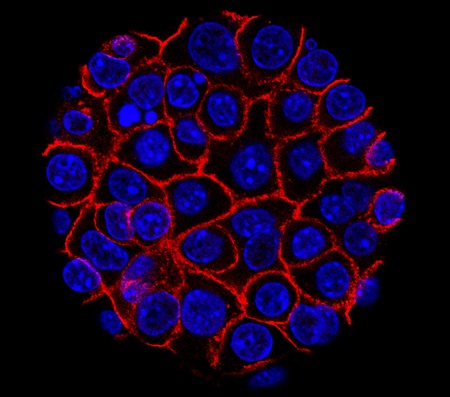
Photo courtesy of National Cancer Institute
Combination With Other Therapies
A great way this therapy could be utilized is in combination with therapies that are used to treat specific disorders if it continues to improve like this. This could enhance the success rate of the treatments that are now available which would lead to more lives being saved. The medical industry needs to make sure that this therapy keeps getting developed because it could help target cells that are harmful to our body.
Challenges
Peptide treatments face various challenges, although they show great promise for the future. The first major challenge is how to maintain their stability and transport through the body. The cost is another major consideration, as it can be quite expensive and limited for some patient groups. Also, some peptides can trigger immunological responses in the body, so there is a risk of immunogenicity. The whole therapeutic potential of peptides depends on overcoming these challenges, and this can only be achieved with the right peptide engineering, delivery technology, and regulatory approaches.
Peptide therapy holds great promise for treating various medical conditions, and it seems to be only improving and moving forward as time goes by. Of course, continued research and developments are necessary to make these innovative treatments safe and effective, and overcoming various challenges can give us new hope that even the most life-threatening conditions will be almost eradicated thanks to this kind of therapy and personalized approaches.
Feature photo by Fayette Reynolds M.S.