
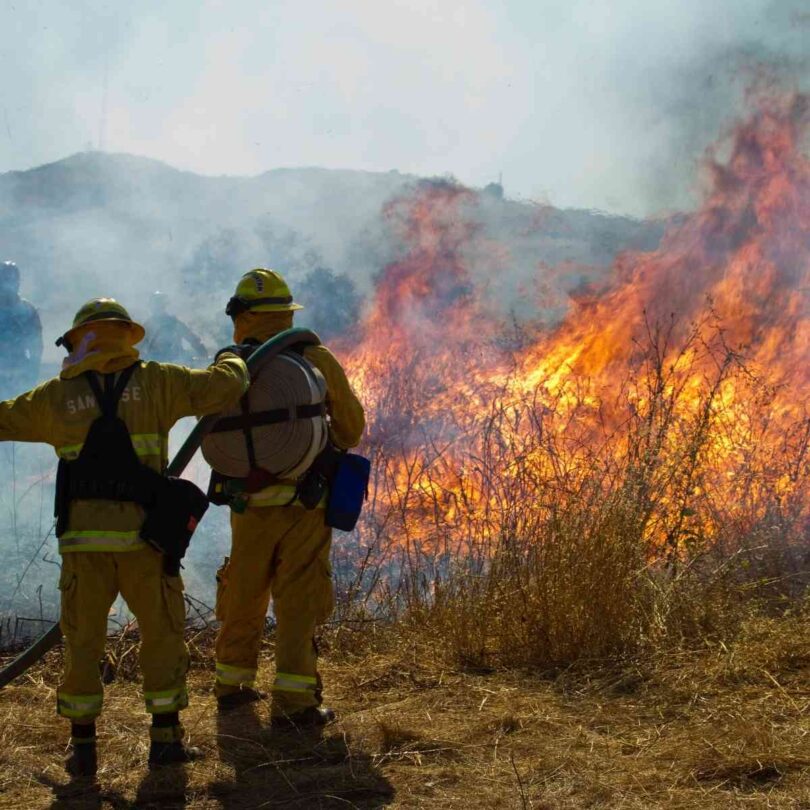

Firefighters are invaluable members of our communities nationwide. They also lead interesting lives both in the field and at home. Read on to learn five exciting facts about these wildland firefighting professionals.
Wildland Firefighters Fight From the Sky
While most wildland firefighters operate on the ground, a select few individuals conduct aerial firefighting tactics on a regular basis. These professionals are known as Smokejumpers and Rappellers, and they go straight to the action by parachuting or rappelling from an aircraft or helicopter. Some delivery airplanes also drop flame retardant agents and water onto the fire from above, although contractors for the U.S. Forest Service typically pilot them.
Many Wildland Firefighters Hold Second Jobs
In some regions, wildland firefighting is merely a seasonal job. Therefore, wildland firefighters usually pursue other career interests during the off-season. Unsurprisingly, a common second job for wildland firefighting is firefighting for towns and cities! Others work for local communities to spread fire prevention awareness, start their own businesses, or take their well-earned time off.
Full-Time Firefighters Work Weeks At a Time
Speaking of time off, wildland firefighters definitely deserve it; most shifts (known as a “roll”) last up to fourteen days! And over those two weeks, most professionals work upwards of sixteen hours a day, with more significant wildfire events demanding even more hours of labor. Lastly, these standard fourteen-day rolls don’t include travel to and from the fire, which sometimes reaches over six days in total.
Fighting Fires Isn’t Their Sole Responsibility
Hollywood movies and the media may make you think that the life of a wildland firefighter is constant action. In reality, these individuals perform many duties that are more mundane but no less critical. Did you know that the color of a wildland firefighter’s helmet has specific meanings pertaining to the job they perform? For instance, wildland firefighters wearing blue helmets are responsible for issuing medical treatments to injured civilians caught in a fire. Other wildland firefighter duties can include:
- responding to fallen trees,
- analyzing weather patterns to predict fire behavior,
- reaching out to surrounding communities to raise fire prevention awareness,
- and interacting with other emergency agencies.
Wildland Firefighters Sleep Near the Action
Have you ever wondered where wildland firefighters go to rest following a long day’s work? In truth, they don’t stray far from the action. In fact, most wildland firefighters set up fire or “spike” camps nearby the fire to ensure better control of its path. They often sleep in tents and sleeping bags, although some use government-provided cots, and others choose to rest in their personal cars. As you might assume, getting beneficial sleep is very tough for wildland firefighters during a wildland fire.
These interesting facts about wildland firefighters prove just how valuable this profession is to our society and well-being. Here in Los Angeles, wildland firefighters save countless lives, homes, animals, and ecosystems every day.