
Recording videos while you’re on a trip is a great way to capture what you see and hear. However, it is also challenging as you’ll have very little control over many of the factors that affect your videos and how they turn out.
That is why if you want to start to record better videos while you travel it is important to focus on the areas that you can control. As a starting point there are a few ways that you can do that:
Record at a high resolution and frame rate
Try to make it a point to record at as high a resolution as possible so that your video has better definition. In fact, you may even want to record in 4K although you intend to create a 1080p video. It will let you use software stabilization and crop your video more effectively.
Similarly, you should record in a high frame rate too so that any movement in-frame looks smoother. Considering most travel videos have lots going on in them, this can have a big impact.
Just keep in mind that recording travel videos at high resolutions and frame rate will require a lot of storage space – so bring spare SD or microSD cards.
Get an external microphone
If you want to record both the sights and the sounds (i.e. the audio around you) – you need an external microphone. The built-in microphone on your camera isn’t going to record very good audio and it will more than likely just drag down your entire video.
Ideally, you should choose the type of external microphone you use based on the audio that you intend to record. If you’re recording audio commentary a lavalier microphone or handheld mic may do the trick, however, if you want to record the sounds coming from a specific direction a shotgun microphone would be better.
Keep the camera stable
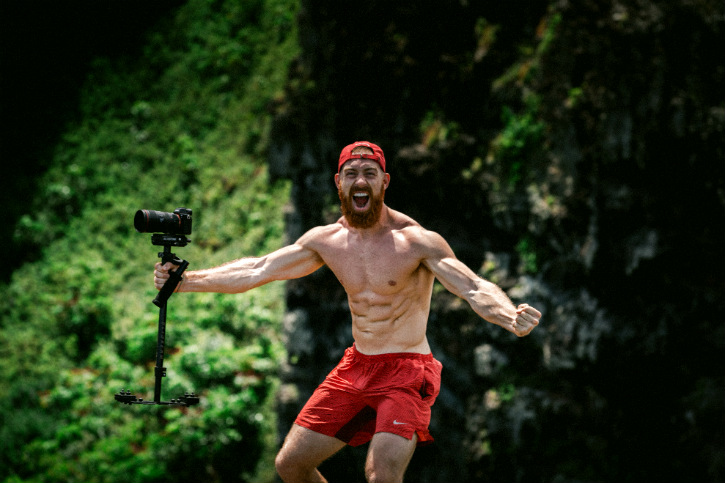
While you record travel videos, you should try your best to keep your camera stable. Sometimes that won’t be easy, but the less it shakes and moves – the better your video will look.
If you’re holding the camera in your hands, be sure to use both hands and try to keep it closer to you so that you can use your sides to support your elbows. In the long run, you may find it a lot easier if you have a travel tripod or monopod to help keep the camera stable, however.
Ultimately your goal should be to record good video footage that really captures the experience while you travel. Don’t worry if the footage isn’t ‘perfect’, and remember that you can work out most small issues using your editing software later on.
Each of the ways described above should help you to record better videos while you travel. However, you need to use them to record the right scenes and subjects if you want your travel videos to really be set apart from the many others out there.