

In a stunning modern-day trek through several Eastern European countries, Davide Ferrario’s documentary follows famed writer Primo Levi’s harrowing journey back to Italy after his release from Auschwitz in 1945.
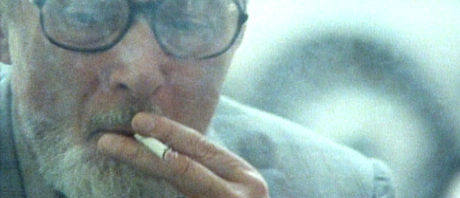
Using Levi’s book "The Truce" as a guide, Academy Award winning actor Chris Cooper narrates the writer’s poetic and stark observations of a war torn Europe as Ferarrio juxtapositions the current sociopolitical atmosphere of a region that struggles to regain its identity amidst the fall of Communism. With brilliant clarity, Ferrario bridges seemingly two incomparable spans of time, suggestive that time does not heal all wounds, as the tentacles of the past are still coiled around the pastoral vestiges while the ideological monuments shadow an uncertain future.
With sensitivity and well placed humor that keeps the film from reverting into a travelogue, Ferarrio and his crew engage the people in provocative interviews that reveal the invisible clutches of a failing system in a burgeoning technological age. Still a self-policed and highly censored society, Ferarrio manages (at one point the KGB intervenes) to illicit dialogue that conveys both frustration and hope from those who have experienced the turmoil firsthand. A Ukrainian sister mourns for her musician brother, killed for singing in the streets in his native tongue. A helpless Chernobyl father recounts the once promising city that is now an empty shell. Disgruntled farmers despair from false promises. Neo-Nazi’s openly meet in cafes and rally in the streets. The aging factory workers, once heroes in another time, are idle and hollow as the factories that line the horizon. All these Ferrario interjects with visually stimulating scenes of Communist propaganda and faded institutions and memorials such as "The Cemetery of Dead Monuments."
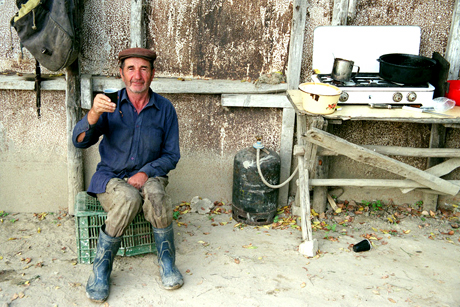
Zigzagging over a thousand miles, Ferrario captures the often haunting panorama with a vibrant richness, but with a precision as any passport stamp. The cities dazzle, the picturesque fields bloom, but the featureless statues representing the iron-clad government in the contortion of celebrated workers bear down on the majesty with a sense of impending doom. There is a subtle undertone of futility and the circuitousness of political strife in this film, but Ferrario deftly strays from interjecting his own agenda, allowing the land and its people, as the two cannot be divided, speak for themselves.
Primo Levi’s words resonant with fluid honesty and provide a perfect accompaniment and support for the documentary’s travails. Ferrario did not fashion his film to fit Levi’s words, he explained to director Paul Mazursky in a Q & A after the film, and this is obvious as the documentary follows its own unique trajectory through the sights, sounds and pauses between Levi’s spoken score and the land and people he loved.
It has been 20 years since Levi’s ill fated fall that caused his death, noted by many as possible suicide. Ferrario’s documentary does not focus on the end of the writer/philosopher, rather his hope in the wake of so much instability. With images from Auschwitz and 9/11, Ground Zero, Ferrario reminds the audience that the journey continues on the tracks laid down by the past, the future a burden by our making.
American Cinematheque at the Aero Theatre
10/11-10/17
For more information or future showings of "Primo Levi’s Journey" go to www.cinemaguild.com/primolevisjourney/.






I had the pleasure of going to the screening of “Primo Levi’s Jourmey” last week at the Aero Theatre, and I found this review to be spot on perfect. Almost as if my own thoughts were mentally swiped from me. Excellent.
I suppose this proves great minds think alike, yes?
Bobby Logan