
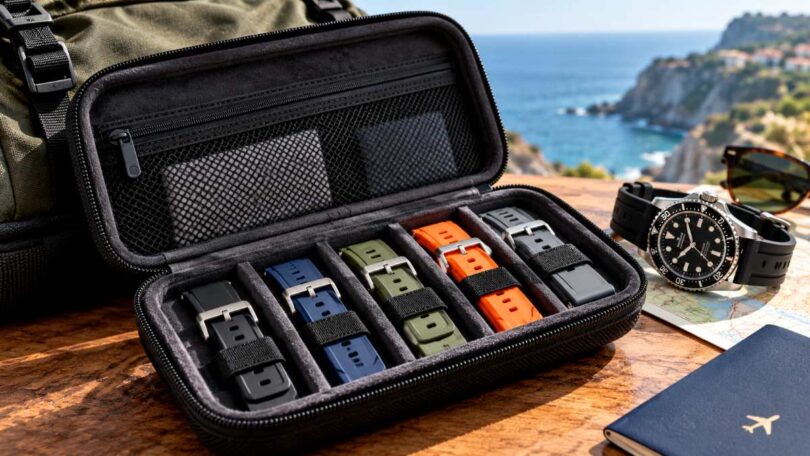

A holiday can expose one watch to more varied conditions in a week than it sees during several months at home. Airport queues, hot streets, swimming pools, sun cream and evening meals all place different demands on the strap. Travelling with a single watch becomes easier when its strap can cope with heat and moisture without needing delicate treatment.
Rubber is an obvious candidate, but the category is broader than the thick black straps associated with professional dive watches. A slim profile, restrained colour and suitable buckle can make rubber work with many sports watches and casual everyday models. The right choice can reduce the amount of equipment packed while still letting the watch look appropriate after the beach.
Travel Exposes Weak Points Quickly
Heat changes the way a strap feels. A close fitting band that is comfortable in a cool office may feel restrictive after several hours in the sun. Perspiration also reveals rough edges, stiff keepers and poor buckle placement. These problems are easier to avoid when the strap has enough adjustment and flexes naturally around the wrist.
Water brings a separate set of questions. A rubber strap may be easy to rinse, but its buckle and spring bars still need suitable materials and basic care. The watch must also be rated for the planned activity. A strap cannot make a watch safe for swimming if the case, crown or seals are not designed for it.
Choose One Strap for the Whole Itinerary
Start with the most demanding part of the trip. If swimming is planned, check the maker’s description for water suitability and consider how securely the buckle closes. If the holiday is mainly urban, comfort, low weight and a discreet appearance may matter more than a heavy duty diving construction.
A versatile Rubber watch band strap can move from a morning by the water to a casual dinner when its colour and texture suit the watch. The collection at Watch Obsession includes plain, perforated, one-piece and embossed designs, giving travellers more scope than the familiar utilitarian black band.
Dark navy, charcoal and deep green often look less technical than solid black while remaining easy to coordinate with holiday clothes. A strap that echoes the dial or bezel usually looks coherent in photographs and at dinner. Bright orange or yellow can work well on a diver, particularly when visibility and a lively summer look are part of the appeal.
Fit Matters More When Temperatures Rise
Wrist size can change slightly in hot weather, so a strap with closely spaced adjustment holes is useful. The watch should stay secure without leaving a deep mark. A long tail may become irritating in the heat, while a strap that only just reaches the keeper can feel precarious. Checking the total length before departure avoids both problems.
Ventilation is another consideration. Perforations and underside channels can reduce the amount of material in continuous contact with the skin. They do not eliminate perspiration, but they can help the wrist dry more quickly. Smooth undersides are often easier to wipe, so the best design depends on personal comfort and cleaning habits.
The case size should guide thickness. A large sports watch can look balanced on a substantial strap, especially if the lugs are broad. A compact chronograph or field watch often benefits from a thinner profile and a taper towards the buckle. The transition from case to strap should appear deliberate rather than abrupt.
Pack the Fitting Details as Carefully as the Watch
Measure the lug width before buying. Common sizes include 20 mm and 22 mm, but assumptions are risky because even related models can differ. The width must match the gap between the lugs. Model-specific curved ends need an additional compatibility check because the shape must fit the case as well as the nominal width.
Quick release spring bars make a pre-dinner strap change easy and reduce the need to pack a full tool. If the chosen strap uses standard spring bars, a compact spring bar tool can still be useful. It should be stored so its forked tip cannot scratch the watch or damage other luggage.
Inspect the bars before leaving home. Bent, rusty or weak spring bars are inexpensive to replace and are not worth trusting on a trip. Also check that the buckle tongue enters the holes cleanly and that both keepers hold the tail without excessive friction.
A Short Cleaning Routine is Enough
Rinse permitted straps after contact with salt water or a chlorinated pool, then dry the strap and watch as directed by their manufacturers. Pay attention to the area around the buckle, keepers and spring bars. Grit caught in these places can irritate the skin and mark the strap.
Sun cream should not be allowed to build up. Wipe it away with a soft damp cloth and use only cleaners approved for the material. Leaving a wet watch in a closed wash bag encourages odour, so give it time to dry before packing. Direct heat from a hair dryer or radiator is unnecessary and may damage some materials.
For longer trips, remove the watch at night and let both wrist and strap dry fully. This simple habit improves comfort the next day. It also provides a chance to look for small splits, stretched holes or loose hardware before they become a problem.
One Practical Change Can Simplify the Trip
Travelling with several straps can be enjoyable, but it is not essential. A carefully selected rubber strap can cover active days, changeable weather and relaxed evenings while taking almost no extra space. It works best when chosen for the actual watch and itinerary, not simply because rubber is associated with holidays.
The result is a setup that asks for little attention. With accurate sizing, secure hardware and routine rinsing, the watch can stay on the wrist through most of the trip. That leaves more time for the journey and less time worrying about the strap.