


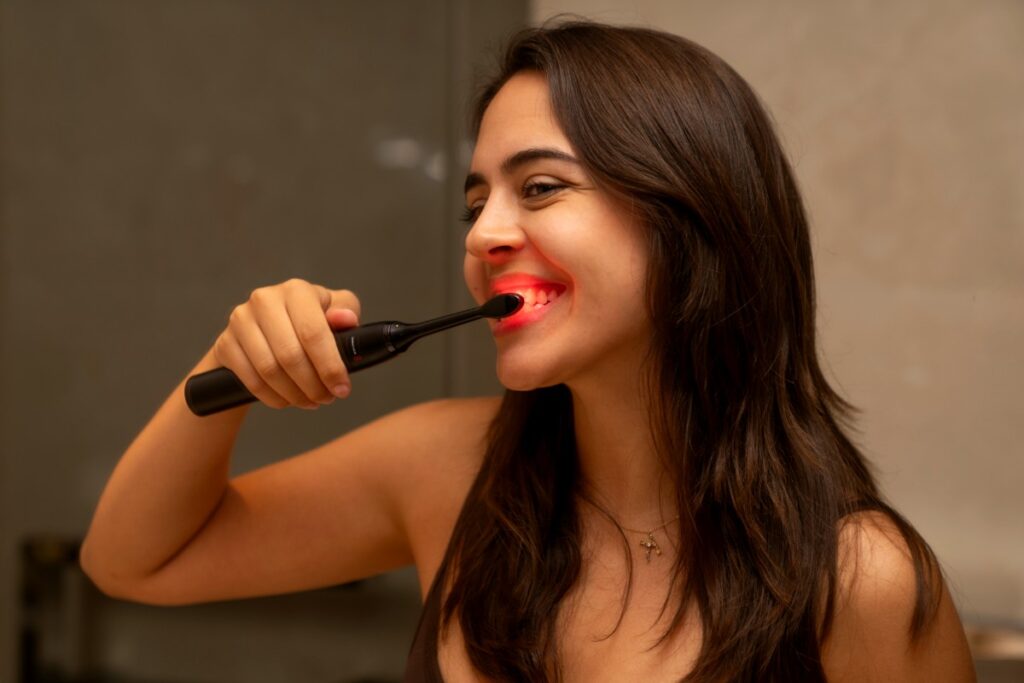
Brushing your teeth twice a day is one of the simplest things you can do for your health, but what if your toothbrush could do more than just clean your teeth? The BON CHARGE Red Light Toothbrush brings the benefits of red light technology into your daily oral care routine, with the potential to support healthier gums, reduce inflammation and promote cellular repair. Red light therapy has already gained considerable attention for its use in skincare, healing and recovery, and its application in oral health is particularly interesting. The idea of combining an everyday necessity with technology that may provide additional health benefits makes this toothbrush worth a closer look.

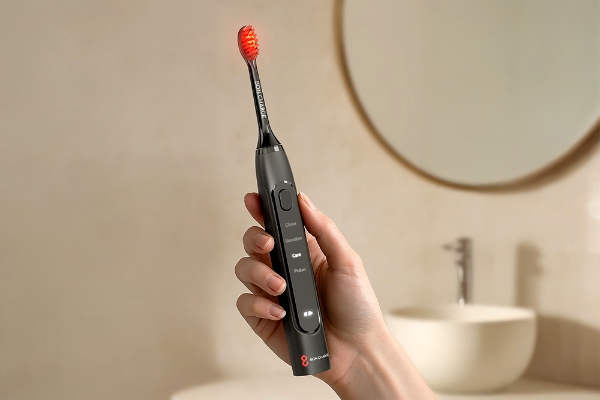
The BON CHARGE Red Light Toothbrush
Now BON CHARGE has introduced its new Red Light Toothbrush Charging Travel Case, a $74.99 accessory that makes taking the toothbrush on the road considerably easier. The sleek, rigid case protects the toothbrush, accommodates two brush heads and charges the device while it’s stored. A full charge takes approximately two to eight hours, and the toothbrush can operate for up to four weeks on a single charge when used twice daily for two minutes. It’s a convenient addition for anyone who travels frequently or simply wants to keep their oral care essentials organized.

How Red Light Technology Can Benefit Your Gums

Red light therapy, scientifically known as photobiomodulation, uses specific wavelengths of light to stimulate biological processes within cells. Unlike ultraviolet light, which can damage tissue, red light at appropriate wavelengths and doses is non-invasive and has been studied for its potential to support healing and reduce inflammation.
One of the most interesting aspects of red light therapy is its interaction with mitochondria, the structures responsible for producing energy within our cells. Research suggests that certain wavelengths can influence mitochondrial activity and cellular signaling, potentially supporting tissue repair and helping regulate inflammatory responses.
This is especially relevant to gum health. Gums are constantly exposed to bacteria, irritation and everyday wear from chewing and brushing. When inflammation becomes persistent, it can contribute to gingivitis and eventually more serious periodontal problems.
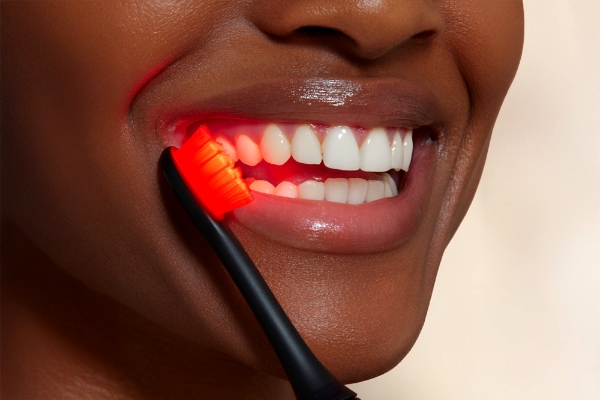
Research into photobiomodulation has shown promising results in certain dental applications, including managing inflammation, supporting healing after dental procedures and reducing discomfort. Some studies have also found benefits when red light therapy is used alongside conventional periodontal treatments.
However, the wavelength, intensity and duration of exposure all influence the results. Although the science is encouraging, more clinical research is needed to establish how effectively consumer red light toothbrushes deliver these benefits during everyday use.
Why the Wavelength Matters
Not all red light is the same. Different wavelengths penetrate tissue to different depths and can produce different biological responses.
Red light generally falls within approximately 620 to 700 nanometers, while near-infrared light operates at longer wavelengths. Both have been investigated for their effects on inflammation, cellular activity and tissue recovery.
The effectiveness of a red light device depends on more than simply producing a red glow. The wavelength, power output, exposure time and amount of energy delivered to the tissue all matter.
For a red light toothbrush, these details are particularly important because the gums receive light during a relatively short brushing session. Understanding how the technology delivers an appropriate dose is essential when evaluating its potential benefits.
Healthy Gums Are About More Than a Beautiful Smile
Oral health has implications that extend well beyond the mouth. Researchers have identified associations between periodontal disease and systemic conditions such as diabetes and cardiovascular disease, making the prevention and management of gum inflammation an important area of study.
Dr. Seb Lomas, a biological dentist and member of BON CHARGE’s Scientific Advisory Board, emphasizes the relationship between oral health and broader wellness. See our interview with Dr. Lomas below!

Dr Sebastian Lomas
“Oral and gum health are important because they influence breathing, inflammatory response and immune resilience. These factors can affect blood sugar balance and surprisingly to many fitness addicts, speed of recovery from training. Red light technology offers a gentle, non-invasive way to support mitochondrial function and healthy cellular responses in gum tissues.”
While red light therapy may offer additional support, it does not replace the fundamentals of good dental hygiene. Regular brushing, flossing and professional dental care remain essential for maintaining healthy teeth and gums.
Making Advanced Oral Care More Convenient
One of the appealing aspects of BON CHARGE’s approach is that red light technology is incorporated into a routine people already follow. There’s no need to schedule a separate treatment or add another lengthy step to the day.
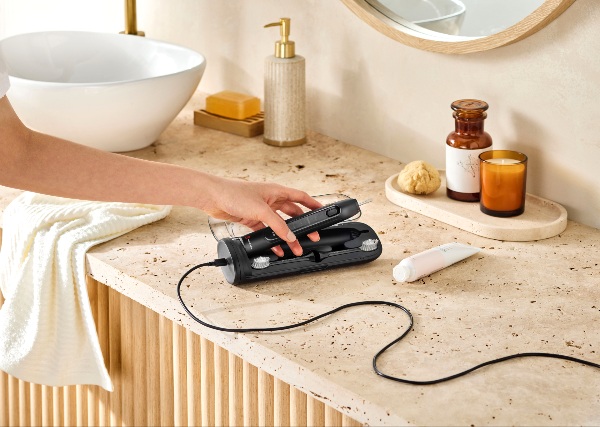
The new charging travel case builds on that convenience. Rather than packing a toothbrush, separate charging equipment and spare brush heads, users can keep their essentials together in one protective case.

With up to four weeks of brushing available on a full charge, the system is particularly practical for vacations, business travel and extended trips.
The case itself does not emit red light. Its purpose is to protect and recharge the compatible toothbrush, making the technology easier to incorporate into everyday life, even away from home.
A Different Approach to Everyday Dental Care
The growing interest in red light therapy reflects a shift toward wellness technologies that can be incorporated into familiar daily habits. From skincare devices to recovery equipment, light-based treatments are attracting attention for their potential to support the body’s natural cellular processes.
BON CHARGE’s Red Light Toothbrush brings that concept into the bathroom, offering a technology-enhanced approach to an essential daily activity. Although further research will help clarify its long-term benefits, the combination of conventional brushing and emerging photobiomodulation technology presents an interesting development in personal oral care.
The new BON CHARGE Red Light Toothbrush Charging Travel Case retails for $74.99 and is designed to accompany the brand’s Red Light Toothbrush.
Additional product information is available at BON CHARGE.
To learn more about the science behind BON CHARGE’s Red Light Toothbrush and what this technology could mean for oral health, we spoke with Dr. Lomas. He shares his insights on how red light works, why wavelength and light intensity matter, and its potential benefits for gum health, inflammation and cellular repair.
LA’s The Place: What wavelength of red light does the BON CHARGE toothbrush use, and why was that particular wavelength chosen?
Dr. Seb Lomas: The BON CHARGE Red Light Toothbrush uses two wavelengths: red light at 660 nm and near-infrared light at 830 nm. Both fall within ranges commonly studied in photobiomodulation and were selected to provide complementary effects at different tissue depths. Incorporating both into a toothbrush also makes it easy to integrate red light therapy into an existing daily oral care routine.
LATP: How does the wavelength affect how deeply the red light penetrates the gums?
Dr. Lomas: Light behaves differently depending on its wavelength. Generally, 660 nm red light is better suited to more superficial tissue, while 830 nm near-infrared light can reach deeper. Having both wavelengths allows the BON CHARGE toothbrush to deliver light across different depths of the gum tissue rather than focusing on a single layer.
LATP: What’s the difference between red and near-infrared light, and which is more beneficial for oral health?
Dr. Lomas: I wouldn’t consider one inherently more beneficial than the other. They serve different purposes based largely on how deeply they can interact with tissue, so they work together rather than compete with one another. The BON CHARGE Red Light Toothbrush combines both wavelengths to provide a broader approach to photobiomodulation as part of daily oral care.
LATP: How does red light help stimulate cellular activity and support gum tissue?
Dr. Lomas: Research shows that photobiomodulation can influence mitochondrial activity, nitric oxide signalling, reactive oxygen species and cellular repair pathways.¹ These mechanisms are linked to supporting gum vitality.
What’s particularly interesting is that photobiomodulation is now being investigated in clinical dentistry, not just for its effects at a cellular level, but also for its potential role in periodontal tissue health. Research suggests that, when used alongside conventional periodontal treatment, it may offer additional benefits.² It’s an exciting area of research, although we’re still learning which treatment protocols deliver the most consistent results.²,³
One of the fascinating things about photobiomodulation is that the relationship between light and biology isn’t necessarily linear. We see what’s known as a biphasic dose response, where a certain level of exposure may stimulate beneficial cellular processes, but increasing that exposure doesn’t automatically improve the outcome.¹ It’s a reminder that in biological systems, more isn’t always better. The wavelength, intensity, duration and frequency all matter.
LATP: Can the toothbrush help reduce gum inflammation, bleeding, and harmful bacteria?
Dr. Lomas: The toothbrush takes a two-pronged approach by combining sonic cleaning, which helps remove plaque and debris, with red and near-infrared light designed to support gum health. I would not position red light as a substitute for professional treatment or as a standalone solution for gum disease or bacterial infection. Persistent bleeding or inflammation should always be evaluated by a dental professional.
LATP: How important are light intensity and exposure time in determining how effective the toothbrush is?
Dr. Lomas: They are important considerations with any photobiomodulation device. The biological response can depend on factors including wavelength, irradiance, dose, exposure time, and frequency, so more light or longer exposure does not necessarily mean better results.¹ The key is using the device according to its intended protocol. With the BON CHARGE toothbrush, the light exposure is built into a normal two-minute brushing routine, twice a day.
LATP: How long does it typically take to see improvements in gum health, and does consistent use produce greater benefits?
Dr. Lomas: There isn’t a universal timeline because gum health varies from person to person and depends on factors such as existing oral health, brushing habits and overall consistency. As with any wellness routine, consistency is important. One of the benefits of incorporating light therapy into a toothbrush is that it doesn’t require adding another step to your day. For frequent travelers, the new Charging Travel Case or Oral Care Travel Bundle make it even easier to maintain that routine by protecting the toothbrush while traveling and allowing it to charge directly in the case.
LATP: Are there any risks associated with daily red light exposure, and can too much light actually reduce its effectiveness?
Dr. Lomas: When used as directed, photobiomodulation is generally considered a low-risk approach, but more exposure is not necessarily better. There can be an optimal therapeutic window, and excessive exposure may not provide additional benefits.¹ That’s why I recommend following the manufacturer’s instructions rather than extending treatment time or frequency on your own. With the BON CHARGE Red Light Toothbrush, the intended use is simply to incorporate it into your regular brushing routine. Anyone experiencing discomfort or who has an existing oral health concern should consult their dental professional.
References
- Huang, Y.-Y., Chen, A. C.-H., Carroll, J. D., & Hamblin, M. R. (2009). Biphasic dose response in low level light therapy. Dose-Response, 7(4), 358–383. https://pmc.ncbi.nlm.nih.gov/articles/PMC2790317/
- da Silva, R. C. M., da Silva, L. G. C., Martins, A. A., de Araújo, C. M., & Martins, A. R. L. A. (2024). Adjunctive photobiomodulation to basic periodontal therapy using different low-power laser application techniques: A systematic review and meta-analysis. Lasers in Medical Science, 39(1), Article 207. https://pubmed.ncbi.nlm.nih.gov/39093490/
- Gong, M. (2026). Photobiomodulation therapy as adjunct to scaling and root planing for patients with type 2 diabetes mellitus complicated by chronic periodontitis: A systematic review and meta-analysis. Photobiomodulation, Photomedicine, and Laser Surgery, 44(2), 61–77. https://pubmed.ncbi.nlm.nih.gov/41467963/
To learn more about BON CHARGE’s Scientific Advisory Board, visit: https://boncharge.com/pages/scientific-advisory-board