



For decades, creatine was largely associated with weight rooms, bodybuilders and athletes looking to squeeze more power out of a workout. That reputation wasn’t exactly wrong. It was simply incomplete.
Researchers are now looking much more closely at what creatine may offer beyond athletic performance, particularly as people move through middle age and begin confronting something that happens whether they notice it or not: the gradual loss of muscle mass and strength.
A new study involving adults between the ages of 45 and 65 is adding to that conversation. After 12 weeks of creatine supplementation, researchers reported improvements in strength and lean tissue mass, with some benefits appearing even among participants who were not exercising.
That last part is particularly interesting. Exercise, and resistance training in particular, remains central to preserving muscle with age. But researchers are increasingly investigating whether creatine might provide another tool for supporting the body’s muscle and energy systems as people get older.
Why Muscle Becomes a Bigger Deal With Age
Muscle isn’t simply about looking strong. It plays a role in mobility, balance, metabolism and the ability to remain physically independent. Beginning in adulthood, muscle mass gradually declines, and that decline can accelerate later in life.
This is where the conversation around creatine becomes considerably more relevant to people who have never picked up a bodybuilding magazine in their lives.
Creatine is a compound produced naturally by the body and also obtained through foods including meat and fish. Inside muscle cells, it helps regenerate adenosine triphosphate, or ATP, the primary energy currency used by cells. Supplemental creatine increases the amount available to the muscles, which can help support short bursts of demanding muscular activity and improve the body’s response to resistance training.
But muscle isn’t the only area attracting attention.
Creatine and the Brain
One of the more intriguing areas of current creatine research involves cognition. The brain has substantial energy requirements of its own, and researchers have been examining whether increasing creatine availability may influence memory and other aspects of cognitive performance.
The recent study of middle-aged adults reported improvements in several measures of memory and cognition alongside changes in lean tissue mass and strength. Those findings don’t turn creatine into a miracle anti-aging supplement, nor do they establish that everyone will experience the same results. They do, however, help explain why creatine research has expanded well beyond sports performance.

Not All Creatine Is the Same
Consumers walking into a supplement store can encounter an increasingly complicated collection of creatine products, from creatine hydrochloride and buffered formulations to powders promising enhanced absorption.
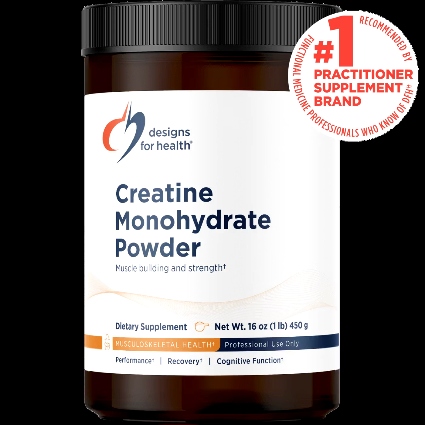
The form with the deepest research history remains surprisingly straightforward: creatine monohydrate.
Micronized creatine monohydrate uses smaller particles, allowing the powder to dissolve more readily and potentially making it easier for some people to digest. Other forms have entered the marketplace, but they have considerably less research behind them and have not established superiority over traditional creatine monohydrate.
A Supplement That May Have Outgrown Its Old Image
The emerging picture of creatine is quite different from the one many consumers grew up with. Rather than being relevant only to young athletes trying to build bigger muscles, researchers are investigating its potential usefulness across the lifespan.
That doesn’t mean supplementation replaces exercise, adequate protein, good nutrition or sleep. Nor does promising research mean creatine is appropriate for everyone. People with kidney disease, those who are pregnant or breastfeeding, and people managing chronic conditions or taking medications that can affect kidney function should discuss supplementation with a qualified health-care practitioner.
There is also an important laboratory consideration. Creatine supplementation can cause serum creatinine to rise somewhat. Because creatinine is commonly used when evaluating kidney function, people taking creatine should tell their health-care provider so laboratory results can be interpreted in the appropriate context.
What makes the current research interesting isn’t that scientists have suddenly discovered creatine. It is that they are asking different questions about a compound that has already been studied for decades.
Could something once marketed primarily to athletes eventually become part of a broader strategy for maintaining muscle, physical function and possibly cognitive health with age? Larger and longer-term studies will help answer that question. For now, creatine’s transition from the weight room into the healthy-aging conversation is well underway.
We asked Dr. David Brady, ND, DACBN, FMCP-M, FACN, Chief Medical Officer at Designs for Health, to take a closer look at the research, what it could mean for healthy aging, and what people should know about creatine, with references included throughout.
Q&A With Dr. David Brady:
LA’s the Place: Creatine has been around for decades. What has changed in our understanding that is making researchers look at it differently for middle-aged and older adults?
Dr. David Brady: Until recently, researchers studied creatine almost entirely in young athletes and bodybuilders, where it built a reputation as a reliable way to gain strength and support high-intensity performance. What has largely changed is the populations being studied. A growing body of evidence is examining creatine across the lifespan, and some of the most interesting findings come from middle-aged and older adults, where it is being studied not just for muscle, but for brain and cognitive health as well.
A recent study by Chun et al. on adults aged 45 to 65 is a good example of this [1]. In the study, 10 grams of creatine supplementation per day increased lean tissue mass, strength, and muscular endurance, and improved several measures of memory and cognition. Interestingly, gains in muscle were observed even in participants who were not exercising [1]. These findings help explain why creatine has gained so much attention lately and is being considered for a much wider audience than previously thought.
LATP: When muscle begins declining with age, what is actually happening physiologically, and where might creatine intervene in that process?
Dr. Brady: By our 30s, we begin slowly losing muscle, often around 3% to 5% per decade [2]. This loss, known as sarcopenia, accelerates around age 60 and tends to affect the larger, more powerful muscle fibers first. Over time, that loss reduces muscular strength and power and makes it harder to stay physically capable and independent. Additionally, some of that decline also comes down to how well muscle cells produce and use energy.
Creatine is stored inside our muscle cells, where it helps quickly regenerate the main source of energy (called ATP) that cells rely on, especially during short, demanding efforts [3]. By supporting that energy system, supplemental creatine can help older adults get more out of resistance training while also helping preserve the lean tissue they already have [3]. The recent study by Chun et al. on middle-aged adults reflects this well. During the trial, creatine increased lean mass and strength in both regularly exercising and non-exercising participants, with the biggest gains in the more active group [1]. Essentially, supplementing creatine helps slow, and in some cases, may even help reverse the natural loss of muscle associated with aging, regardless of activity level.
LATP: How significant is the possibility of improving or preserving lean mass for someone in their 50s or 60s compared with simply becoming stronger?
Dr. Brady: While muscular strength and lean mass are closely related, they are not the same. Improving strength involves how efficiently your existing muscle performs, while preserving lean mass means maintaining the tissue itself, which takes intentional effort as we age. Lean mass is also closely tied to metabolic health and longevity, making it an especially important focus in our later years.
A growing body of research suggests that preserving and even building muscle while also losing fat is achievable with creatine supplementation [1, 4]. In the recent Chun et al. study, participants who paired creatine with exercise gained lean tissue mass while losing more body fat compared with the group not taking creatine [1]. In other words, creatine supplementation has been shown to help improve body composition in a more favorable direction, an outcome that becomes more valuable the older we get.
LATP: Is there a particular age when creatine supplementation may become more relevant, or is that too simplistic a way to look at it?
Dr. Brady: Naming a single age is probably an oversimplification, because muscle deserves attention across the whole lifespan. However, because lean mass and muscular strength tend to peak in early adulthood and decline as we get older, it may be especially helpful as we enter our 40s and 50s [2]. The encouraging part is that we can build and maintain muscle at nearly any age. Older adults still gain muscle and strength through resistance training, even into their 70s and beyond, though it tends to take more consistent, deliberate effort than it did earlier in life [5]. Creatine can support that effort at any age, helping individuals get more out of training when they are younger, while also helping protect muscle as natural decline begins to set in.
Beyond age, a few lifestyle factors play important roles as well. People who eat little or no meat and fish, like vegetarians and vegans, tend to have lower baseline creatine, so they may have more to gain by supplementing [6]. Additionally, women generally carry lower creatine stores than men across the lifespan [7]. Anyone losing muscle, becoming less active, or working to improve strength may benefit from supplemental creatine.
LATP: What do people misunderstand most about creatine when they hear the word “supplement”?
Dr. Brady: The word supplement can make some people picture something synthetic, and creatine can sometimes get mixed up in this. Creatine, however, is a compound our bodies make naturally and is also something we get from foods like meat and fish. Supplementing helps maximize the creatine stored in our muscles that may otherwise be suboptimal, especially in older adults and people who eat little animal protein. Supplements can also feel intimidating to some because they are regulated differently from prescription medications. However, creatine is one of the most thoroughly researched supplements available, with its safety and effectiveness studied extensively across many populations [8].
LATP: Are there meaningful differences among the various forms and formulations of creatine on the market, or is much of that marketing?
Dr. Brady: Creatine monohydrate is the most widely studied and recommended form of creatine, with the strongest evidence behind its safety and effectiveness. Several variations of monohydrate exist, but micronized creatine monohydrate is the gold standard. Micronizing reduces the particle size to about 20 times smaller, resulting in more surface area for the creatine to dissolve and allowing for easier absorption and digestion [9]. The smaller particles also tend to mix more smoothly and may be gentler on the stomach. Other forms, like creatine hydrochloride, ethyl ester, and buffered creatine, are also on the market, but they have far less research behind them and have not been shown to work better than creatine monohydrate.
LATP: Who should speak with a physician before taking creatine, and are there medications or medical conditions that warrant particular caution?
Dr. Brady: For generally healthy adults, creatine has one of the strongest safety profiles of any supplement on the market, and serious adverse effects are very rare [10]. Still, anyone starting a new supplement should inform their health-care practitioner first, and a few groups deserve particular attention. This applies especially to anyone with existing kidney disease, along with people who are pregnant or breastfeeding, and anyone managing a chronic condition or taking prescription medications that affect the kidneys [10].
It is worth noting that supplementing creatine can cause a small rise in serum creatinine, a lab marker often used to estimate kidney function. That increase typically reflects the extra creatine in the body rather than any decline in kidney health, but it can be misread on a routine panel if the provider is unaware of supplementation.
LATP: If larger and longer studies confirm these findings, how do you think creatine could ultimately fit into a broader healthy-aging strategy?
Dr. Brady: Creatine can play a foundational role in healthy aging, especially when it works alongside other fundamental lifestyle choices. Healthy aging depends on the basics, including regular exercise, proper nutrition, and quality sleep. In addition to the physical and cognitive benefits we continue to learn more about, creatine supplementation is advantageous because it is relatively inexpensive, generally well tolerated, and easy to include alongside healthy lifestyle habits.
If larger and longer studies continue to confirm these findings, creatine could become a routine recommendation for older adults working to preserve muscle, strength, and cognitive health as they age. Recent research is especially compelling because muscle-related benefits were observed even in people who were not exercising, suggesting it may be useful for more people than previously thought. For many older adults, creatine supplementation offers a low-cost and well-tolerated option worth considering to support muscle health, cognition, and overall healthy aging.
In Closing
Creatine may have spent decades associated with athletes and gym culture, but the conversation around it is clearly changing. As researchers continue to examine its role in maintaining muscle, strength and cognitive function later in life, its relevance may prove to be much broader than previously assumed. The more interesting question now isn’t whether creatine can improve a workout, but what preserving the body’s physical and mental reserves could mean for staying capable, independent and healthy as people age.
Click here to purchase the most researched and quality creatine on the market: Designs for Health Creatine Monohydrate Powder
References
- Chun J, Liu Y, Kibler GL, et al. Effects of creatine supplementation with and without exercise and diet intervention on body composition, cognitive function, and markers of health in middle-aged and older adults. J Int Soc Sports Nutr. 2026;23(sup1):2716273. https://doi.org/10.1080/15502783.2026.2716273
- Cleveland Clinic. Sarcopenia (muscle loss): symptoms and causes. https://my.clevelandclinic.org/health/diseases/23167-sarcopenia
- Kreider RB, Stout JR. Creatine in health and disease. Nutrients. 2021;13(2):447. https://doi.org/10.3390/nu13020447
- Desai I, Wewege MA, Jones MD, et al. The effect of creatine supplementation on resistance training-based changes to body composition: a systematic review and meta-analysis. J Strength Cond Res. 2024;38(10):1813-1821. https://doi.org/10.1519/JSC.0000000000004862
- Grgic J, Garofolini A, Orazem J, Sabol F, Schoenfeld BJ, Pedisic Z. Effects of resistance training on muscle size and strength in very elderly adults: a systematic review and meta-analysis of randomized controlled trials. Sports Med. 2020;50(11):1983-1999. https://doi.org/10.1007/s40279-020-01331-7
- Kaviani M, Shaw K, Chilibeck PD. Benefits of creatine supplementation for vegetarians compared to omnivorous athletes: a systematic review. Int J Environ Res Public Health. 2020;17(9):3041. https://doi.org/10.3390/ijerph17093041
- Smith-Ryan AE, Cabre HE, Eckerson JM, Candow DG. Creatine supplementation in women’s health: a lifespan perspective. Nutrients. 2021;13(3):877. https://doi.org/10.3390/nu13030877
- Kreider RB, Gonzalez DE, Hines K, et al. Safety of creatine supplementation: analysis of the prevalence of reported side effects in clinical trials and adverse event reports. J Int Soc Sports Nutr. 2025;22(S1):2488937. https://doi.org/10.1080/15502783.2025.2488937
- LeBaron T. Creatine recommendation report. 2011. https://www.researchgate.net/publication/312320682_Creatine_Recommendation_Report
- Kreider RB, Jagim R, Antonio J, et al. Creatine supplementation is safe, beneficial throughout the lifespan, and should not be restricted. Front Nutr. 2025;12:1578564. https://doi.org/10.3389/fnut.2025.1578564