


Direct-seeded rice (DSR) is reshaping rice farming across many parts of India. Instead of raising seedlings and transplanting them into puddled fields, seed is placed straight into the main plot. When DSR is managed well, it saves labour, shortens the crop cycle, and allows better water control. Modern farm equipment makes those gains more consistent and easier to repeat season after season.
Why DSR rewards precision more than transplanting
Transplanted paddy can hide small errors because puddling and standing water slow early growth. DSR behaves differently: seed depth, surface levelling, and soil moisture decide how quickly the crop establishes. The first month is decisive, because weeds compete aggressively and gaps in the plant stand are hard to recover later. Equipment that improves accuracy and timing directly boosts efficiency.
1) Land levelling: the base for uniform emergence
A level field is the starting point for efficient DSR. It decides where water collects, how fertiliser moves, and whether machinery can operate smoothly.
Laser land leveller
Laser levelling creates a consistent slope, so irrigation spreads evenly, and the field drains predictably after rain. In DSR, that usually means:
- More uniform germination and crop stand
- Fewer waterlogged patches that trigger weed flushes
- Better use of each irrigation, especially in water-stressed belts
Power harrow or rotavator
Where clods are large, a power harrow or rotavator can prepare a fine tilth quickly. For DSR, the aim is a firm yet crumbly seedbed that holds moisture without sealing over. A smoother bed also keeps seed depth consistent across the field.
2) Accurate sowing: one pass, right depth, right spacing
The biggest efficiency leap in DSR comes from controlled seed placement. When rows are straight and depth is consistent, every later operation becomes easier.
Seed-cum-fertiliser drill
A seed-cum-fertiliser drill meters seed and basal fertiliser through separate boxes and places them in a defined pattern. This improves nutrient use because fertiliser sits close to the root zone instead of being scattered on the surface. It also reduces the number of passes, saving fuel and time.
Zero-till drill for residue-retained fields
In many rice–wheat areas, residue management is part of day-to-day field reality. A zero-till drill cuts through mulch and places seed with minimal soil disturbance. That reduces turnaround time between crops and preserves soil structure when the season is tight.
Drum seeder for wet DSR
Where farmers prefer sowing into a moist surface, a drum seeder drops pre-germinated seed in rows. Row sowing supports mechanical weeding and more uniform top-dressing later.
3) Right-sized power for Indian fields: the mini tractor
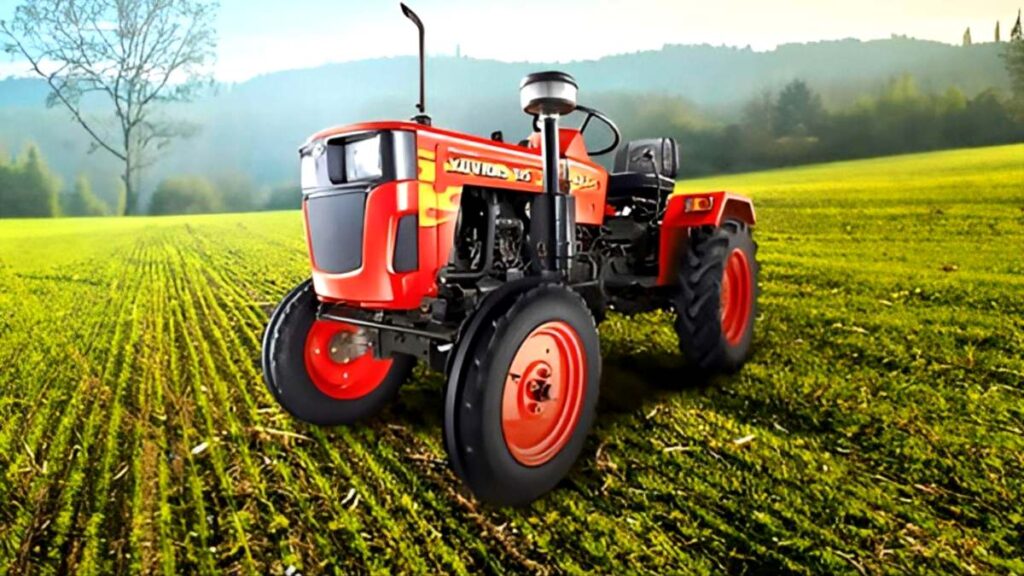
Many DSR fields are small, irregular, or separated by narrow bunds. Custom hiring is useful, but availability during peak sowing can be unpredictable. A mini tractor fits well here because it is manoeuvrable, works on fragmented plots, and can be paired with several DSR implements.
A mini tractor commonly supports:
- Light tillage and seedbed preparation
- Pulling smaller seed drills and seed-cum-fertiliser drills
- Inter-row operations when the crop is line-sown
- Moving inputs and spray water during busy weeks
4) Weed control: equipment that protects timeliness
Weeds are the make-or-break factor in DSR. Even a few missed days can shift the field from manageable to messy. Modern equipment improves efficiency by making weed control fast, uniform, and less dependent on labour availability.
Boom sprayers for uniform coverage
A calibrated boom sprayer delivers the right dose and droplet pattern across the field. Compared with a knapsack sprayer, it reduces skips and overlaps, which means fewer surviving weed patches and less chemical wastage. Speed matters too: you can spray at the right stage.
Mechanical weeders for row-sown DSR
If the field is line-sown, inter-row weeders uproot weeds and disturb the soil between rows. Options range from compact power weeders to lightweight rotary weeders. Besides saving labour, mechanical weeding can aerate the soil surface, supporting stronger roots.
5) Water and nutrient efficiency: more control, less guesswork
DSR performs best when irrigation maintains moisture without prolonged flooding. Equipment supports that tighter approach.
- Gated pipes, pipe outlets, and better field channels distribute irrigation evenly
- Drills keep basal nutrients near the seed line, improving early vigour
- Broadcast spreaders distribute granular inputs evenly, reducing patchy growth
Uniform crop growth is an efficiency gain by itself: it simplifies crop protection and makes harvest timing easier.
6) Crop protection and monitoring: staying ahead of surprises
DSR crops move quickly, so scouting and timely sprays matter. A battery sprayer or boom sprayer with clean nozzles keeps pressure steady, which improves coverage on weeds and early pest pockets. Many villages now have drone or sprayer service providers; a quick round after a rain event can spot gaps, lodging, or nutrient stress. Keep a simple field diary for irrigation and spray dates so the next season’s rice farming plan starts with proven timings. Small habits like this cut rework.
7) Harvest and residue management: saving grain and turnaround time
DSR fields can show uneven maturity if sections face moisture stress or weed pressure. Efficient harvesting reduces grain loss and protects quality.
Harvest options that match farm size
In larger clusters, combine harvesters finish quickly and reduce shattering losses when scheduled at the right grain moisture. In smaller holdings, reapers and compact harvesters shorten the harvest window and reduce dependence on large machines.
Straw management implements
Straw choppers, mulchers, and residue spreaders make the next operation smoother, whether you retain residue, incorporate it, or prepare for the following crop. Good residue handling keeps fields workable and supports timely sowing.
A clear equipment roadmap for DSR adoption
You do not need every machine at once. Think in a sequence, and use custom hiring where ownership does not make sense.
- Start with levelling and seedbed preparation (laser leveller access plus harrow/rotavator as needed)
- Choose a seeding method (seed-cum-fertiliser drill, zero-till drill, or drum seeder)
- Strengthen weed control (boom sprayer, and mechanical weeder if row-sown)
- Plan harvest and residue management early, especially if the village depends on shared machines
What efficiency looks like on the ground
The real value of modern equipment in DSR is predictability. When levelling is accurate, sowing is uniform, and weed control is timely, the crop becomes easier to manage week after week. For Indian growers aiming to make rice farming more resilient amid labour pressure and water stress, machinery choices that match field size, soil type, and local service availability can turn direct seeding into a dependable, repeatable approach.