
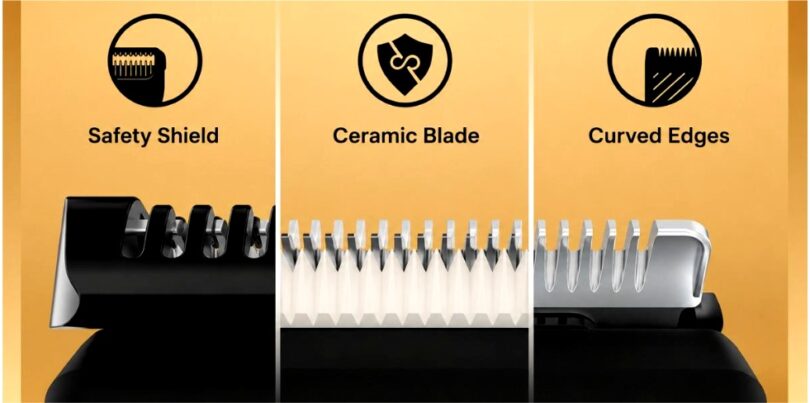

Safer pubic hair trimming depends on skin-friendly blades, proper guard length, rounded edges, controlled cutting speed, and a design that keeps the blade from directly scraping sensitive skin.
Pubic hair trimming is different from beard or head trimming. The skin around the groin is thinner, softer, and more folded. A normal trimmer may work on the beard, but it can feel risky around private areas because one wrong angle can lead to cuts, pulling, redness, or burning. This is why the blade and guard design matter so much when choosing a pubic hair trimmer.
Why Blade and Guard Design Matters in Pubic Hair Trimming
| Challenge | Why It Happens |
| Skin folds | The blade can catch loose skin if not handled carefully |
| Coarse hair | Pubic hair is usually thicker and curlier than beard hair |
| Sensitive skin | Small cuts or friction can cause irritation quickly |
| Sweat-prone area | Poor trimming can lead to redness, itching, or bumps |
| Uneven surface | The tool needs better control than a regular trimmer |
This is why choosing the best pubic hair trimmer is not about the sharpest blade only. It is about the safest balance between cutting power and skin protection.
1. Rounded Blade Tips
One of the most important features is rounded blade tips.
Sharp blade edges may cut hair quickly, but if the blade tips are too aggressive, they can scratch sensitive skin. Rounded blade tips reduce the chance of sudden nicks when the trimmer touches uneven skin.
Why this helps
- Reduces sharp contact with skin
- Makes trimming more comfortable
- Helps around folds and curves
- Safer for beginners
- Useful for below-the-belt grooming
A pubic hair best trimmer for men should ideally have blades designed for body grooming, not only beard shaping.
2. Ceramic or Skin-Safe Blade Material
Blade material also affects safety. Many grooming trimmers use stainless steel blades, while some body grooming trimmers use ceramic or ceramic-coated blades.
| Blade Type | Benefit | Things to Know |
| Stainless steel blade | Strong, durable, sharp | Needs proper cleaning and drying |
| Ceramic blade | Stays cooler, smooth cutting feel | May be more delicate if dropped |
| Coated blade | Better glide and comfort | Quality depends on the coating |
Ceramic blades are often preferred in sensitive-area grooming because they may heat less during use. Heat is important because a blade that becomes warm too quickly can make trimming uncomfortable, especially near private areas.
3. Fixed Guard Protection
A guard is the attachment or protective layer that keeps the blade away from direct skin contact.
For pubic hair trimming, a guard is not optional. It is a safety feature.
A good guard should:
- Sit firmly on the trimmer
- Not move or shake while trimming
- Maintain equal distance from the blade
- Have smooth edges
- Allow hair to enter without pulling
- Be easy to remove and clean
If the guard is loose, trimming becomes risky because it may shift while moving over the skin.
4. Multiple Guard Length Options
Not everyone wants the same grooming style. Some men prefer a very close trim, while others only want to reduce length. Multiple guard sizes make trimming safer because you do not have to go too close immediately.
| Guard Length | Best For |
| 1 mm to 2 mm | Very close trim, needs careful use |
| 3 mm to 4 mm | Safer clean look for beginners |
| 5 mm to 6 mm | Natural but neat trimming |
| Adjustable guard | Flexible control for different areas |
For beginners, starting with a longer guard is better. You can always trim shorter later, but you cannot undo irritation caused by going too close too quickly.
5. Anti-Nick Blade Design
An anti-nick blade design means the blade is positioned in a way that reduces direct contact with the skin.
This is especially useful for areas like:
- Scrotum
- Inner thighs
- Groin folds
- Base area
- Lower abdomen
A regular beard trimmer may expose the blade more directly. A pubic hair trimmer should have a design that protects the skin while still cutting hair effectively.
6. Blade Gap Should Not Be Too Wide
Blade gap means the space between the moving and fixed blades. If the gap is too wide, sensitive skin can get caught. If the gap is too narrow, the trimmer may not cut coarse hair properly.
A safer pubic hair trimmer usually has a balanced blade gap that allows hair to enter while keeping skin protected.
Signs of unsafe blade gap
- Hair pulling
- Skin pinching
- Uneven cutting
- Need to press hard
- Sudden sharp feeling on skin
If a trimmer pulls hair frequently, stop using it on sensitive areas.
7. Smooth Guard Teeth
The teeth of the guard should be smooth and rounded. If the guard teeth are sharp, rough, or poorly finished, they can scratch the skin even if the blade itself is safe.
This matters because pubic skin is not flat like the cheek or jawline. The guard constantly touches curves and folds.
Better guard teeth should feel:
- Smooth
- Rounded
- Flexible but stable
- Non-scratchy
- Easy to glide
A guard that feels rough on your hand will likely feel worse on sensitive skin.
8. Good Hair-Lifting Design
A good guard should guide the hair into the blade without dragging the skin. Pubic hair can grow in different directions, so the trimmer needs to lift and cut hair cleanly.
If the guard does not guide hair properly, users may keep moving the trimmer again and again over the same area. This can increase friction and redness.
Good hair-lifting design helps with:
- Faster trimming
- Less repeated strokes
- Cleaner finish
- Reduced skin irritation
- Better control on curly hair
9. Low Heat Blade Performance
Blade heating is an underrated safety point. If the trimmer blade becomes hot within a few minutes, it can irritate sensitive skin.
This is why the best pubic hair trimmer should have stable performance and low heating during normal use.
Why heating happens
- Poor motor quality
- Continuous long use
- Dirty blades
- Lack of oiling where required
- Low-quality blade material
If your trimmer gets warm, pause for a few minutes before continuing.
10. Easy-to-Clean Blade and Guard
A safe trimming experience does not end after cutting hair. Hygiene is equally important.
Pubic hair trimming involves sweat-prone areas, so the blade and guard should be easy to clean after every use.
| Feature | Why It Helps |
| Detachable guard | Easy to remove trapped hair |
| Washable blade head | Better cleaning after use |
| Cleaning brush | Helps remove small hair particles |
| Rust-resistant blade | Better hygiene and durability |
| Quick-dry design | Reduces moisture build-up |
Never store a wet trimmer in a closed pouch immediately. Let it dry properly first.
Blade and Guard Features to Avoid
Not every trimmer is suitable for pubic grooming. Avoid these features if your goal is safety.
| Avoid This | Reason |
| Exposed sharp blades | Higher chance of cuts |
| Loose guard | Can shift while trimming |
| Rough plastic teeth | May scratch skin |
| Overheating blade | Can irritate sensitive skin |
| No guard option | Risky for beginners |
| Beard-only trimmer head | May not suit body curves |
A beard trimmer can shape facial hair well, but that does not automatically make it safe for private-area grooming.
How to Use the Guard Safely
Even the right tool needs the right technique.
Follow this simple method:
- Start with a longer guard.
- Trim when the area is clean and dry.
- Do not press the trimmer into the skin.
- Stretch loose skin gently with one hand.
- Move slowly in short strokes.
- Avoid trimming the same area repeatedly.
- Clean the blade and guard after use.
- Stop if you feel pulling, burning, or pinching.
For first-time users, a 3 mm or higher guard is usually safer than going very close.
Trimmer vs Razor for Pubic Hair
Many men use razors for a smooth look, but razors can be risky around the balls and groin folds. A trimmer gives more control because it cuts hair without fully scraping the skin.
| Tool | Safety Level | Best Use |
| Razor | Lower for beginners | Smooth shave, but higher irritation risk |
| Beard trimmer | Medium to low | Not ideal for sensitive areas |
| Body trimmer | Better | General body grooming |
| Pubic hair trimmer | Best suited | Sensitive-area grooming |
If safety is your main concern, trimming is usually easier to manage than shaving.
Final Takeaway
The safest pubic hair trimmer is not simply the sharpest one. It should have rounded blade tips, stable guards, smooth guard teeth, low-heat performance, easy cleaning, and controlled blade contact.
For men’s intimate grooming, the guard is just as important as the blade. The blade cuts the hair, but the guard protects the skin. So, when choosing a male pubic hair trimmer, look for comfort, control, and skin protection before looking at style or speed.
FAQs
1. What blade type is safer for pubic hair trimming?
A skin-safe blade with rounded tips is safer for pubic hair trimming because it reduces direct sharp contact with sensitive skin.
2. Why is a guard important while using a pubic hair trimmer?
A guard keeps the blade slightly away from the skin. This helps reduce the chances of cuts, pinching, scratching, and irritation, especially around folds and sensitive areas.
3. Which guard length is best for beginners?
For beginners, a 3 mm or higher guard is usually safer. It gives a neat trim without going too close to the skin. After gaining confidence, you can try shorter settings if needed.
4. Can I use a beard trimmer for pubic hair?
You can, but it is not always the safest choice. A beard trimmer is designed for facial hair, not sensitive groin skin. A dedicated pubic hair trimmer or body trimmer with proper guards is usually better.
5. What blade features help prevent cuts?
Features like rounded blade tips, anti-nick design, controlled blade gap, smooth edges, and a stable guard help reduce the risk of cuts during pubic hair trimming.