Site icon LA's The Place | Los Angeles, Magazine

Big Wheel® Is Rolling Back Into the Spotlight as Families Rediscover Outdoor Play

Big Wheel
Big Wheel. the iconic ride-on toy returns with new models for 2026 and a renewed connection to screen-free childhood fun.

Before everything needed a password, an app, or a charging cable, there was the driveway. For generations of kids, it doubled as a racetrack, a proving ground, and the site of that first real taste of freedom. And usually, it happened from just a few inches off the ground behind the oversized front wheel of a Big Wheel®.

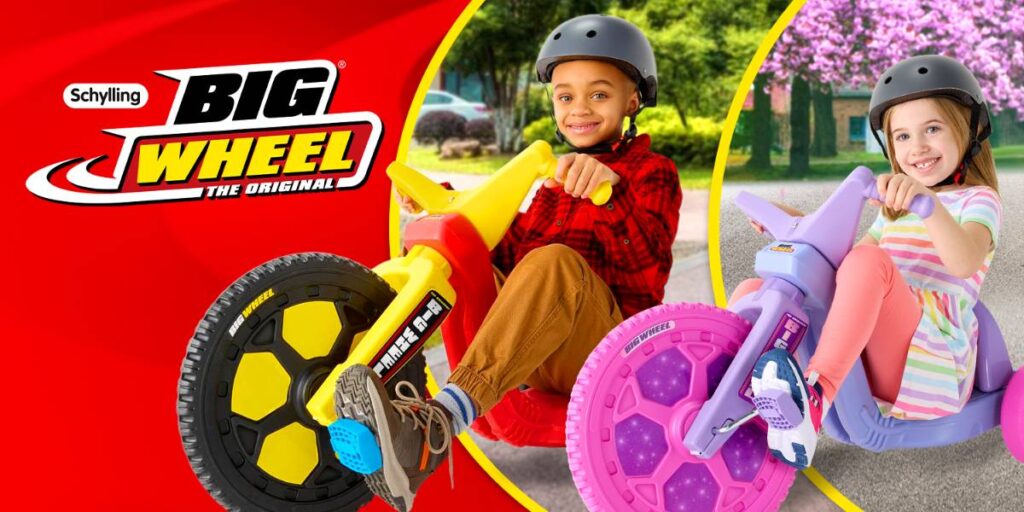
Now, the iconic ride-on brand from Schylling Inc. is finding fresh momentum again with the launch of two new models for Spring 2026: the Big Wheel Chopper and Big Wheel Dreamer.

Having arrived in time for National Bike Day on April 19, the new releases tap into something larger than nostalgia. As more parents look for ways to pull kids away from screens and back into physical play, classic ride-on toys are quietly regaining cultural relevance.

Why Big Wheel Still Matters

Long before electric scooters and handheld gaming devices dominated childhood attention spans, Big Wheel introduced kids to movement, speed, and independence in a way that felt thrilling but approachable. The low-rider design gave children confidence while still feeling fast enough to spark imagination.

That formula has endured because it delivers something simple and immediate. No learning curve. No complicated setup. Just motion, momentum, and outdoor freedom.

For many parents, there’s also an emotional connection. Big Wheel remains one of those rare products that instantly triggers memory, summer afternoons, sidewalk races, spinning out in cul-de-sacs, and the feeling of being old enough to roam just a little farther from home.

A New Generation of Riders

The 2026 Big Wheel Chopper and Big Wheel Dreamer maintain the classic oversized-wheel design while adding updated styling and customization features aimed at today’s kids.

Designed for ages 3–7, both models feature adjustable seats that grow with the child, oversized 15-inch front wheels for smoother pedaling, and wide rear wheels designed to create a more stable ride. Weather-resistant decals also allow kids to personalize the experience, something increasingly important in a generation raised on customization.

But despite the updates, the core appeal hasn’t changed much at all.

Kids still want speed. They still want movement. And they still want something that feels like their own.

The Return of Outdoor Play

The renewed interest in products like Big Wheel also reflects a broader shift happening among families. Outdoor play, once considered automatic, is now being intentionally encouraged as parents push back against endless screen time and increasingly indoor lifestyles.

Ride-on toys occupy an interesting place in that conversation because they blend activity with independence. Unlike organized sports or structured activities, they allow kids to create their own adventures without rules, schedules, or supervision hovering over every moment.

That freedom may be part of why the category continues to endure while so many toy trends come and go.

Nostalgia That Still Works

Some nostalgic products survive mainly as collectibles or references to another era. Big Wheel is different because it still functions exactly as intended. A child climbing onto one today experiences much of the same excitement kids felt decades ago.

That’s not easy to preserve in a market driven by rapid trends and constant reinvention.

The goal is to evolve the brand carefully while protecting what made it iconic in the first place. The result is a product that feels familiar to parents without feeling outdated to kids.

In many ways, Big Wheel’s continued relevance comes down to something surprisingly timeless: the joy of movement and the freedom that comes with it.

For more information on Big Wheel® products and the new Spring 2026 models, visit schylling.com.

We chatted with Anna Barker, Chief Creative Officer, Co-Founder for more!

LAsThePlace: Princess Ida is rooted in a real child’s story. What specifically about her influenced the design and personality of this character?

Anna Barker: Princess Ida was inspired by a real child whose joy, imagination and love of pink helped shape the heart of this character. We wanted Princess Ida to feel magical, but also clever, curious and relatable. She isn’t just a princess because of how she looks; she is a character who leads with kindness, friendship and wonder. In her Light-Up Library™ story, she goes on an adventure to find her missing magic wand, but the real message is that friendship and connection are the most magical tools of all. That felt very true to the spirit of Ida and what the Glo Pals represent. 

LATP: Glo Pals started with a sensory need. As the brand has gro wn, how do you make sure you don’t lose that original purpose?

Anna Barker: We come back to the “why” constantly. What began as light-up drink cubes evolved into a toy designed to make bath time more engaging for children. The concept took on a deeper meaning. We heard from a mother that it helps a child with autism navigate sensory overload during bath time, transforming a difficult daily routine into a calming, joyful experience.  As the brand grows, that original purpose still guides how we design and innovate. We continue to create innovative, intentionally designed products that empower kids to grow, play, and thrive through meaningful, magical moments.

LATP: There’s a noticeable gap when it comes to girl-focused representation in sensory and STEM-adjacent toys.

Anna Barker: We’ve seen that many sensory and STEM-adjacent toys focus heavily on function, but don’t always reflect how kids actually want to play. There’s been this idea that these categories need to look a certain way, when in reality, kids are drawn to things that feel expressive, imaginative, and personal.

What’s been missing is that blend, products that support sensory needs but also feel magical, character-driven, and fun. Representation is about making sure kids can see themselves in the experience, not just use it.

LATP: What made you decide now was the right time to introduce Princess Ida?

Anna Barker: We’ve built a strong foundation in sensory play with the original Glo Pal characters, and now we’re seeing kids want more connection, characters, worlds, and stories they can step into.

Princess Ida allows us to expand in that direction while staying true to our purpose. She brings together sensory play and imagination in a way that reflects how kids are engaging with play today.

LATP:  When you think about sensory play, what are parents still getting wrong or overlooking?

Anna Barker: Parents may feel like sensory play has to be structured or therapeutic to “count,” when really, it can be simple and child-led. A glowing cube in the bath, a new texture, a soft light, a familiar routine with one small moment of surprise. Those things matter. The goal isn’t to do sensory play perfectly. It’s to create space for curiosity, comfort and regulation in ways that feel natural for your child.

LATP: The water-activated cubes are simple but powerful. What did you learn from kids, especially neurodivergent kids, that shaped how these products function?

Anna Barker: Simplicity can be incredibly powerful when it gives a child control and predictability. The cubes activate when placed in water, so the cause-and-effect is clear and immediate. Kids understand, “I put this in, and it glows.” For many children, especially neurodivergent children, that kind of intuitive interaction can be both exciting and grounding. We also focus on gentle visual stimulation, something engaging enough to spark wonder, but not so overwhelming that it takes over the experience.

LATP: How do you balance making a toy visually appealing, like with the pink aesthetic, without falling into stereotypes or limiting how kids engage with it?

Anna Barker: For us, pink is not about limiting who Princess Ida is for. It’s about celebrating a child’s real personality and preferences. Kids should be allowed to love pink, green, princesses, dinosaurs, science, adventure, all of it. The goal is not to tell children how to play, but to give them characters and tools that invite imagination. Princess Ida may have a pink world, but her story is about friendship, discovery and confidence, which are themes any child can connect with.

LATP: The Light-Up Library component adds storytelling. How important is narrative when it comes to keeping kids engaged in sensory play?

Anna Barker: Narrative is huge because it gives the sensory experience meaning. The Light-Up Library™ turns reading into something interactive, where children use the Magic Magnifier™ to reveal hidden details and make each page glow. That transforms storytime into a full sensory adventure, but it also gives kids a reason to stay engaged. They’re not just looking at light,  they’re helping a character, following a journey and discovering surprises along the way. 

LATP: Have you seen differences in how children with sensory sensitivities interact with Glo Pals versus traditional bath toys?

Anna Barker: Traditional bath toys are fun, but Glo Pals often create a different kind of focus. For some children, the glow becomes a calming visual anchor. For others, especially sensory-seeking kids, it encourages them to stay in the bath longer and engage more fully with the routine. We’ve heard from parents that bath time can shift from stressful to something their child actually looks forward to, and that is incredibly meaningful for us. 

LATP: With sensory toys becoming more mainstream, how do you separate meaningful innovation from brands just jumping on a trend?

Anna Barker: For us, meaningful innovation starts with real families and real needs. Sensory play should never be treated as just a buzzword. It has to be designed with intention… how does it feel, how does it support a routine, how does it invite participation without pressure? Glo Pals was born from a sensory need, so we hold ourselves accountable to that origin. If a product doesn’t create magic, connection or joy in a child’s everyday life, then it’s not enough for us. 

LATP: Looking ahead, what does inclusive play actually need next that the industry still isn’t addressing?

Anna Barker: Inclusive play needs to move beyond saying “for everyone” and start showing children that they are truly considered in the design. That means more representation, more flexible ways to play, more products that support different sensory needs and more stories that reflect the many ways kids experience the world. The next step is designing play that doesn’t ask children to adapt to the toy, but allows the toy to meet the child where they are.

Exit mobile version