


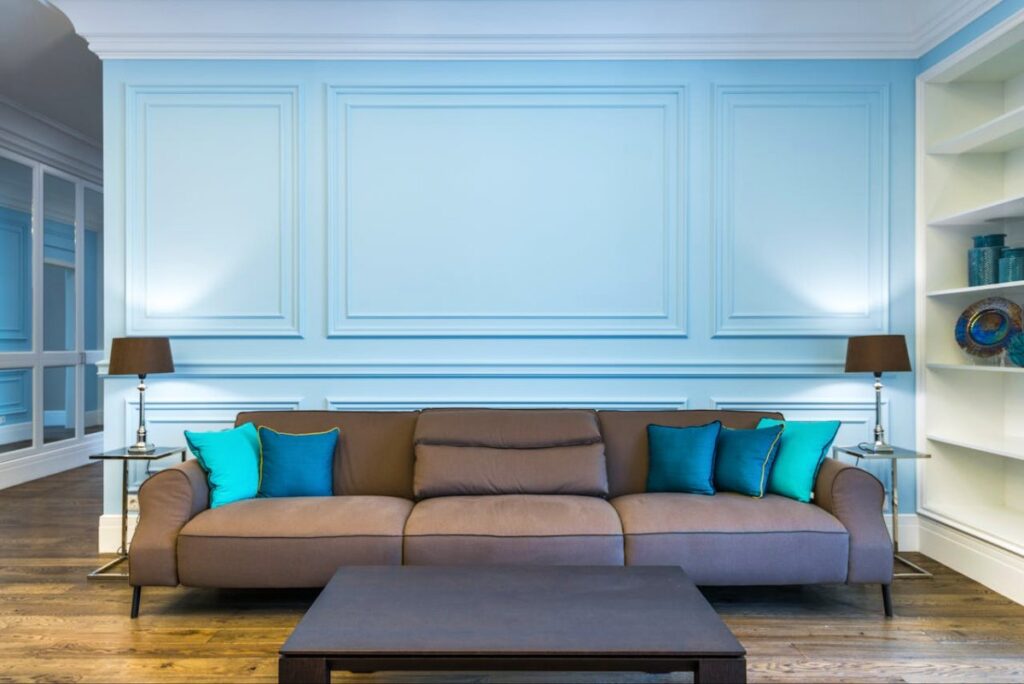
An accent wall is one of the simplest ways to refresh a room without changing the whole space. It adds focus, depth and personality, whether used behind a sofa, bed, dining corner or study desk.
The colour should not stand alone. It should match your furniture, flooring, curtains and lighting. This article explains how to use accent walls in a clean, balanced and stylish way for your overall home interior.
Why an Accent Wall Works so Well?
An accent wall creates one clear focus point in the room. This can make the room feel more organised and thoughtfully designed. It is useful in Indian homes where open layouts, compact rooms and mixed furniture styles are common.
A well-planned accent wall can:
- Make a plain room look more finished
- Add depth without making every wall dark
- Highlight a key area of the room
- Support better interior colour combinations
- Give the room a fresh look without changing everything.
Pick the Main Wall Carefully
The wall you choose should be the one that naturally catches attention. In a bedroom, it can be the wall behind the bed. In a living room, it can be the wall behind the sofa or TV unit. Avoid choosing a wall that has too many doors, windows or switches.
A simple, clear wall allows the colour to stand out better and makes the room look neater. It also gives the accent shade enough space to create impact without making the room feel crowded.
Pick a Colour That Matches the Room
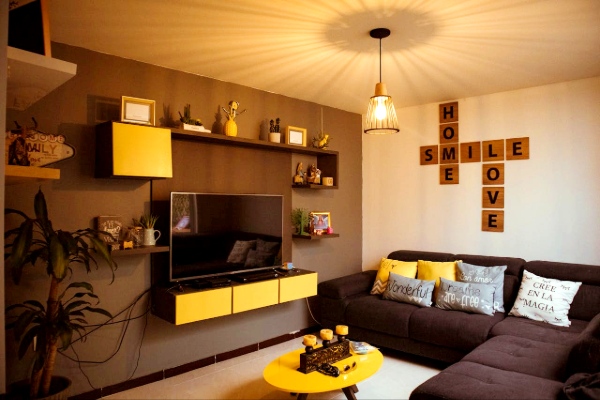
Photo credit
The accent colour should blend well with your furniture, flooring, curtains and décor so the space feels complete. If your room has light flooring and neutral furniture, deeper shades like teal, olive, navy, charcoal, or terracotta can look rich.

For such accent walls, Nerolac Impressions 24 Carat works well, for accent walls as its velvet finish enhances deeper shades while offering good washability.
If the room already has dark furniture or flooring, softer shades like muted green, dusty rose, warm beige or soft grey may work better. Good interior colour combinations usually follow a simple balance: one strong shade, one soft shade and one supporting neutral.
Use Texture for More Depth
Paint is not just about choosing the right colour, as the finish also affects how the wall looks. A matte finish can give the space a soft, elegant feel, while a mild sheen may suit areas that are used often.
For more depth, you can add texture to the accent wall. Keep it subtle, as heavy textures may not suit every room. A simple textured finish can make the wall look stylish and balanced.
Final Thoughts
An accent wall can improve your home interior when it is planned with consideration. Choose the right wall, pick a colour that matches the room and keep the décor simple. When the shade, lighting and furniture work together, even one wall can make the whole room feel fresh, stylish and welcoming.