


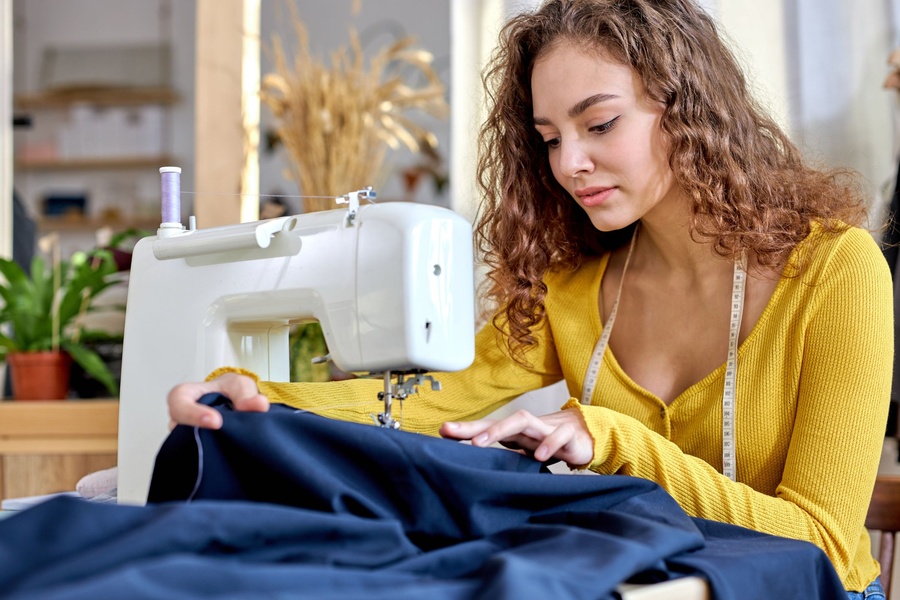
Most of us have turned over the tag on a seemingly simple piece of clothing at the mall and seen a jaw-dropping price. Ninety dollars for a button-up blouse? Three hundred for a dress with misaligned patterns at the seams?
It seems to be getting harder and harder to justify store-bought prices given the quality, but you still want cute, fashionable clothing. So you’re wondering if you should start sewing your own clothes and whether it’s actually cheaper.
Though DIY apparel is not nearly as affordable as many people think, the cost mostly depends on what you make and how skilled you are. Let’s explore the top factors to consider below!
The Upfront Costs Are Substantial
Getting started with sewing costs money. A decent beginner sewing machine runs anywhere from $100 to $300. Then you’ve got fabric, thread, needles, scissors, a seam ripper, and patterns. Before you’ve sewn a single seam, you could easily spend $200 to $400.
Fabric Prices Will Surprise You
Quality fabric isn’t cheap. A yard of decent cotton can run $8 to $15, and a simple dress might need three to four yards. You could end up spending $40 on materials for something you’d find on sale at a retail store for $25.
To save money, buy fabric on sale, shop discount stores, or repurpose textiles you already have. For example, you can upcycle quilts into clothes, which will give you thick, quality pieces at nearly no cost to you!
What You’re Making Matters
Simple garments, like tote bags, pajama pants, or basic tees, are where DIY starts to make financial sense. Once you get decent at the craft, you can whip out easy garments in 30 minutes to an hour, and you won’t spend much on fabric if you have to buy it new.
But if you want complex pieces with lots of hardware, lining, or specialty fabric, those can actually cost more to make than to buy. Even if you spend less on the supplies than you would on a retail garment, you’ll pay for the piece in days of your time.
Skills Pay Off Over Time
The longer you sew, the cheaper it gets. You waste less fabric, you make fewer mistakes, and you get faster. You can also stop buying patterns for every single project, which apart from fabric, are the most expensive part.
Learning the basics of sewing your own clothes before you start, like how to read a pattern and choose the right fabric, can cut down on many costly beginner mistakes. But there’s no real replacement for time and practice.
So Is It Worth It?
Sewing your own clothes can be cheaper in the long run, but not immediately. If you go in expecting to slash your clothing budget in month one, you’ll be disappointed. But if you go in knowing it’s a skill that compounds over time, it’s usually worth it, especially if you enjoy the craft as a hobby. Time is the most expensive line item in all garment construction, so if you love the process, you can find ways to cut fabric and pattern costs and make truly affordable apparel for yourself.