

The 3D-printed pieces that most people see are small, no bigger than desk lamps or planters. But when we step outside of the hobbyist realm, 3D printing technology is capable of so much more. We can even print life-size buildings!
Want to learn more? Read on to explore how large a 3D print can get and what makes large-scale production possible.
Size Starts With the Machine
Every 3D printer has a physical print area, and the size of it determines build volume. It’s important to understand build volume because that area sets a hard limit on what you can create in a single run.
Desktop FDM (Fused Deposition Modeling) printers, the kind most hobbyists start with, typically offer a print bed somewhere between 220x220mm and 300x300mm, with a height of around 250–400mm. That’s plenty of room for phone stands, figurines, and replacement parts, but it won’t get you a full helmet or a piece of furniture in one shot.
Industrial Machines Push Way Beyond That
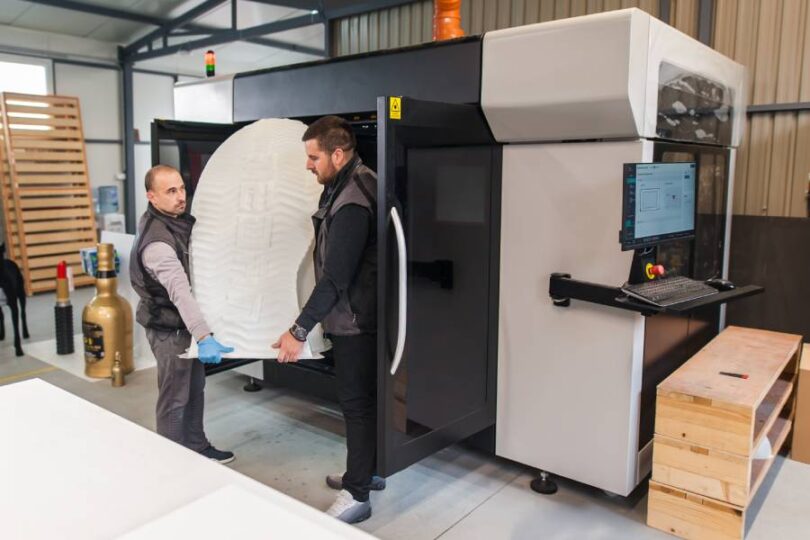
When you move into industrial-grade printers, the numbers jump dramatically. Large-format FDM printers used in manufacturing and prototyping can handle print volumes of 1,000×1,000×1,000mm or more. Some industrial systems go even further, with print areas measured in meters.
Companies are using these machines to print car body panels, aircraft components, and architectural models that would’ve taken weeks of manual fabrication in the past.
Construction-Scale 3D Printing Is Real
Yes, people are printing buildings. Concrete 3D printing has produced full-size houses, walls, and structural components using massive gantry-style machines that move over a fixed area rather than inside a closed frame. Some of these systems operate on print areas spanning dozens of feet.
Printing in Pieces Can Create Large Models
You don’t always need a massive machine to make something massive. Splitting a large design into interlocking sections and printing each piece separately is a standard approach for hobbyists and professionals alike.
A helmet, a statue, or a custom enclosure can all be printed in segments and assembled after the fact. Designers plan the splits carefully so seams stay hidden or structural strength doesn’t weaken.
Other Things That Limit Print Size
Beyond the physical bed, a few other factors cut into how large your prints can realistically get. Warping is one such issue, especially common with materials like ABS, which shrinks as it cools. Likewise, layer adhesion across tall prints can weaken over time if you don’t control temperature properly.
Print time is another factor. A massive print on a desktop machine can run for 40 to 80 hours, and any power interruption or mechanical hiccup during that window can ruin the whole thing.
Getting the Most Out of What You’ve Got
3D prints can get pretty large, but you need either an industrial printer with a huge build volume or an advanced, creative understanding of your hobbyist machine. Whether you’re printing a 20mm keychain clip or sectioning out a life-size prop, the process rewards people who plan ahead. Check your slicer’s build volume settings, understand your material’s behavior, and design with printability in mind from the start.