
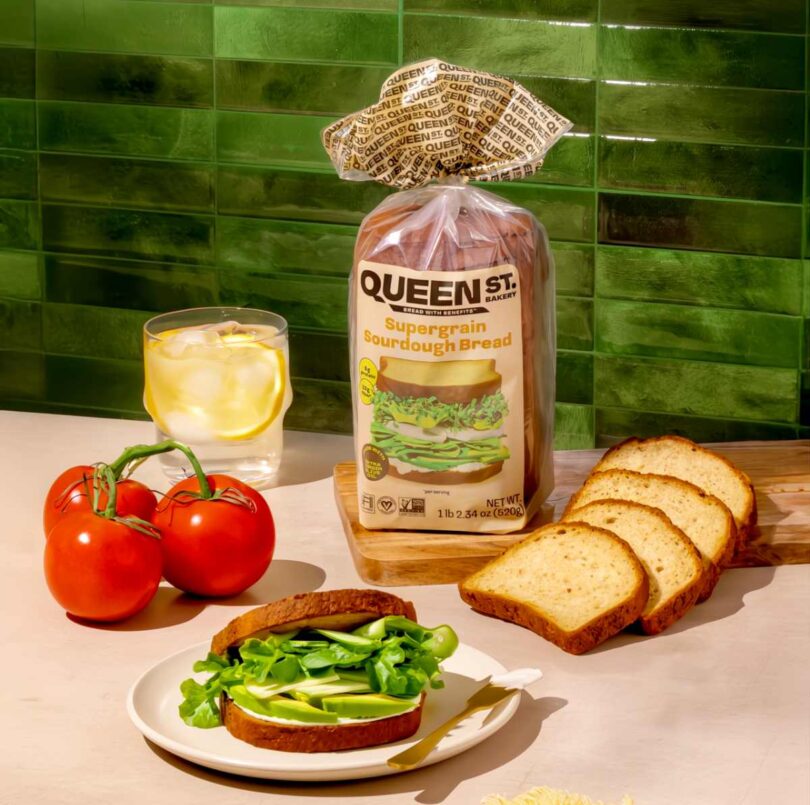

Queen St. Bakery approaches bread from a different starting point. Instead of building around white flour and adjusting from there, it uses a base of seeds, legumes, and whole ingredients that naturally bring fiber, plant-based protein, iron, and Omega 3s into the mix. The lineup includes supergrain sourdough, bagels, and English muffins, all sharing that same foundation. It is a noticeable shift from standard bread, both in how it tastes and how it holds up as part of a meal.
Sourdough That Goes Beyond White Flour
Sourdough has always been considered a better option for digestion because of its fermentation process. The issue is that most sourdough still relies heavily on refined flour, which limits what it actually delivers nutritionally.
Queen St. Bakery keeps the fermentation but changes what is being fermented. The supergrain sourdough is built with chia, flax, millet, and white beans, which gives the loaf more substance. The fermentation works together with these ingredients, not just on top of them.
The result is a sourdough that feels more complete. It has the slight tang expected from fermentation, but also a deeper, more grounded flavor from the seeds and grains. It is not just easier to digest. It actually brings something with it.
Structure, Texture, and Flavor
The texture reflects the way it is made.
The crumb is tighter and more structured than standard bread, with a light chew that feels intentional. When toasted, the crust develops a clean crisp edge while the interior stays intact. It does not fall apart or flatten out under toppings.
There is also a natural nuttiness from the seeds that carries through each bite. It adds flavor without competing with whatever you pair it with. The sourdough tang sits underneath that, giving it balance.
Bagels and English Muffins Follow the Same Build
The same ingredient base shows up across the rest of the lineup.
The bagels have a firm bite and enough structure to handle a full sandwich, but they do not have the heavy, overly dense feel that bagels often bring. They hold together and stay satisfying without slowing you down.
The English muffins are one of the more versatile options. They crisp evenly on the outside and stay soft inside, making them easy to use for both simple and more layered combinations. They do not get gummy or collapse once heated.
Everything feels consistent. Nothing comes across as an afterthought.
Ingredient Driven, Not Fortified
There is a clear difference between adding nutrients into a product and building the product around them from the start.
Here, the fiber, protein, and healthy fats are coming directly from the ingredients themselves. Chia and flax contribute Omega 3s and texture. Millet adds structure. White beans bring protein and help hold everything together.
It does not read like a formula that was adjusted later. It feels intentional from the beginning.
How It Fits Into Everyday Eating
These products are easy to work into daily use without needing to think about it.
They hold up well for quick meals, simple combinations, or something more put together. Because of the fiber and protein content, they tend to keep you satisfied longer than standard bread, which changes how often you reach for something else later.
They are also allergen friendly, which opens them up to more people without turning them into a niche option.
Where It Lands
Queen St. Bakery is not trying to recreate traditional bread. It is building something different and applying that across sourdough, bagels, and English muffins in a consistent way.
The sourdough stands out because it takes a familiar format and makes it more substantial. The rest of the lineup follows through with the same approach.
It comes across as bread that has been thought through, from the ingredients to the texture, and it shows once you start eating it.
You can buy and try the Sourdough with Supergrains here.