


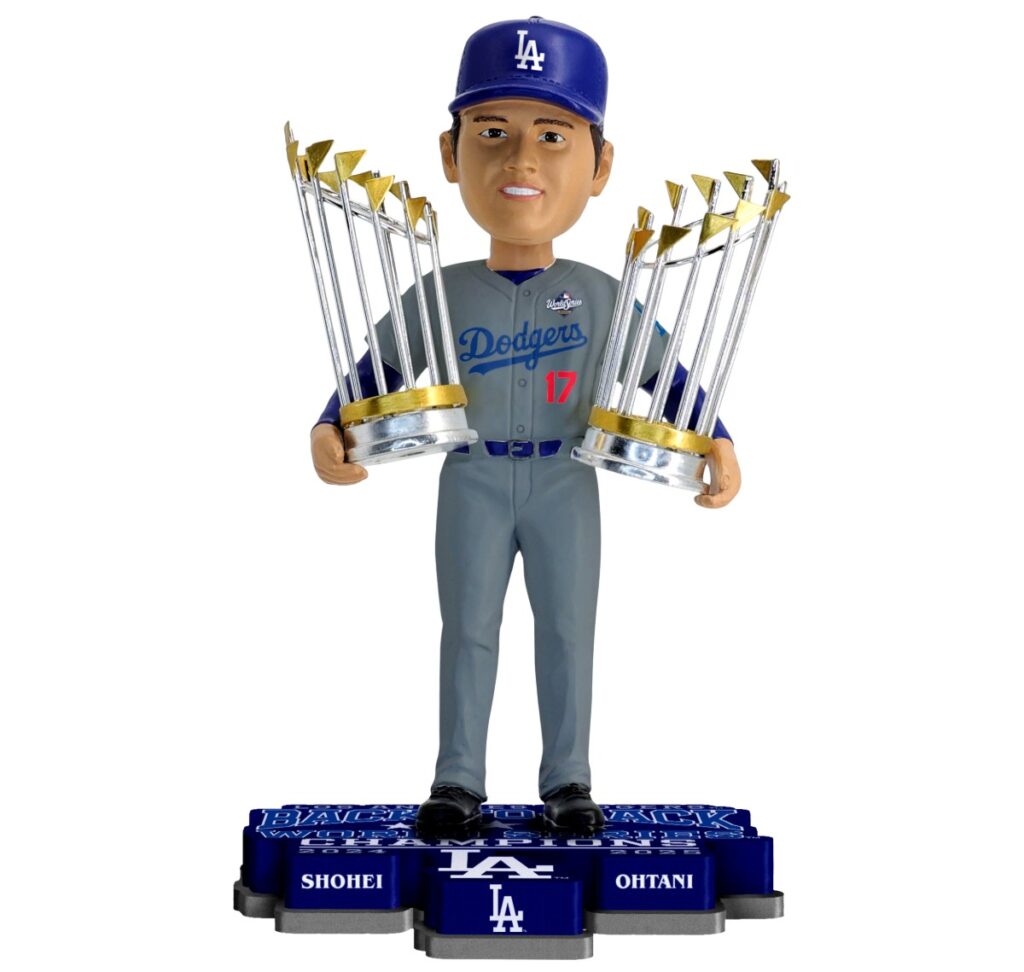
Opening Day always brings a surge of anticipation, but this season, the Los Angeles Dodgers are giving fans even more reason to pay attention. Fresh off a historic run, a newly released collection of the officially licensed Los Angeles Dodgers 2025 Back-to-Back World Series Champions Bobbleheads is hitting at exactly the right moment, just as the team kicks off the 2026 season at Dodger Stadium.
The collection celebrates the Dodgers’ back-to-back World Series victories, capturing a roster that has quickly become one of the most recognizable in the sport. Names like Shohei Ohtani, Mookie Betts, Freddie Freeman, and Yoshinobu Yamamoto are all represented, alongside key figures like manager Dave Roberts and even the iconic Dodger Dog. It’s a lineup that reflects both star power and the cultural footprint of the franchise right now.

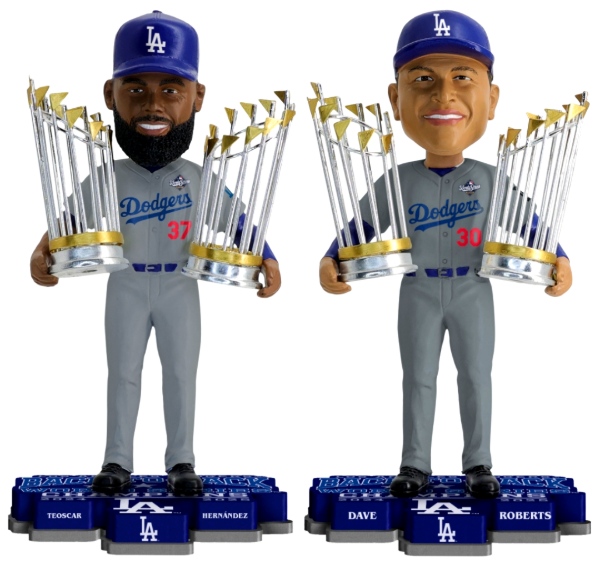
Teoscar Hernandez and Dave Roberts
What makes this release stand out is how it leans into the idea of documenting a moment, not just producing merchandise. Championship collectibles have always carried weight, but back-to-back titles shift things into a different category. For fans, it’s less about owning a keepsake and more about marking a specific era that feels bigger than a single season.
The pricing reflects that balance between accessibility and collectibility. Standard championship bobbleheads are set at $60, while celebration editions come in at $80, with flat-rate shipping keeping things straightforward.
For those who prefer a bit of unpredictability, the introduction of Los Angeles Dodgers Mystery Bobblehead Boxes adds a different layer. At $40 for two figures, the boxes pull from a mix of current players, past favorites, and team-related designs, giving longtime collectors and casual fans alike a reason to take a chance.

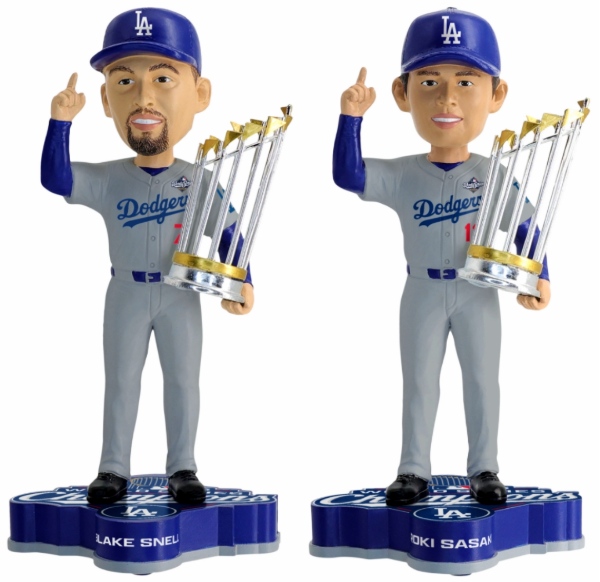
Blake Snell and Roki Sasaki
That mystery format speaks to a broader shift in how fans engage with collectibles. It’s no longer just about choosing a favorite player, it’s about the experience of collecting itself. The element of surprise, combined with the possibility of landing a standout piece, mirrors trends seen across everything from trading cards to limited-edition drops.
Timing also plays a role here. With the Dodgers opening the season at home against the Arizona Diamondbacks, the release feels intentionally aligned with the energy of Opening Day. The team is once again positioned as a contender, with talk already building around the possibility of a third consecutive title, something not seen since the 2000 New York Yankees. That kind of narrative naturally elevates the appeal of anything tied to this stretch of success.
At the same time, the scale of the release hints at just how deep the demand runs. With 24 bobblehead giveaways planned throughout the season, including pieces that commemorate key moments from last year’s championship run, the Dodgers continue to blur the line between in-game promotion and collectible culture.
For fans, it ultimately comes down to connection. Whether it’s Ohtani’s presence, Betts’ consistency, Freeman’s leadership, or the broader sense that this team is in the middle of something special, these bobbleheads function as small, tangible reminders of a much larger story.
The full collection, including championship and celebration bobbleheads as well as the new mystery boxes, is available now while supplies last.
Interview
We spoke with Phil Sklar, the Co-Founder and CEO of the National Bobblehead Hall of Fame and Museum, who is behind the release, to get a closer look at how these pieces are designed, how players are selected, and what fans can expect next.
LA’sThePlace: When you started working on this Dodgers collection, what was the first decision you had to make?
Phil Sclar: For about 25 years, there have been World Series Championship Bobbleheads commemorating the championship team and their top players. The collection typically features the team’s top players, mascot, and sometimes their manager. The number of players typically depends on demand—more popular teams will have larger collections, although Championship teams always have rising stars who have huge moments during the season and playoff run, and that was definitely the case with the Dodgers 2025 World Series title. All the key players, Dodger Dog, and Dave Roberts are included in the bobblehead series.
LATP: When you’re building out a championship series, how do you balance the obvious stars with the moments or players that hardcore fans actually care about?
Phil: It’s a real balancing act. You need the headliners because they drive initial interest and sales, but what makes a collection feel complete — what makes a serious Dodgers fan say “they actually got it right” — are the pieces that reflect what it felt like to watch the championship unfold. Sometimes that means a reliever who came up huge in a specific game, or a bench player who had the at-bat everyone in L.A. remembers. Those are the pieces that separate a great collection from a generic one.
LATP: Everyone expects names like Shohei Ohtani and Mookie Betts – how do you decide when to go beyond the headline names?
Phil: We pay close attention to what fans are actually talking about. Social media, message boards, what’s trending after big games — that tells you a lot. We also look at it historically. Years from now, when someone looks back at this Dodgers era, which players and moments will define it? The obvious stars will always be there, but we want the collection to reward the fan who watched every inning, not just the highlights.
LATP: What’s the hardest part about translating a championship moment into a single bobblehead, and what tends to get lost if you’re not careful?
Phil: The championship collection features a classic design with the players holding the World Series trophies. In this case with the back-to-back titles, fans get two trophies for any players that were on the team both years, while first year Dodgers players have one trophy. These will become some of the most sought after bobbleheads in a few years as many people will find out about them too late when they’re sold out forever.
LATP: These pieces sit somewhere between memorabilia and design – how much of the process is about accuracy versus creating something that just looks great on display?
Phil: Both matter, but accuracy comes first. If a collector picks it up and the face doesn’t look right, or the uniform details are off, nothing else matters. That said, once you’ve nailed the accuracy, you absolutely think about presentation — the base design, the colors, how it looks on a shelf next to the rest of the collection. We want these to be pieces people are proud to display, not just toss in a box. The best bobbleheads get both right simultaneously.
LATP: The mystery box concept adds a different layer — was that driven by how collecting has evolved, or more about bringing in a broader audience?
Phil: A bit of both. The mystery box model has exploded across collectibles — trading cards, vinyl figures, you name it — and there’s a reason for that. People love the thrill of not knowing exactly what they’re going to get. For us, it’s a way to make the collection accessible to someone who might not want to commit to buying every individual piece, while also giving serious collectors a fun way to chase the ones they’re missing. It brings an element of excitement that a straightforward purchase doesn’t always have.
LATP: Are you seeing a shift in who’s buying these now — more serious collectors, casual fans, or even people outside traditional baseball audiences?
Phil: We’re definitely seeing the audience broaden. The traditional collector base is still there and as passionate as ever, but the Dodgers specifically have become such a cultural brand — especially with Ohtani’s arrival — that we’re reaching people who might not have bought a bobblehead before. Younger fans, international buyers, people who are fans of the player more than the sport in some cases. That crossover appeal is something we’re paying attention to as we develop new pieces.
LATP: With international stars like Yoshinobu Yamamoto and Roki Sasaki, have you noticed a wider global demand for Dodgers collectibles?
Phil: Absolutely. The international interest has been significant, particularly from Japan. When you have players like Ohtani, Yamamoto, and now Sasaki all on the same roster, you’re tapping into a fanbase that spans the Pacific. We’ve seen increased demand from overseas buyers and inquiries from international retailers. The Dodgers have essentially become a global brand within baseball, and these players are a huge part of that. It’s something we factor into production planning now in a way we wouldn’t have had to even a few years ago.
LATP: From a production standpoint, what’s something fans would be surprised to learn about how these bobbleheads actually get made?
Phil: think people would be surprised by how many hands touch each piece. These aren’t stamped out by a machine — there’s a significant amount of hand-painting and hand-finishing involved. A single bobblehead can go through dozens of steps from the initial sculpt to the finished product. The approval process alone can take weeks, going back and forth on facial likeness, uniform accuracy, paint colors. And every detail matters — we’ve sent things back over a stripe being the wrong shade of blue. Fans see the finished product on a shelf, but there’s a long road to get there.
LATP: If this run continues and the Los Angeles Dodgers push for a third straight title, does that change how you think about documenting this era going forward?
It absolutely would. A three-peat would put this Dodgers team in truly historic company, and at that point you’re not just commemorating individual seasons — you’re documenting a dynasty. That opens up possibilities for pieces that celebrate the era as a whole, not just single moments. Think about how we look back on the late-’90s Yankees or the Giants’ run in the early 2010s — there’s a larger narrative there. If the Dodgers keep this going, we’d want our collection to reflect the full scope of what they’ve accomplished.
To get yours, go to Los Angeles Dodgers 2025 Back-to-Back World Series Champions Bobbleheads