


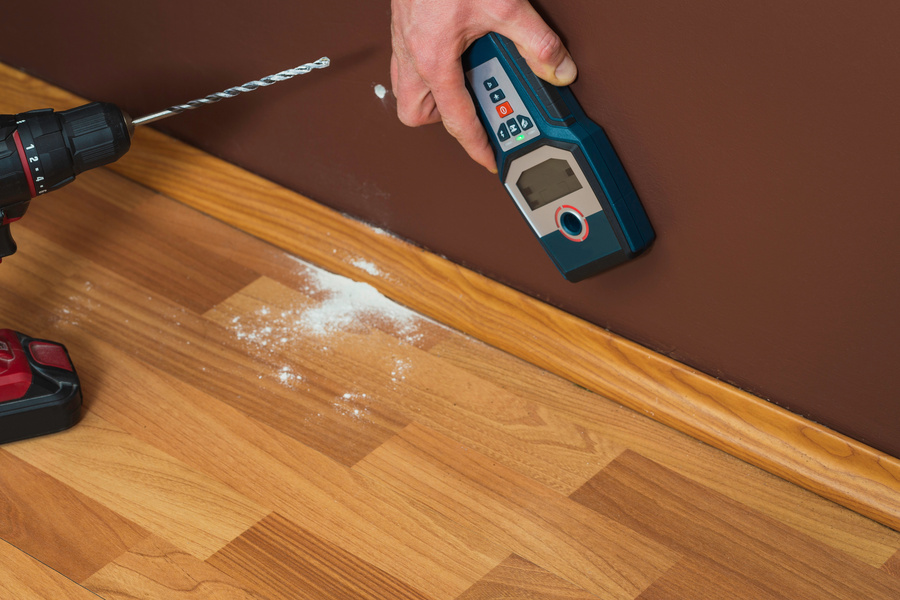
We’ve all been there. You hold a heavy frame against the wall, squint a little, tap your knuckles against the drywall, and think, “Yeah, that sounds solid.” You grab your hammer, pound in a nail, and—whoops. It sinks right in with zero resistance. Now you have a hole in your wall, a heavy mirror with nowhere to hang, and a slightly bruised ego. Let’s take an inside look at why every DIY toolkit needs a stud finder, especially yours.
Safety First (and Second, and Third)
The biggest reason to own a stud finder is safety. Drywall isn’t designed to hold significant weight on its own. When you hang heavy items—that gorgeous vintage mirror or a massive TV mount—anchoring them into a wooden stud provides the necessary support. If you miss the stud, your heavy item could come crashing down, potentially hurting someone or destroying your stuff.
Plus, stud finders often do double duty. Many modern models can detect live wires behind the wall. Accidentally drilling into an electrical wire is a surefire way to ruin your day (and possibly your house). A good stud finder gives you the confidence to drill without hitting anything dangerous.
Save Your Walls From Swiss Cheese Syndrome
Let’s be real: nobody wants a wall that looks like a connect-the-dots puzzle. Without a stud finder, you might end up poking five or six test holes before you actually hit something solid. Patching and painting those tiny mistakes takes time, effort, and patience that most of us don’t have.
Using a stud finder means you get it right the first time. You scan, mark, and drill. It keeps your walls looking pristine and saves you from an afternoon of Spackle and sanding.
It’s Essential for Heavy-Duty Projects
While you can sometimes get away with drywall anchors for light picture frames, bigger projects demand serious support. Consider the process of drilling holes when installing floating shelves. These shelves need to support not just their own weight, but also the weight of books, plants, and decor. If you don’t hit a stud, those shelves will start to sag—or worse, rip right out of the drywall.
A stud finder ensures you hit the center of the stud every time, giving your heavier projects the structural integrity they demand to stay up safely.
Types of Stud Finders To Consider
You don’t need to spend a fortune to get a reliable tool. Here are a few options depending on your budget and needs:
- Magnetic Stud Finders: These use strong magnets to find the screws or nails holding the drywall to the studs. They are simple, battery-free, and super affordable.
- Electronic Stud Finders: These scan the density of the wall to locate the edges and center of the stud. They are generally more accurate and often include features like wire detection.
- Phone Apps: Believe it or not, some apps work with magnetic attachments to turn your smartphone into a stud finder.
Ultimately, owning a stud finder in your DIY toolkit gives you confidence. It takes the guesswork out of hanging things. Instead of crossing your fingers and hoping for the best, you know exactly what’s behind your paint. That confidence encourages you to take on cooler, more complex projects.