
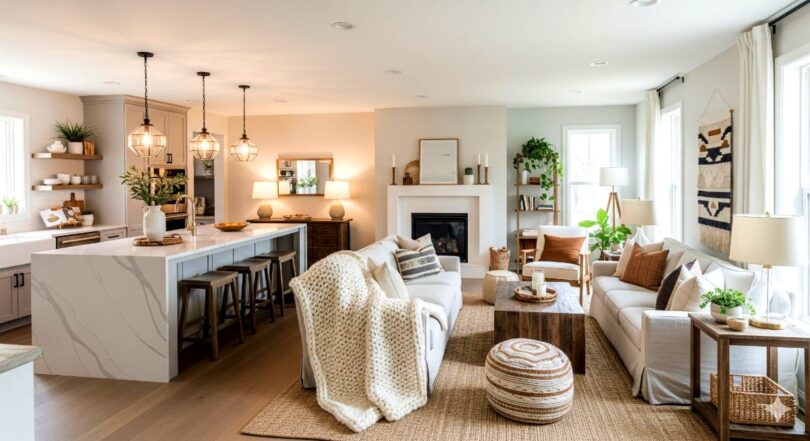

Homeowners are looking for clever, cost-conscious ways to refresh their homes without compromising on style. It’s a cultural shift as much as it is a practical one, and it’s reshaping how people think about upgrading their living spaces in one of the most expensive housing markets in the country.
Reevaluating Where The Money Goes
The city has no shortage of contractors and designers who can turn a bungalow into a showpiece, but the cost of living has nudged homeowners toward new priorities. Instead of pouring everything into large-scale renovations, many are breaking projects down into digestible steps. This piecemeal approach keeps improvements manageable and allows for experimentation without committing to a full-blown overhaul. Kitchens are getting partial updates like swapping cabinet doors and hardware rather than gutting the space. Living rooms are transformed with paint and lighting adjustments that create an entirely new mood at a fraction of the cost of tearing out walls.
There’s also a growing recognition that design doesn’t need to scream luxury to feel elevated. Natural textures, layered textiles, and thoughtful layouts often matter more than imported fixtures. Los Angeles homeowners are embracing design that feels personal and grounded, not just aspirational. By redirecting spending toward the elements that shape daily life—like better light, durable finishes, or storage that actually works—they’re investing in comfort without draining their savings.
Shifting Attention To Regional Options
Another interesting trend is how homeowners are approaching labor costs. Contractors in Los Angeles come at a premium, especially for cosmetic work where reputation often inflates pricing. Many residents are discovering that going with San Diego painting contractors instead of LA based ones who are pricier can make a significant difference. While it requires a little more coordination, the savings are substantial enough to justify the drive.
This willingness to look beyond the city limits is changing how projects are scoped and planned. Some homeowners are splitting services, bringing in Los Angeles talent for high-skill custom work but outsourcing straightforward tasks like painting or flooring to nearby professionals who charge less. It’s a practical balance between supporting the local market and avoiding price points that simply don’t make sense.
Even design services themselves are being approached differently. Online consultations have taken off, giving Angelenos access to creative expertise without the steep hourly rates that come with in-person studio visits. These virtual setups still provide guidance on palettes, furniture placement, and materials, but they eliminate travel surcharges and the expectation of long-term contracts. For families balancing mortgage payments, this hybrid approach has become a go-to.
Small Changes That Deliver Big Impact
What makes Los Angeles unique is its architecture—a mix of Spanish revival, mid-century, craftsman, and everything in between. That diversity gives homeowners room to be playful with updates that amplify existing character instead of erasing it. A century-old bungalow doesn’t need a modern extension to feel fresh. Sometimes all it takes is emphasizing the details that already set it apart.
Swapping out a front door in a bold color can revive curb appeal instantly. Updating window trim in a shade that contrasts with stucco exteriors can turn a washed-out facade into a focal point. Indoors, people are rethinking lighting placement. Instead of relying on a single overhead fixture, they’re layering table lamps, sconces, and even strategically placed candles to create warmth that a major remodel couldn’t replicate.
These kinds of touches are accessible to homeowners who might otherwise feel locked out of design trends. They offer immediate visual payoff and can be tackled in a weekend. Even landscaping has taken on new significance, with many leaning into drought-tolerant plants that don’t just look good but also cut down on water bills—a very real concern in Southern California. The result is a style that’s intentional without being overthought, a reflection of people who want their homes to feel alive and adaptable.
The Power Of Budget-Conscious Creativity
When people talk about design in expensive cities, there’s often an assumption that you need endless funds to achieve a polished result. In reality, some of the most stylish Los Angeles homes are the ones where homeowners leaned into home improvements on a budget and found inventive ways to make every dollar stretch. Vintage and secondhand markets have become treasure troves for lighting, art, and furniture that carry more personality than anything off the showroom floor.
DIY has also made a comeback, though with a modern twist. Instead of clunky weekend warrior projects that look obviously homemade, people are focusing on achievable upgrades like limewash walls, handmade tile backsplashes, or refinished wood floors. Tutorials and step-by-step videos have taken the intimidation factor out of these updates, empowering homeowners to personalize their spaces while saving thousands in labor costs.
Collaboration within communities has also emerged. Neighbors swap tools, share leftover materials, and pass along contractor recommendations in ways that weren’t as common before. There’s a sense of resilience that comes from pooling resources and knowledge, and it shows in the layered, lived-in character of many Los Angeles homes today.
Embracing Sustainability As A Design Driver
A side effect of this budget-minded approach is a rise in sustainable choices. Repurposing and upcycling aren’t just cost-cutting measures; they’re design statements that align with Los Angeles’ broader culture of environmental awareness. Salvaged wood becomes shelving, reclaimed bricks turn into garden paths, and vintage fabrics are reimagined as custom cushions or drapes. These decisions add authenticity while keeping materials out of landfills.
Energy efficiency has also become a central focus. Upgrading insulation, sealing drafts, and switching to LED lighting may not be as visually exciting as a new sofa, but the long-term savings are undeniable. Homeowners are learning to balance immediate aesthetic desires with choices that pay off over time. Even something as simple as installing solar-powered outdoor lighting combines style with practicality.
Sustainability, in this sense, is no longer seen as a compromise. It’s part of the design language, a way to signal thoughtfulness and future-proof a home against rising utility costs. For Los Angeles homeowners, the appeal is clear: you don’t have to spend extravagantly to live beautifully, but you do have to think carefully about how every choice shapes both your space and your budget.
Looking Ahead To A More Personal Design Culture
What’s striking about this shift is that it’s less about following trends and more about cultivating homes that feel authentic. Los Angeles has always had a reputation for setting style standards, but the current moment is more about individual expression than polished perfection. People are asking what feels right for their lifestyle, not what looks good in a glossy magazine.
This mindset is creating a design culture rooted in accessibility and flexibility. It’s no longer unusual to see a $50 thrifted credenza sitting comfortably next to a high-end designer chair, because the story a space tells matters more than its price tag. The result is homes that feel layered, intentional, and reflective of the people living in them rather than dictated by market expectations.
As homeowners continue to find smart ways to navigate the cost of living, Los Angeles may become less of a showcase for expensive remodels and more of a case study in how creativity thrives under constraints. The city has always inspired innovation, and in design, that innovation now looks a lot more approachable.
The story of home design in Los Angeles today isn’t about opulence or excess. It’s about everyday people making thoughtful choices that let them enjoy their spaces without financial strain. By rethinking priorities, leaning on community, and celebrating personal style, Angelenos are proving that beauty doesn’t have to come with a luxury price tag. What’s unfolding is a quieter, more resourceful kind of design movement, one that feels distinctly of its time and place.Los Angeles has always been known for its design edge, but the way homeowners are updating their spaces today looks a little different than it did even a few years ago. Instead of leaning into splashy remodels with six-figure budgets, more Angelenos are finding.