
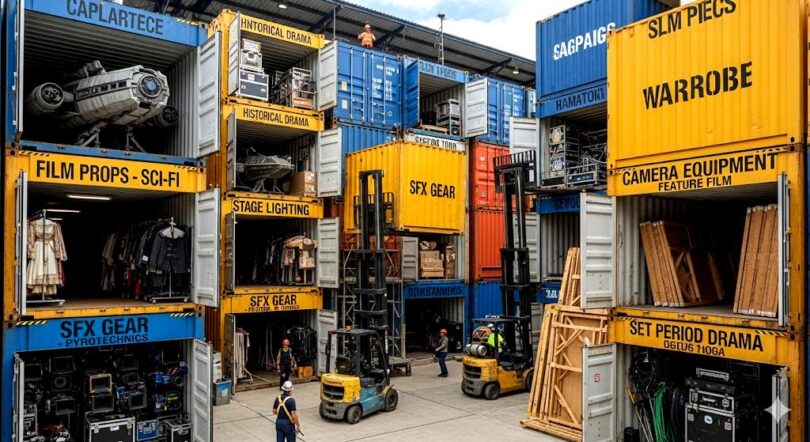

When you think about Los Angeles’ entertainment industry, you probably picture red carpets, studio lots, and celebrity sightings. But behind all that glamour is a massive infrastructure, and increasingly, shipping containers are playing a crucial role. Major studio productions and indie film crews alike are discovering that these steel boxes solve some of their biggest storage challenges.
The transformation makes sense when you consider the problems facing LA’s creative community. Commercial storage space is expensive, productions need equipment access at odd hours, and project-based work doesn’t align well with long-term leases. Shipping containers offer a practical solution that’s both affordable and flexible.
The Economics of Entertainment Storage
Traditional warehouse space in Los Angeles comes with premium rates, especially near major studios. For creative professionals working on project timelines, long-term warehouse leases often don’t make financial sense.
Shipping containers provide a compelling alternative. A standard 40-foot container offers approximately 2,400 cubic feet of storage space at a fraction of warehouse costs. Companies like Viva Containers supply both new and used shipping containers to businesses and independent creators looking for cost-effective storage solutions.
The modular nature of containers also provides unmatched scalability. A music production company might start with one container, then add more as they grow. This lets creative businesses scale storage costs with their actual needs.
Film and Television Production Uses
The film industry uses container storage across multiple production phases. During pre-production, containers serve as secure staging areas for equipment, costumes, and props. Their mobility lets production teams position storage close to shooting locations, cutting transportation costs and improving efficiency.
Major TV productions operating from the same location for months use containers as semi-permanent storage for wardrobe departments, prop houses, and equipment. The standardized size makes them compatible with existing transportation, allowing seamless integration with production logistics.
Independent filmmakers particularly benefit from container flexibility. A single container can house an entire production’s equipment between shoots, providing secure storage in locations that traditional moving trucks can’t reach.
Music Industry and Live Events
The music industry’s use of container storage reflects the unique challenges of touring and live events. Equipment rental companies use containers as mobile warehouses, pre-loading sound systems and lighting rigs for transport to venues.
For touring artists, containers provide consistent storage regardless of location. A band’s equipment stays in the same familiar container whether stored in LA or temporarily housed at venues nationwide.
Concert promoters and festival organizers rely on container storage for large-scale event logistics. Containers can be positioned around event sites for distributed storage of sound equipment, catering supplies, merchandise, and emergency materials.
Creative Studios and Workspaces
Beyond storage, shipping containers can be converted into functional studio spaces. Photography studios, recording facilities, and artist workshops housed in converted containers offer creative professionals affordable workspace in a city where commercial real estate often exceeds budgets.
The industrial look of containers also appeals to creative professionals who appreciate working with repurposed materials. For photographers and videographers, the clean lines provide versatile backdrops that can be easily modified for different projects.
Required vs. Optional Container Modifications
When purchasing containers for entertainment industry use, buyers should understand what modifications they may need to arrange separately:
Essential Modifications for Most Uses:
- Security systems: Locks, alarms, and access controls
- Site preparation: Level foundations and proper drainage
- Basic electrical: Lighting and power outlets (requires licensed electrician)
Industry-Specific Requirements:
- Climate control: HVAC systems for costume storage, film equipment, or recording studios
- Insulation: Temperature and sound control for sensitive materials
- Custom shelving: Organized storage solutions for specific equipment types
- Ventilation: Air circulation for enclosed workspace conversions
Advanced Optional Features:
- Solar power systems: For remote locations without grid access
- IoT monitoring: Temperature, humidity, and security sensors
- Internet connectivity: For remote monitoring and access control
- Specialized flooring: Non-slip or anti-static surfaces for specific uses
Buyers should budget for these modifications separately from the container purchase, as they require specialized contractors and can significantly impact total project costs.
Location Strategy
Container storage’s mobility proves valuable in LA’s complex geography. Production companies can position storage close to active shooting locations, reducing transport costs and improving response times.
This flexibility becomes important for projects shooting in multiple locations. Rather than maintaining central storage requiring lengthy transport, productions can strategically position containers to minimize travel time.
Implementation Planning
Successfully using containers for entertainment storage requires navigating specific regulatory requirements before purchase. In Los Angeles and throughout California, commercial container placement typically requires building permits and zoning compliance verification.
Permit Requirements:
- Temporary use (under 180 days) may have simplified requirements
- Permanent commercial placement generally requires building permits
- Zoning regulations vary significantly between residential, commercial, and industrial areas
- Entertainment businesses should consult local authorities early in planning
Other Planning Considerations:
- Site preparation and utility access requirements
- Modification budgets for electrical, HVAC, and security systems
- Insurance implications for commercial container use
- Transportation and positioning logistics
Creative businesses should research local regulations thoroughly before purchasing containers, as permit requirements can significantly impact project timelines and budgets. Working with contractors experienced in local permit processes helps avoid costly delays.
Industry Growth
Entertainment industry professionals are increasingly exploring container storage as production costs rise and workflows become more flexible. While adoption varies across different segments of the industry, containers offer practical solutions for specific storage and workspace challenges.
The trend toward remote and distributed production has created interest in portable storage solutions. Productions working in multiple locations can benefit from storage options that relocate as needed, though this requires careful logistical planning.
Wrapping Up
Shipping container storage has evolved from a cost-saving experiment to an integral part of LA’s entertainment infrastructure. As creative professionals adapt to economic pressures and changing production methods, containers provide the flexibility and affordability that traditional storage often cannot match.
For creative professionals considering container storage, success lies in understanding both opportunities and limitations, then planning the right combination of basic container purchase and necessary modifications to serve specific operational needs.