


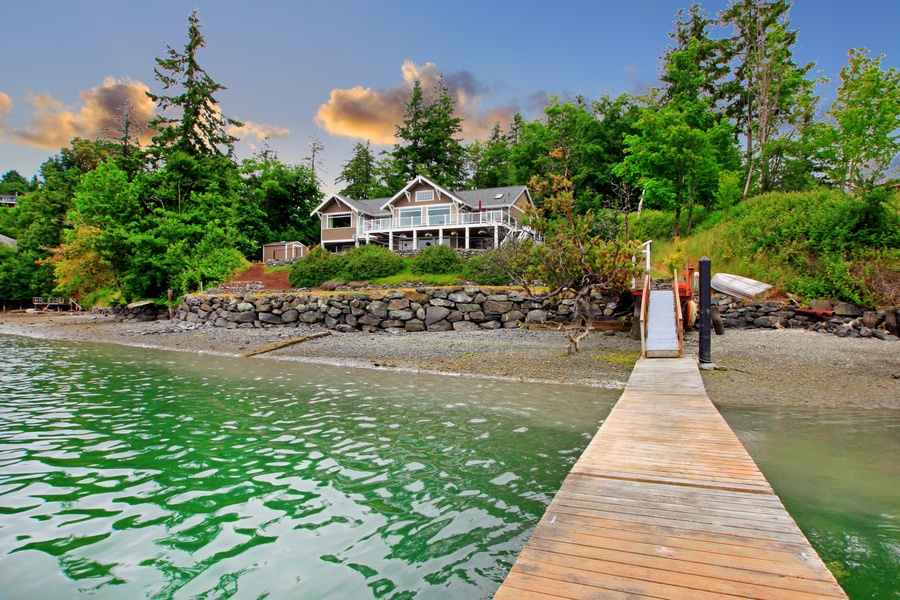
Selecting the perfect dock is more than just a practical decision when it comes to enhancing your waterfront property. It’s also an opportunity to create a stunning focal point that blends functionality with style.
But with so many options available, how do you find the one that fits your lifestyle, needs, and aesthetic? Don’t worry—we’re here to help you choose the best dock for your waterfront property and to make the right splash!
Understand Dock Types
Dock types come in all shapes and configurations, but they generally fall into three categories: floating, stationary, and roll-in. Each type serves different needs and environments, so understanding their unique characteristics can make your decision much easier.
Floating docks are the ultimate in versatility. They rest on the water’s surface and rise and fall with changing water levels, making them a fantastic option for lakes or rivers with fluctuating depths. They’re also relatively easy to install and relocate, which is ideal if you like to switch things up.
Stationary docks are the steadfast and sturdy option. Contractors build them on posts or pilings anchored into the ground, making them a solid choice for areas with rougher water or where long-lasting durability is a priority. These docks tend to require more work to install but offer unmatched stability once in place.
Roll-in docks are a favorite for seasonal dock users. True to their name, they’re designed to roll in and out of the water on wheels, making installation and removal a breeze. Choosing a roll-in dock can be perfect for the seasonal changes if you live in a region where winters freeze the water.
Choose the Right Material
Materials are crucial to your dock’s appearance and longevity. Wood docks, such as cedar or pressure-treated lumber, offer a warm and traditional aesthetic, but they require regular maintenance to prevent rot.
Aluminum docks might not have the same natural charm, but they’re lightweight, durable, and resistant to corrosion—ideal for low-maintenance property owners. Composite decking combines the best of both worlds for an eco-friendly and modern option. This material boasts a wood-like appearance with outstanding durability.
Assess Your Waterfront Conditions
Every waterfront property is unique, so it’s essential to understand your shoreline’s specific conditions before making any decisions. Is the water shallow or deep? Does it have a sandy, rocky, or mucky bottom? Are strong currents or waves a factor?
For example, a stationary dock works well in shallow, calm areas, whereas a floating dock can better handle deep water or fluctuating levels. Keeping these characteristics in mind ensures the dock you choose is functional and stable in your environment.
Consider Maintenance Requirements
Think about how much time and energy you’re willing to devote to boat dock upkeep before making a purchase. A wooden dock may require regular staining and sealing to maintain its beauty over the years, while aluminum and composite options are more hands-off.
Look for materials and designs that can withstand the elements with minimal effort if low maintenance is a top priority, so you can spend less time maintaining and more time enjoying your dock.
By considering these factors, you’ll be well on your way to finding the perfect dock to complement your waterfront lifestyle!