


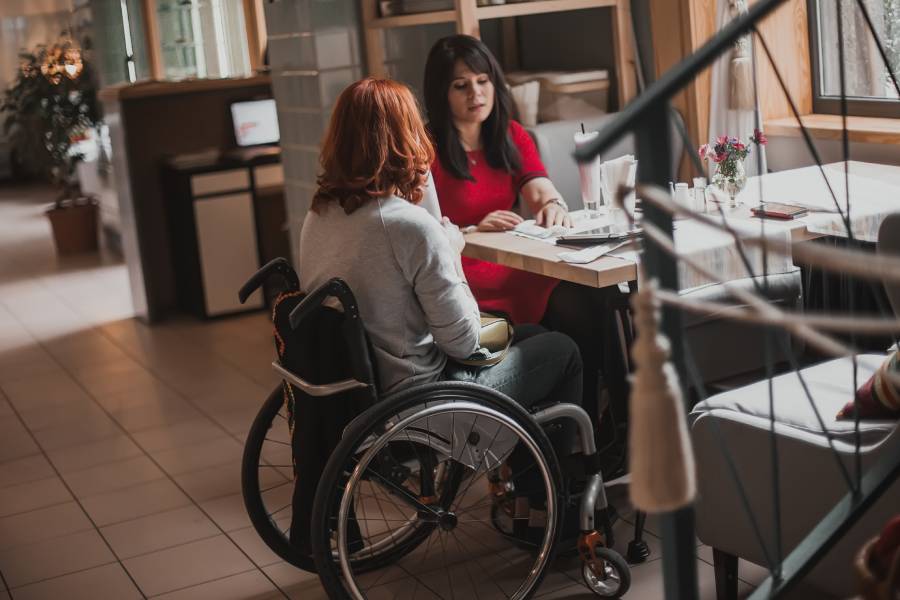
Accessibility shows that you care about all customers, including those with disabilities, families, elderly guests, and more. Small, special changes can make a big impact on their experience. Here are some simple ways to make your restaurant more accessible.
Offer Accessible Parking and Drop-Off Zones
Accessible dining starts before guests walk through your doors, and parking is no exception. Reserve spaces close to your entrance for those with disabilities, and clearly mark them with visible signs and ground paint.
If you have limited parking, create a drop-off zone with a safe, level area where vehicles can pull up and passengers can exit easily. Ensure that pathways from the parking lot or drop-off area are smooth, with ramps available wherever there are steps.
Optimize Entry Doors
Doors should never stand in the way of your guests navigating your restaurant. You can ensure your commercial door is accessible by checking the width. The ADA recommends at least 32 inches of clear opening.
Beyond width, you can optimize entry doors by switching out traditional round doorknobs for lever handles. Additionally, you can place a braille sign beside the entrance doors.
Rearrange the Dining Area
The dining area needs to accommodate all your patrons, no matter their mobility. Arranging tables with enough space between them allows wheelchairs and walkers to pass through with ease. Aisles that feel open and accessible set the tone for comfort.
Providing tables with movable chairs makes it easier to accommodate customers with different needs. Include various seating options, such as chairs with armrests or booths that are easy to slide into. Don’t forget to keep lower tables available so people in wheelchairs can sit comfortably.
Make Menus Easy To Access
Making menus easy to access is a simple way to make your restaurant more accessible. Offering menus with braille lets you cater to blind or visually impaired customers. High-contrast menus, for example, with bright text on dark backgrounds, can support those with low vision.
For a tech-savvy solution, QR codes can link customers to digital menus compatible with screen readers. Regardless of your menu preference, avoid overly decorative fonts or small print, as they can make reading menus harder.
Simplify Payment Processes
The payment process should be seamless for all guests, including those with disabilities. Equip your staff with portable card readers to allow tableside payment, which benefits customers with mobility challenges who can’t approach a counter.
Additionally, providing clear instructions for contactless payment options helps guests with limited dexterity complete transactions with ease. A hassle-free checkout leaves a positive final impression of their visit.