


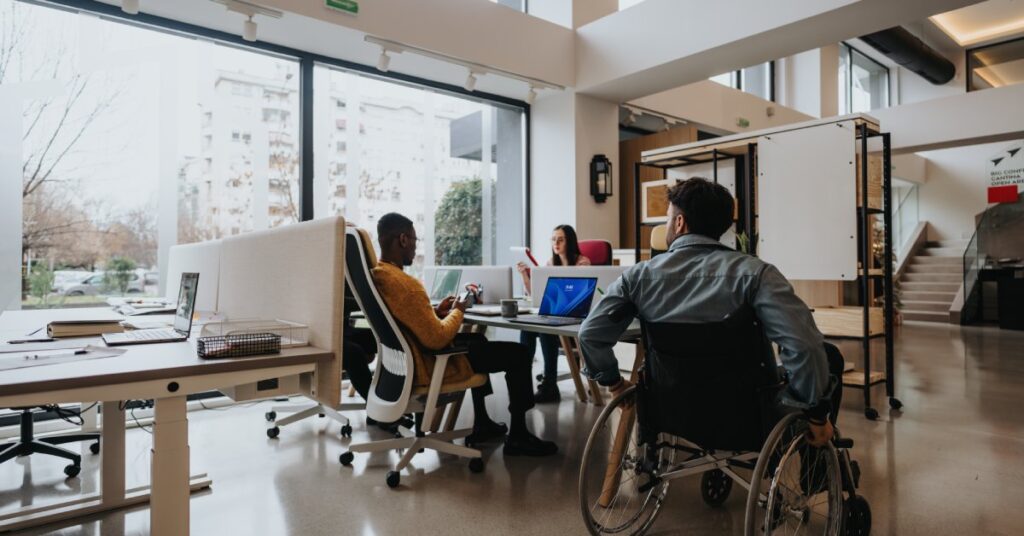
When designing an office, accessibility often gets overlooked in favor of aesthetics or cost-saving measures. However, this overlooking accessibility can exclude valuable talent, harm employee satisfaction, and leave businesses unprepared for future challenges. Unpack why accessibility in office design matters more than ever and how it’s a critical investment for modern office managers.
Increasing Diversity and Inclusion in the Workplace
An accessible office is a clear invitation for a diverse pool of talent to join your team. This includes fostering inclusion for individuals with mobility challenges, visual impairments, and sensory sensitivities. Details like office reception desk height are important and can make a world of difference for people with mobility challenges. Accessible furnishings send a strong message that a company values its employees beyond just their skills; they care about who they are.
Legal and Ethical Responsibilities
Apart from being morally right, accessibility in office design aligns with legal frameworks in many countries. Non-compliance with these guidelines can lead to penalties, but more importantly, it can tarnish a company’s reputation. Creating a workspace that accommodates adaptive tools ensures you’re adhering to these legal obligations while contributing to a fairer, more ethical work environment.
Boosting Employee Morale and Retention
Have you considered how accessibility influences team morale? Employees value workplaces that make an effort to meet their needs. Accessibility is a tangible expression of that. Features like ramps, adjustable lighting, and ergonomic furniture go beyond functionality. They show your team that you support them.
Adapting to Remote and Hybrid Work Models
Accessibility isn’t limited to the physical office. Remote and hybrid models demand inclusive tech and processes as well. Consider how accessible your communication tools are for every employee. For instance, are captions available in virtual meetings? Adapting accessibility in this way ensures you’re meeting the needs of your employees, whether they’re in the office or working remotely.
Future-Proofing Workspaces for Technological Advancements
Technology continues to advance, and accessible office designs are critical to staying ahead. Incorporating flexible designs and tech-powered solutions allows spaces to adapt to future innovations like AI-driven accessibility tools or voice-operated systems. Future-proofing your office today means you’ll be creating a workplace that remains functional and innovative for years to come.
Why accessibility in office design matters more than ever comes down to not just meeting today’s needs but ensuring workplaces are ready for the future. Inclusive office designs can benefit companies at every level. Take the first step to ensuring your workplace is built to support every individual on your team.