
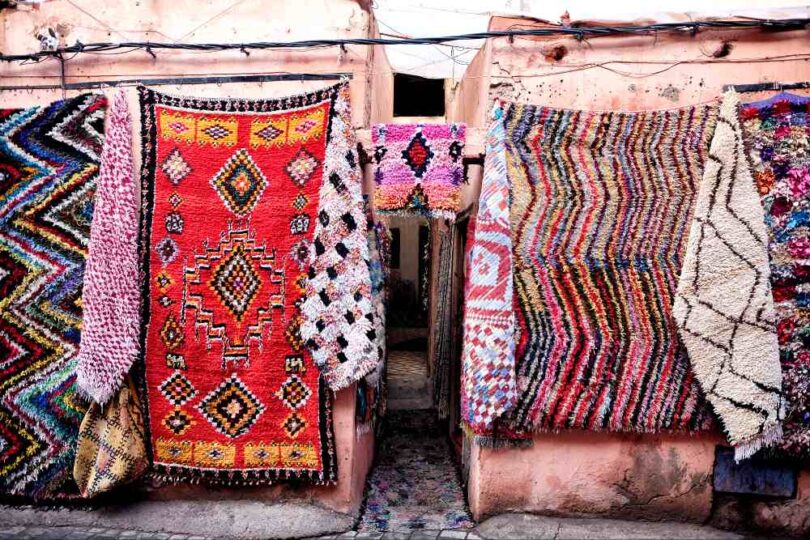

Our houses are teeming with meticulously manufactured, almost uniformly identical things; we inhabit a world where everything is mass-produced. In addition to being aesthetically pleasing and practical, many connoisseurs want to own items that pay homage to the age-old artisanal practices of humanity.
Collectors of high-quality Moroccan and Berber rugs seek carpets that not only look good but also maintain traditional hand-weaving techniques. An investment in a Berber rug is more than simply a textile made from the finest materials; it is also an investment in a one-of-a-kind item that retains the nuanced variances made by human hands.
Moroccan Carpets: Crafted with Traditional Techniques and Contemporary Styles
Most Moroccan carpets are known for their exceptional quality and longevity since they are made using the time-honored hand-knotting technique. Considering hand knotting is a time-consuming process and the time it takes to hand-knot a rug seems nearly absurd in an age preoccupied with mass production and convenience.
But when you take a look at each knot individually, you can see how meticulously crafted each Moroccan original is. A 9’x12′ carpet, for instance, can have up to 1.5 million knots that are individually hand-tied. Tamazi.shop offers a variety of authentic Moroccan rugs that showcase this traditional craftsmanship.
In contrast to the machine-spun yarn used to make mass-produced rugs, the yarn used to make Moroccan carpets is first carded by hand and then spun by hand. The yarn is hand-dyed in tiny pots after spinning. The weavers still use their hands to do the washing, shearing and detailing necessary to make rugs, even though they now use computers to produce modern patterns.
What Materials Are Used to Make Moroccan Tribal Rugs?
Moroccan rugs are woven from 100% wool sheep. The carpets come in various pile heights and textures. Large, thick-textured Moroccan throw rugs are popular in the snowy and chilly Atlas Mountains area. In contrast, the lightness and airiness of Moroccan flat-weave carpets make them ideal for the hot Saharan climate.
Weaving each floor covering by hand creates a one-of-a-kind work of art that can take anywhere from two weeks to six months, depending on its size and intricacy. Because of this, no two Moroccan area rugs are ever the same. Symbolism is woven onto these tapestries by women, who customarily tell their life stories via them.
Conclusion
Traditional weaving methods continue to be employed to create Moroccan carpets, which are cherished cultural artifacts. Skilled artisans, however, have had to refine their methods to keep up with the demands of the current market. The masterful combination of traditional Moroccan techniques with modern machinery and tools produces stunning, long-lasting, and very high-quality carpets.
Photo credit: Adobe