

The most common resolutions men and women make usually have to do with body positivity and a healthier lifestyle. Whether losing weight, adopting a more active lifestyle, or eating healthier, everyone wants to feel good in their skin. Dr. Sean Kelishadi, a board-certified plastic surgeon to the stars, shares surgical and aesthetic procedures that can boost your confidence and help you to start the new year in the right direction.
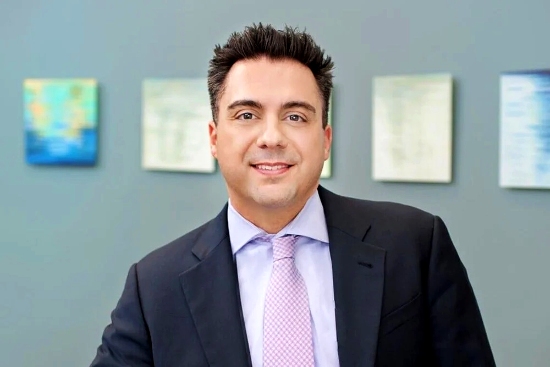
Q: Many people are looking for a change as they enter the new year, embracing the mantra ‘new year, new me.’ If someone is looking for quick results in time for the New Year, what are their options?
A: Most cosmetic surgical procedures take about one to two months to heal fully. So if you’re looking to get results fast and in time for the new year, you will likely be looking for some non-surgical procedures. Things like botox and filler can make a big difference in your appearance, and the results are as fast as a couple of days up to just under two weeks.
Another popular option in our office is the Venus Bliss MAX. This nonsurgical body contouring machine can be used virtually anywhere on your body and face for simultaneous fat and cellulite reduction, muscle enhancement, and skin tightening where applicable. Depending on your goals and what you want to treat, results can happen in as little as one session.
LA’s The Place interview with Dr. Kelishadi:
Q: What is the most common procedure you find people looking for?
A: I get requests for all types of procedures, like neck and facelifts, labiaplasties, mini BBLs, and tummy tucks. However, the most commonly requested procedures are breast-related, such as breast augmentations with or without a lift, breast reductions, breast lifts without implants, and breast implant “upgrades” or augmentation revisions.
Q: Why do you think it’s the most popular?
A: Breast augmentations are incredibly popular across the board. For my practice specifically, patients seek me out because of my unparalleled combo of consistent results and top-notch customer service. More recently, I am one of the first plastic surgeons to introduce a cutting-edge DuraSorb mesh that acts as an internal bra. It gives better and more precise results, decreases scarring, and extends the life of the procedure. Of course, DuraSorb mesh will be much more popular because the word is getting out, as I have recently published four manuscripts in the plastic surgery literature and have been invited to lecture global audiences on my findings. I am excited to currently have the world’s largest and longest experience using this internal support matrix and have validated my findings by publishing my results in peer-reviewed journals. It is truly an honor to be involved in this paradigm shift that I have helped start, and I am humbled to have so many surgeons seek my expertise about how best to deliver this technology to their own patients to better patient care, results, and satisfaction.
Many women opt to undergo breast augmentations as their first surgical procedure. This is likely because the desire for breast augmentation is relatable, with 1 in 5 women constantly thinking about their breast size. Not to mention, it is a straightforward procedure, so the healing time is very manageable. Aside from working out, you’ll be back to your daily routine in just a week in most cases.
Q: What is the DuraSorb mesh that you use on your patients? How does it make their breast augmentations different from those not using it?
A: DuraSorb is made of polydioxanone mesh, the same material as a very non-reactive, commonly used absorbable suture in plastic surgery. In essence, it is a “net” or sheet of this commonly used suture material. After being placed in your body, it stimulates the body’s natural healing process and produces collagen in the process of absorption; in other words, the mesh absorbs and turns into collagen (called neocollagen) over 5-6 months. We use this material in our breast augmentations as an internal bra to prolong or prevent breast tissue’s natural sagging and aging. In addition, it helps prevent excess skin stretching when patients opt for a significant size increase. I have found that it is there to support the soft tissue during the most critical early stages of wound healing when everything is swollen, holding the implant in place and reducing stretch forces on the vulnerable skin; later, it turns into a stronger version of your own natural scar tissue/collagen and gives a secure “one breast” feel.
Q: Are there nonsurgical options for people looking for those results?
A: Breast size is generally fixed because of how a woman’s breasts grow during puberty, after she has had children, or as she ages. There is no natural way to lift a breast or restore lost upper pole volume. Diet and exercise can improve overall appearance but will not increase the breast’s size or alter its shape.
Q: What inspired you to pursue a career as a plastic surgeon?
A: I started in plastic surgery, performing the whole gamete of plastic and reconstructive surgery, from fixing broken jaws and fingers to reconstructing pressure sores or defects after dermatological resections like Mohs Surgery. I also did plenty of breast reconstruction after mastectomy and even went to the ER to suture lacerations on children and, occasionally, adventurous adults. In time, I became recognized for my work on the aesthetic side of plastic surgery as patients, and people who worked in healthcare recognized my quality of work.
Early on, I realized that breast augmentations are the gateway to other plastic surgery procedures. Even the shyest of women will go and get breast implants, and at least one of their friends will hear of their transformative experience. That friend will then go on to tell ten other people, who each will tell ten of their own friends, and so forth.
I was lucky to be mentored by one of the best in the world in this realm and saw early on the confidence and empowerment these procedures brought women. When they return after surgery for their three-month post-op, you can see the difference in their face and how they feel about themselves. I’ve even seen some women return with a new fiancé shortly after their procedures. Seeing the confidence enhancement in these women made me realize that plastic surgery is so much more meaningful than just a cosmetic makeover.
Q: Who are the best candidates for plastic surgery? Do you ever deny anyone?
A: Typical candidates are in good overall health without any current health problems like bleeding disorders, heart disease, obesity, etc. l review each candidate’s medical history during my consultation with them to ensure they’re an applicable patient for plastic surgery. I have denied people before; for example, I won’t work on people who are highly overweight because it puts the patient at a much higher risk of life-threatening complications. I have also denied people looking for unrealistic results because, at that point, no matter what I or someone else can do for them, they won’t be happy with the results. For me, it’s really important that people leave my office feeling empowered and confident.
Q: What do you think will be trending next in plastic surgery?
A: What I’ve observed lately in plastic surgery is that the most common features to be altered are the most visible. For example, last year, we saw a drastic increase in the number of labiaplasties performed. That can be attributed to the Lululemon legging trend and women wearing tighter-fitted clothing that exposes more parts of their body, causing physical and emotional discomfort.
Another trend that I see emerging is what we call “tech neck,” as people spend way more time on their phones and computers. The tech neck is creating more demand in patients looking for a neck lift, and the age demographic for these requests is becoming increasingly younger.
Feature photo by Valerie Elash